



Best Food for Pugs: Small Breed Nutrition Guide for Best Wet Food
India's complete nutrition guide for Pugs: covering the perfect small-breed meal composition, wet food choices, home-cooked options, hydration, treats, supplements, and everything a healthy Pug needs at every life stage.
If you share your home with a Pug, you already know the combination: a dog of extraordinary charm, outsized personality, and an enthusiasm for food that is matched almost perfectly by a metabolic tendency to gain weight from it. Pugs are one of the most beloved toy breeds in India -- and one of the most medically complex, with a flat face that restricts breathing, skin folds that require daily care, a vulnerability to heat that is far greater than most owners appreciate, and a predisposition to obesity that, if unchecked, compounds every one of these conditions. Getting the diet right for a Pug is not simply a matter of good nutrition. It is a matter of managing the intersection of breathing, weight, skin, and gut health that defines this breed's daily quality of life.
This guide covers everything you need to know about feeding your Pug in India: from understanding the breed's specific brachycephalic nutritional needs to practical meal planning, home-cooked recipes, the best Goofy Tails products for Pugs, and honest answers to every common question Indian pet parents ask.
1. The Pug: The Ancient Companion of Emperors

The Pug is one of the oldest toy breeds in the world, with a documented history stretching back over 2,000 years to ancient China. Developed as a companion for Chinese emperors during the Han Dynasty, Pugs were kept in luxury, guarded by soldiers, and given only to royalty and honoured guests as gifts. They reached Europe through Dutch traders of the Dutch East India Company in the 16th century, where they became favourites of the House of Orange and subsequently of royal courts across the continent. Queen Victoria of England was an ardent Pug enthusiast, as were Napoleon's wife Josephine and the Duke and Duchess of Windsor.
In India, the Pug became genuinely famous through Vodafone's iconic "You and I" advertising campaign, which featured a Pug puppy following a young boy through life's moments. That campaign made Pugs one of the most recognised and sought-after breeds in the country. For Pugs in cities with high pollution levels, this is particularly relevant: their compromised airway makes them far more vulnerable to airborne particulate matter than other breeds. See our guide on how air pollution affects dogs and what you can do to help.
| Breed Fact | Detail |
|---|---|
| Origin | Ancient China (Han Dynasty, 206 BC to 220 AD); introduced to Europe in the 16th century |
| Size | Toy: 6 to 8 kg; 25 to 36 cm at shoulder |
| Coat | Short, smooth, glossy double coat -- low maintenance but moderate to heavy shedding year-round |
| Colours | Fawn (most common in India), black, apricot, silver fawn |
| Lifespan | 12 to 15 years with good management; shorter in obese or poorly managed individuals |
| Energy Level | Low to moderate; content with short indoor play and brief daily walks; heat intolerant |
| Key Health Concerns | Brachycephalic obstructive airway syndrome (BOAS), obesity (primary risk), skin fold dermatitis, hip dysplasia and luxating patella, eye conditions (corneal ulcers, dry eye, proptosis), pug dog encephalitis (PDE), and common small-breed health concerns |
| Temperament | Charming, affectionate, playful, stubborn, deeply people-oriented, clown-like |
2. What the Perfect Pug Meal Looks Like
Feeding a Pug requires understanding that this breed has the most weight-sensitive body of almost any dog. Every extra gram of body weight a Pug carries is extra strain on a respiratory system that is already significantly compromised. A Pug at 9 kg when their ideal weight is 7 kg is not just a little overweight -- they are carrying 28% excess body mass on a frame whose breathing is already restricted. That excess fat compresses the airway further from the inside, reduces respiratory reserve, worsens heat tolerance, and accelerates the joint deterioration that comes with age. Diet for a Pug is not optional management -- it is front-line healthcare.
The 5 Pillars of a Pug-Optimised Diet
| Nutrient Pillar | Why Pugs Need It | What to Look For |
|---|---|---|
| Lean High-Quality Protein (25 to 30%) | Maintains lean muscle mass that protects Pug joints and supports metabolic rate; high-protein meals increase satiety, reducing the persistent hunger that drives Pug food-seeking behaviour. Muscle mass also supports the respiratory musculature that Pugs rely on more than other breeds | Named whole meat first (chicken breast, eggs), not "meat meal" or unnamed by-products; lean protein over fatty cuts to support weight management |
| Strict Calorie Control with Satiety Volume | Obesity is the single greatest threat to a Pug's quality of life and lifespan. Every excess calorie a Pug receives makes breathing harder, joints more painful, and heat tolerance lower. Read the complete guide to managing obesity in dogs. | High-moisture wet food delivers more food volume per calorie than dry kibble, improving satiety without excess calories. Strict measured portions at every single meal. Never free-feed a Pug |
| High Moisture Content | Pugs are heat-sensitive and lose fluid rapidly through their laboured panting. Chronic dehydration from dry kibble worsens skin fold conditions, stresses kidneys, and reduces the body's ability to manage heat. India's climate makes this a year-round management priority | Wet food at 75 to 80% moisture as the primary diet; bone broth topper daily; multiple small fresh water sources always available |
| Skin Fold and Immune Support Nutrients | Pug skin folds trap moisture, heat, and bacteria -- creating a permanent infection risk. Internal nutritional support (omega-3 fatty acids, zinc, antioxidants) strengthens the skin barrier and reduces inflammation in fold-prone areas. Read about grain-free food for skin and coat health. | Omega-3 from hemp seed and chia seeds; zinc from named whole meat; grain-free or gluten-free formulations reduce the dietary inflammatory triggers that worsen skin fold dermatitis in this breed |
| Low-Starch, Low-Fermentation Ingredients | Pugs are prone to digestive gas, which combined with their restricted breathing creates visible discomfort. High-starch diets contribute to fermentation and gas production in the gut. Low-starch wet food reduces this significantly. Read about grain-free food for sensitive stomachs. | Pumpkin, sweet potato, and quinoa as preferred carbohydrate sources; no corn, wheat, soy, or unnamed cereal fillers; grain-free or gluten-free wet food for most Pugs |
Calorie Guide for Pugs by Life Stage
| Life Stage | Weight Range | Daily Calories (Moderate Activity) | Feeding Frequency |
|---|---|---|---|
| Puppy (2 to 5 months) | 1 to 3 kg | 200 to 350 kcal | 3 to 4 meals/day (small, frequent portions) |
| Puppy (5 to 12 months) | 3 to 6 kg | 350 to 500 kcal | 3 meals/day |
| Adult (1 to 8 years) | 6 to 8 kg | 400 to 550 kcal | 2 meals/day (strictly measured) |
| Senior (8+ years) | 5.5 to 7.5 kg | 350 to 480 kcal | 2 meals/day (smaller, highly digestible portions) |
3. Goofy Tails Wet Meals: The Best Food for Pugs

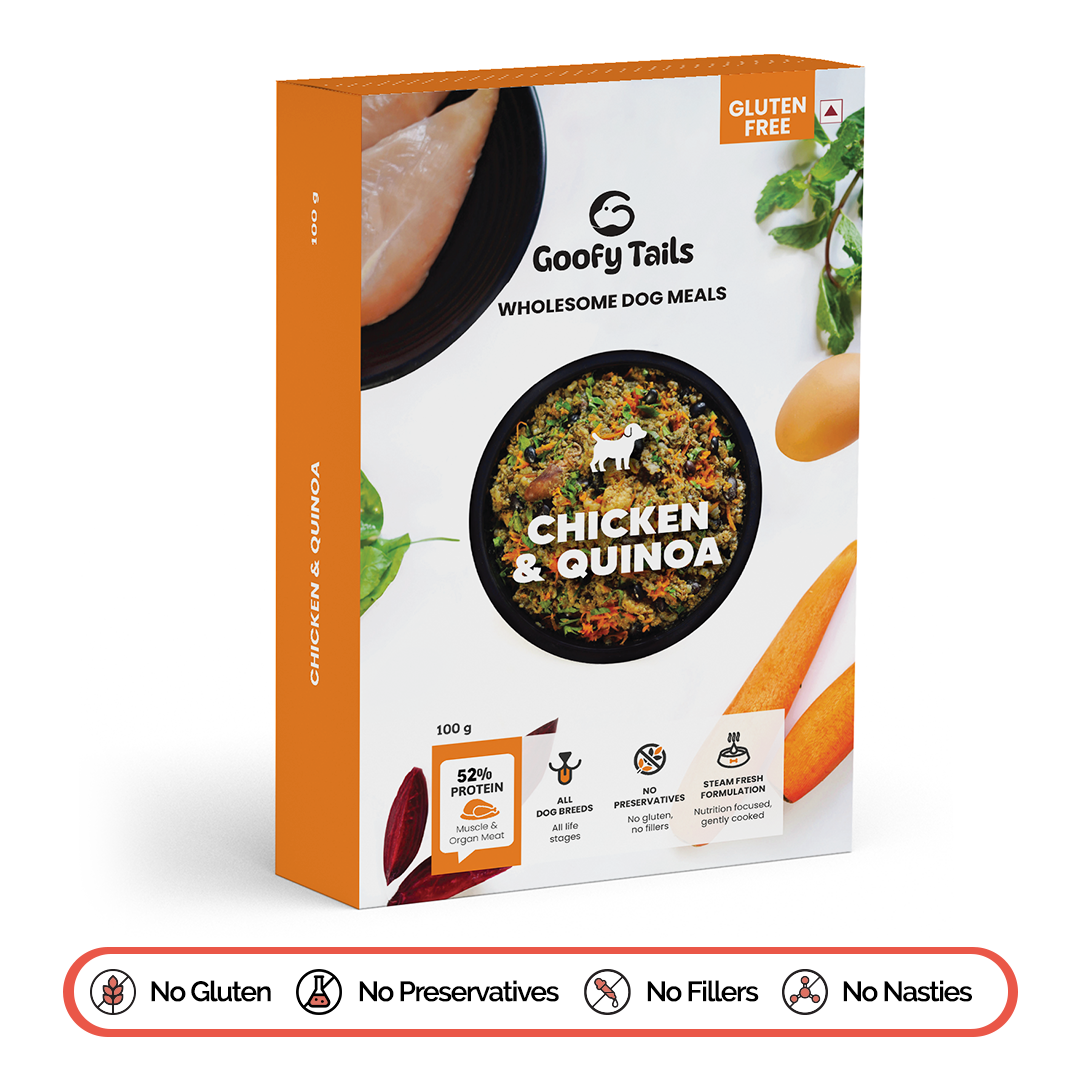
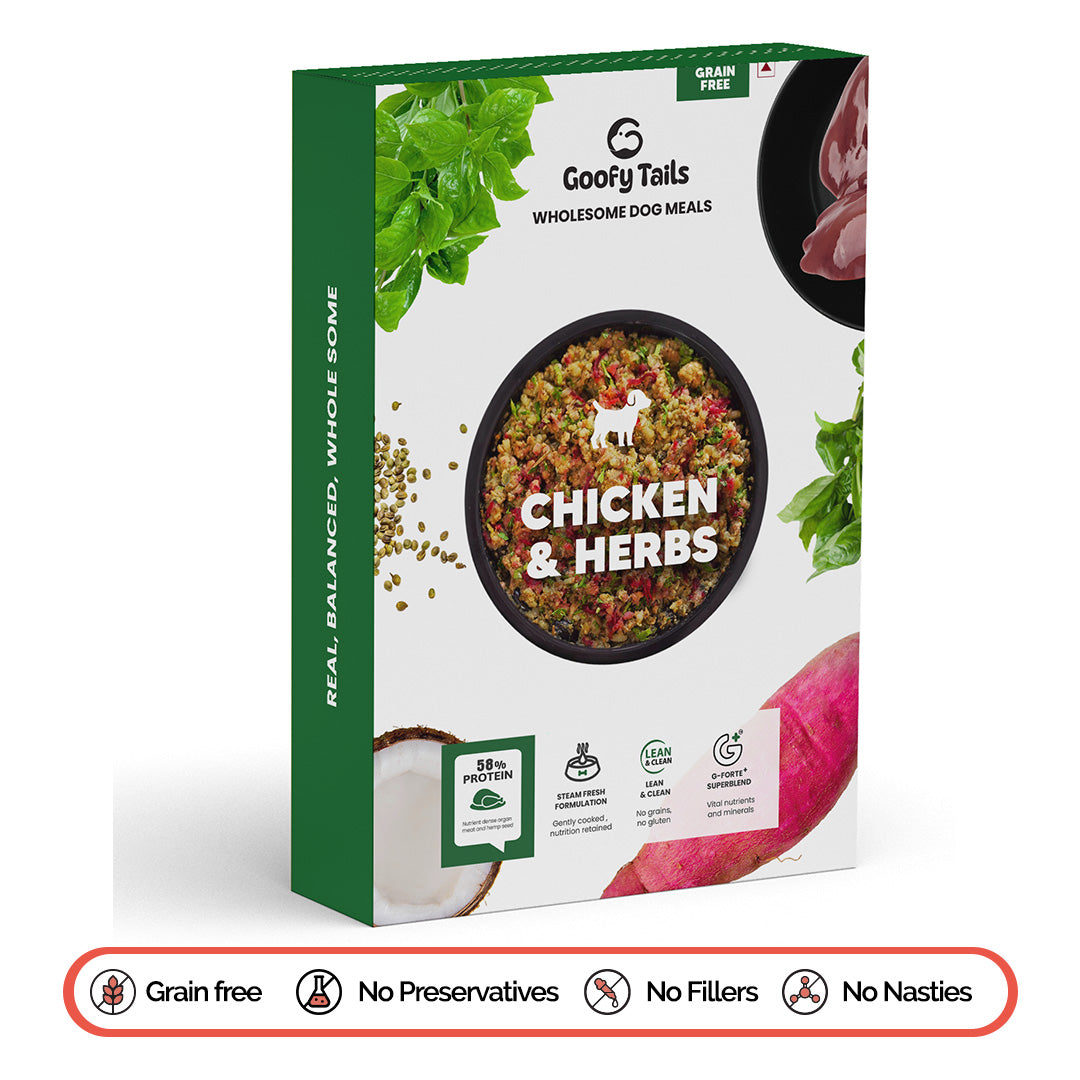
Every Goofy Tails wholesome wet meal is made with 75 to 80% natural moisture, real whole-meat protein, and no artificial preservatives or fillers. For Pugs, this format is not just preferable -- it is the most appropriate daily food choice for the breed's specific health profile. The high moisture content directly counters the dehydration that worsens skin fold infections and kidney function; the lean protein profile supports the weight management that is non-negotiable for a brachycephalic breed; and the complete absence of high-starch fillers reduces the gut fermentation and gas production that already compromise Pug comfort. For more on choosing the right format, see our guides on grain-free food for skin and coat health and the science behind grain-free dog food.
Among the full range, two meals stand out as particularly well-suited for Pugs:
"As a Vet I recommend clean, honest and wholesome ingredients and an active lifestyle. Therefore, I trust and recommend Goofy Tails."Dr. Madhurita, President, Myvets Charitable Trust & Research Centre
4. Home-Cooked Meals for Your Pug
Home cooking for your Pug gives you complete control over ingredients, portion size, and calorie count -- all of which are particularly valuable for a breed where weight management is the central health priority. The rules for a Pug home-cooked diet are: lean protein as the primary ingredient, low-starch vegetables for gut-friendly fibre and volume without excess calories, minimal added fat, and strict portion measurement at every single meal. See our detailed guide to homemade grain-free dog food for a complete framework.
A Simple Balanced Home-Cooked Base Recipe (Per 7 kg Adult Pug)
| Ingredient | Quantity (per meal) | Purpose |
|---|---|---|
| Chicken breast (boiled, boneless, skinless) | 80 to 100 g | Lean complete protein for muscle maintenance and satiety; lower fat than thigh or skin-on cuts -- important for a weight-sensitive breed |
| Pumpkin (boiled or steamed) | 30 to 40 g | Low-fermentation soluble and insoluble fibre for gut health and gas reduction; beta-carotene for immune support |
| Sweet potato (boiled) | 25 to 30 g | Slow-release complex carbohydrate; lower GI than white potato; provides meal volume without rapid blood sugar impact |
| Carrot (raw grated or boiled) | 15 g | Beta-carotene, natural fibre, low-calorie volume; raw carrot also provides mild mechanical dental benefit |
| Spinach or leafy greens | 10 g | Iron, folate, antioxidant vitamins with minimal caloric cost |
| Whole egg (boiled) | half a small egg | Complete protein, biotin for skin and coat health; keep portions small given Pug calorie ceiling |
| Hemp seed oil or coconut oil | quarter tsp | Omega-3 and omega-6 for skin barrier health and skin fold inflammation management; keep fat addition minimal |
| Bone broth (as liquid base) | 50 to 70 ml | Passive hydration, collagen for joints and gut lining, significantly improves meal palatability for Pugs who can be selective eaters |
Safe Human Foods to Add as Toppers
- Watermelon (seedless, small pieces): very high water content, very low calorie; ideal for heat-sensitive Pugs in Indian summers
- Cucumber slices (small pieces): almost zero calories, high water content; excellent as between-meal enrichment for a breed that is always hungry
- Boiled sweet potato (small amount): complex carbs, beta-carotene; provides volume and mild sweetness that satisfies a food-motivated Pug without excess calories
- Plain boiled chicken breast (very small pieces): lean, complete protein topper; keeps meals interesting without adding significant fat
- Plain curd / yogurt (very small amounts): probiotics, cooling, supports digestive regularity; helps with the gas sensitivity common to this breed
- Blueberries (1 to 2 berries): powerful antioxidants in a tiny calorie package; safe as an occasional treat
5. Hydration and Bone Broth: Essential for Pugs in India

A 7 kg adult Pug requires approximately 350 to 500 ml of water per day under normal conditions, rising meaningfully in India's summer heat. The challenge is that Pugs cool themselves almost entirely through panting -- their flat faces reduce nasal airflow and make panting less efficient than in other breeds, meaning they lose fluid rapidly while cooling themselves less effectively. A Pug on dry kibble in India's summer is genuinely at dehydration risk every single day. For Indian Pugs in high-pollution urban environments, adequate hydration also supports the body's ability to manage the additional airway irritation from particulate matter. See our guide on how air pollution affects dogs in Indian cities.
Why Bone Broth Is Non-Negotiable for Pugs
Bone broth is the most practical and effective hydration tool for a breed that may not drink voluntarily when hot or stressed. Poured warm over any meal, it delivers fluid passively alongside collagen and glycine for joint tissue support, gut lining integrity, and the natural anti-inflammatory compounds that benefit a breed where chronic low-grade inflammation in skin folds and airways is an ongoing reality. For Pugs who are picky eaters -- many are given their strong opinions about food temperature and texture -- warm bone broth transforms meal engagement consistently.


🧊 Summer Tip: Frozen Broth Enrichment for Indian Pugs
In India's peak summer months (April to June), Pugs are among the dogs at greatest risk from heat given their compromised ability to cool through panting. Dilute Goofy Tails Chicken Bone Broth 50/50 with water and freeze in small silicone moulds. Offer 1 to 2 frozen broth cubes as afternoon enrichment. This provides passive hydration, satisfies the Pug's persistent interest in food-related activity, keeps them occupied indoors during the hottest hours, and provides collagen without adding meaningful calories. Keep your Pug in air-conditioned or well-fanned spaces between 11am and 6pm throughout summer -- their brachycephalic anatomy gives them almost no tolerance for temperatures above 28 degrees Celsius.
Shop Chicken Bone Broth →6. The Right Treats for Pugs
Treats are a particularly loaded topic with Pugs. They are highly food-motivated, and their food motivation is one of their most endearing and also most dangerous characteristics. For a 7 kg adult Pug eating 480 kcal/day, the 10% treat rule allows just 48 kcal in treats per day -- roughly half a standard commercial dog treat. Every treat above that threshold is directly compressing their airway and stressing their joints. Choose treats that are maximally high-value and minimally high-calorie. Break them into the smallest pieces possible. Reserve them for genuine training purposes rather than comfort-giving or entertainment.


7. Supplements: Targeted Support for a Healthy Pug
Pugs benefit from daily targeted supplementation that supports three of their most pressing health requirements: gut health and immune resilience (particularly relevant given their prone-to-infection skin folds and sensitive digestive systems), stress and energy management for a breed that lives intensely and emotionally, and the micronutrient coverage that home-cooked or even premium wet food diets do not fully provide. For Pugs showing early mobility concerns or those in their senior years, see our guide on degenerative myelopathy and how it affects dogs. Goofy Tails Canine Vitality addresses all of these directly in a single daily liquid supplement that integrates seamlessly into any meal routine.

Why Canine Vitality is the #1 supplement for Pugs:
-
Turmeric Curcumin reduces systemic and skin inflammation. Shih Tzus are prone to skin fold dermatitis and allergic skin reactions -- curcuminoids regulate the immune pathways driving chronic skin inflammation, reducing flare frequency and severity when used consistently.
- Ashwagandha is a natural adaptogen that helps regulate cortisol and support the stress response. Stress is a documented trigger for skin flare-ups, dermatitis episodes, and immune suppression in small breeds. Daily ashwagandha reduces the cortisol spikes that drive these responses, supporting both emotional stability and physical health.
-
Boswellia Extract reduces swelling and immune overreaction, particularly valuable for Shih Tzus with recurring skin irritation or early joint stiffness. It works synergistically with curcumin for a broader anti-inflammatory effect.
-
Collagen Peptides support skin barrier integrity from within and provide structural support for joint cartilage and connective tissue. A strong skin barrier reduces allergen penetration -- the primary mechanism behind atopic dermatitis in small breeds. Joint support becomes increasingly important from around age 6 onwards.
8. Can Pugs Eat a Vegetarian Diet?
If your household is vegetarian and you prefer a plant-based option for your dog, Goofy Tails offers one carefully formulated choice. Here is what it delivers and what a complete vegetarian diet for a Pug must always include:

What a complete vegetarian diet for a Pug must always include:
- Lean complete plant protein: paneer and yellow lentils together provide a broad amino acid profile, but taurine and L-carnitine -- found naturally in animal muscle meat -- must be monitored. For a breed where maintaining lean muscle mass is critical for respiratory health and joint protection, amino acid completeness is non-negotiable even on plant-based days.
- Pumpkin daily: provides low-fermentation fibre that directly reduces the gut gas that Pugs are prone to even on optimal diets. Beta-carotene supports immune function. The low starch load of pumpkin is appropriate for a breed where blood sugar management matters for long-term metabolic health.
- Hemp seeds and flaxseed daily: the primary plant-based omega-3 sources (ALA) in this meal; essential for skin barrier health and for reducing the skin fold inflammation that is an ongoing management challenge in Pugs. Both are present in this formulation for meaningful daily delivery.
- Canine Vitality daily regardless of meal base: probiotics, prebiotics, ashwagandha, and B vitamins are equally critical on vegetarian meal days. Do not skip supplementation on rotation days -- the immune and gut support are independent of the meal protein source and should never be paused.
9. Frequently Asked Questions
Q: What is the best food for a Pug in India?
The best food for a Pug in India is a high-protein, high-moisture, low-starch wet food made with named whole-meat ingredients and no artificial preservatives. Goofy Tails Chicken and Quinoa (52% lean protein, gluten-free) and Chicken and Herbs (58% protein, grain-free, with the G-Forte+ superblend) are the top choices for Indian Pugs. Both deliver the lean protein that supports weight management, in a high-moisture format that counters the chronic dehydration risk, and with a low-starch base that reduces the gut gas and blood sugar instability that affect Pug comfort. Wet food is strongly preferred over dry kibble for Pugs -- the starch in kibble contributes directly to the weight gain that compromises their breathing and quality of life. For protein choice, see our guide on lamb vs chicken for dogs.
Q: How much should I feed my adult Pug?
A typical adult Pug (6 to 8 kg) requires approximately 400 to 550 kcal per day depending on age, sex, activity level, and whether they are spayed or neutered. For Goofy Tails wet food at approximately 150 to 180 kcal per 200g pack, most adult Pugs need 1.5 to 2 packs per day split across two meals. Never rely on your Pug's appetite as a portion guide -- Pugs will eat any amount presented to them and look for more. Always weigh food portions and weigh your dog every 4 weeks. At 6 to 8 kg, even 300 to 400g of excess body weight is a meaningful proportion of total mass with direct breathing consequences. Read the complete guide to managing obesity in dogs.
Q: Is wet food better than dry kibble for Pugs?
Yes -- and the benefits are particularly significant for a brachycephalic breed. Wet food delivers 75 to 80% moisture versus kibble's 6 to 10%, directly countering the dehydration risk that worsens skin fold infections, stresses kidneys, and reduces heat tolerance. Wet food has dramatically lower starch content than kibble, reducing gut fermentation and gas -- a Pug comfort issue that kibble worsens significantly. Wet food is more digestible and delivers higher bioavailable protein per gram, which means a Pug on wet food reaches satiety at a lower calorie intake than on kibble. For a breed where every calorie above ideal intake has breathing consequences, this matters enormously. If you do feed kibble, always add warm water or bone broth to every single meal. For more detail, see the science behind grain-free dog food.
Q: Do Pugs need supplements?
Yes -- and the most important for this breed is Goofy Tails Canine Vitality. Pugs benefit from daily probiotic and prebiotic support for their sensitive gut and skin fold immune health, ashwagandha for their stress-responsive, emotionally sensitive nature, and Vitamin B Complex for energy metabolism and neurological support. For Pugs on home-cooked diets, Canine Vitality is especially important as it closes the micronutrient gaps that home cooking creates. Start from puppyhood and maintain daily -- the cumulative benefit of consistent supplementation across a 12 to 15 year lifespan is substantial, particularly for a breed managing multiple chronic health pressures simultaneously.
Q: Why do Pugs get skin problems, and can diet help?
Skin fold dermatitis is one of the most common and most distressing health conditions for Pugs. The skin folds around the face, nose rope, and tail pocket trap moisture, heat, and bacteria, creating a chronic infection environment. Diet addresses the internal dimension of this problem: omega-3 fatty acids from hemp seed and chia seeds strengthen the skin barrier and reduce the inflammatory response in fold-prone areas; grain-free diets remove common dietary allergen triggers that worsen skin inflammation systemically; and the ashwagandha in Canine Vitality reduces the cortisol response that drives stress-triggered skin flare-ups. External fold cleaning must be combined with internal nutritional support for the most effective management. For a full overview of skin conditions, see our guide to dermatitis in dogs.
Q: What should I feed my Pug during the Indian summer?
In Indian summers (March through June), Pugs are at the greatest heat risk of any commonly kept breed in India. Their compromised airway makes panting -- the primary cooling mechanism -- significantly less efficient than in other breeds. Prioritise hydration above all else: switch to Goofy Tails wet food as the primary diet, add Chicken Bone Broth over every meal, and freeze diluted bone broth in small ice cube trays for afternoon cooling enrichment. Reduce all outdoor activity to brief early morning and late evening outings. Keep your Pug in air-conditioned or well-fan-cooled spaces continuously between 11am and 6pm throughout summer. Never exercise a Pug in temperatures above 26 to 28 degrees Celsius. Signs of heat stress (heavy laboured panting, pale or blue-tinged gums, collapse) require immediate cooling and emergency veterinary attention. For city-based Pug owners, air pollution significantly worsens the respiratory burden during summer months.
Q: How do I manage my Pug's weight?
Weight management in Pugs is the single most impactful health intervention available to owners -- more impactful than any medication, supplement, or veterinary procedure. A Pug at ideal body weight breathes more comfortably, tolerates heat better, moves more easily, and lives longer. Measure every meal by weight. Choose lean high-protein meals: Chicken and Quinoa and Chicken and Herbs are the correct primary choices. Feed to ideal body weight, not current weight. Use only tiny portions of low-calorie treats: crumbled Freeze Dried Chicken Liver Cubes and small cucumber pieces are the correct snack choices. Maintain a house-wide no-scraps policy. Weigh your Pug every 4 weeks and reduce portions at the first sign of weight gain rather than waiting to address a larger problem. Obesity in Pugs is also a documented risk factor for diabetes in dogs.
Q: Should I give my Pug chicken or lamb-based food?
Chicken is the preferred first choice for most Pugs: it is the leanest complete protein available, easily digestible, and the protein base of both Goofy Tails Pug-optimised meals (Chicken and Quinoa and Chicken and Herbs). The low fat content of chicken breast is particularly appropriate for a breed where fat management is critical for breathing and weight outcomes. If your Pug shows signs of chicken sensitivity -- persistent itching, recurring ear or skin fold infections, or loose stools despite management -- rotating to a lamb-based option provides a clean novel protein alternative. Adding Lamb Bone Broth alongside any meal provides additional collagen and hydration independent of the primary protein choice. For a detailed comparison, see our guide on lamb vs chicken for dogs.
Q: What are the best treats for training a Pug?
Pugs are intelligent and extremely food-motivated, making them responsive to training -- when the treat is compelling enough and the calorie budget is carefully managed. Goofy Tails Freeze Dried Chicken Liver Cubes are the ideal training treat: intensely palatable, only 2g fat per serving, grain-free, and easy to crumble into the tiny fragments that keep training cost per reward extremely low. Active Dental Sticks (Seaweed) are the correct daily end-of-session reward -- they satisfy the food motivation while simultaneously providing the dental care that is a genuine health priority for this breed. Avoid all commercial biscuit treats: their starch and calorie content is incompatible with the strict calorie management that Pug health requires.
Q: Can Pugs eat home-cooked food exclusively?
Yes, but with consistent supplementation and rigorous portion discipline. A home-cooked diet without Canine Vitality is almost certainly deficient in B vitamins, zinc, and the probiotic support the breed's sensitive gut and immune system genuinely need. Use the balanced base recipe in Section 4 as your foundation -- keep fat very low, use only lean chicken breast, and measure every ingredient. Add Canine Vitality daily and Chicken or Lamb Bone Broth as the liquid base at every meal. Have your vet review the diet every 6 months. For more detail, see our complete guide to homemade grain-free dog food.
Q: What are the most common health problems in Pugs?
The most common health issues in Pugs are: obesity (the most prevalent and most consequential, directly worsening every other condition on this list); brachycephalic obstructive airway syndrome (BOAS) -- the structural cause of the breathing difficulty that affects all Pugs to varying degrees; skin fold dermatitis around the face, nose rope, and tail pocket; dental overcrowding and periodontal disease; eye conditions including corneal ulcers, dry eye, and proptosis; hip dysplasia and luxating patella; and pug dog encephalitis (PDE), a breed-specific inflammatory brain condition. Diet addresses the obesity risk directly -- and through obesity management, reduces the severity of BOAS, skin fold conditions, and joint disease simultaneously. For a broader overview, see our guide to common health problems in dogs.
Q: Where can I buy Goofy Tails products for my Pug?
Goofy Tails wet food meals are available for quick delivery across India on Blinkit (same-day in select cities), Swiggy Instamart, Zepto, BigBasket, Amazon India, and Supertails. For the complete Pug care range, including Canine Vitality, Chicken Bone Broth, Lamb Bone Broth, Active Dental Sticks (Seaweed), and Freeze Dried Chicken Liver Cubes, visit goofytails.com directly. The Trial Pack (all 6 wet food flavours) is the ideal starting point to discover which meal your Pug engages with most before committing to a full routine.
10. Other Toy and Companion Breeds: Meet the Family
The Pug sits at the heart of the toy and companion breed world -- one of the most ancient and most loved small dogs on earth. Its ancient Chinese lineage, royal European history, and contemporary Indian fame make it unique. If you are curious about related companion breeds with similar temperaments or care needs, here is your guide. All breed profiles are available in full on the Goofy Tails Dog Wiki →


Conclusion: Feed Your Pug Like the Imperial Companion They Were Born to Be

The Pug is one of the most rewarding dogs to share your life with: charming, funny, deeply devoted, and possessed of a presence far larger than their compact frame suggests. That lovable personality comes packaged in a body that demands more nutritional care and weight discipline than almost any other breed. Every diet decision you make for your Pug -- every measured meal, every refused table scrap, every daily Canine Vitality serving, every Active Dental Stick after dinner -- is an investment in the breathing room, joint comfort, and quality of life that defines whether a Pug's 12 to 15 years are spent thriving or struggling.
The choices are clear. Lean whole-meat protein, high moisture, low starch, daily bone broth, daily Canine Vitality, strict portion control, and consistent dental care. That is what a Pug deserves, and that is exactly what Goofy Tails is built to deliver for Indian pet parents.
- Feed high-protein, lean, high-moisture meals: wet food is the gold standard for Pugs in India
- Use Chicken and Quinoa or Chicken and Herbs as the primary Goofy Tails meal for your Pug
- Add Chicken Bone Broth as a daily topper for passive hydration, collagen, and palatability
- Start Canine Vitality from puppyhood for immune, gut, and vitality support across a long lifespan
- Use Active Dental Sticks (Seaweed) daily after the evening meal -- dental health is critical for this breed's overall systemic health
- Use Freeze Dried Chicken Liver Cubes for training: crumble into tiny pieces, high value, minimal calories
- If cooking at home, always supplement with Canine Vitality to fill inevitable micronutrient gaps
- Weigh your Pug every 4 weeks and adjust portions based on body condition, not appetite
- Keep your Pug in air-conditioned spaces during Indian summer afternoons -- brachycephalic breeds cannot tolerate heat
- Never free-feed a Pug: strict portion control is the most important daily health decision you make for this breed
- Never feed onion, garlic, grapes, chocolate, xylitol, namkeen, chai, or any salted or spiced human food
- Never rely on dry kibble as the sole diet: starch, dehydration, and gas from kibble actively worsen Pug health
- Never ignore early weight gain: for a Pug, even 200 to 300g above ideal weight has real breathing consequences
🐾 Start Your Pug's Nutrition Journey with Goofy Tails
Human-grade, preservative-free, FSSAI-compliant, and vet-formulated. Wet meals, bone broth, Canine Vitality immune and gut supplement, dental treats, and freeze-dried training rewards: everything your Pug needs to thrive at every life stage. Rated 4.5/5 across 850+ reviews by Indian pet parents.
Shop Pug Essentials →
Leave a comment