



Brussels Griffon (Griffon Bruxellois)

Breed History:
Brussels Griffon originated in Belgium, particularly around the city of Brussels, during the 19th century. The breed descended from small, rough-coated stable dogs known as Smousje, which were kept to control rats and other vermin in horse stables. Breeders later crossed these hardy little dogs with breeds such as the Affenspinchers, Pugs, and English Toy Spaniels, resulting in a toy dog with a distinctive, expressive face and a bold personality.
The breed soon gained popularity among the Belgian upper class, especially after Queen Marie Henriette of Belgium became an enthusiastic admirer and promoted the breed throughout Europe. By the late 19th century, the Brussels Griffon had transitioned from a working stable dog to a fashionable companion. Although its numbers declined during the World Wars, dedicated breeders helped preserve the breed. Today, the Brussels Griffon is admired worldwide as an affectionate companion dog known for its expressive, almost human-like facial expressions, intelligence, and charming personality.
Today, the Brussels Griffon is valued as a devoted family companion, affectionate lap dog, and charming toy breed known for its intelligence, confidence, and distinctive expressive face.
If you want to learn about other Toy breeds, check out our page "Toy Dog Breeds: Types, Temperament, and Care Guide".
Considering adopting a Brussels Griffon (Griffon Bruxellois) or a similar toy breed? Check out our page "Popular Toy Dog Breeds in India and Their Diet Needs," detailing what to consider before adopting and our recommended products for toy dog breeds.
|
Gender |
Height |
Weight |
|
Male |
18-20 cm |
3-6 kg |
|
Female |
18-20 cm |
3-6 kg |
Size – Toy
Life Expectancy: 12–15 years

Breed Appearance:
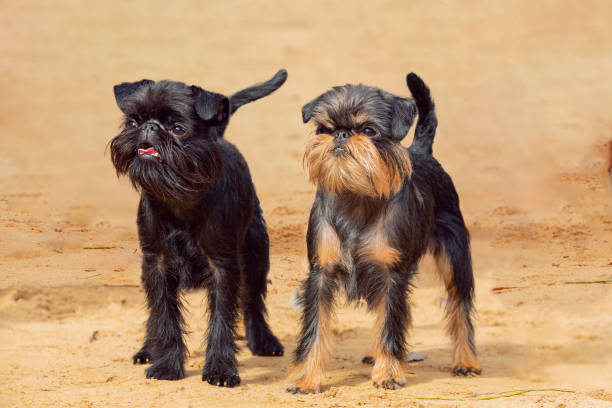
The Brussels Griffon is a compact, sturdy, and well-balanced toy breed with a distinctive almost human-like expression.
The breed commonly features:
- Large, rounded head
- Very short, broad muzzle
- Large, dark, round expressive eyes
- Small, high-set ears (naturally semi-erect or folded)
- Deep chest
- Short, sturdy neck
- Straight, well-boned limbs
- High-set tail carried upright
The breed comes in two coat varieties:
- Rough-coated
- Smooth-coated (Petit Brabançon)
Common coat colours include:
- Red
- Black
- Black and tan
- Belge (a mix of black and reddish-brown)
The rough-coated variety has a wiry texture with a characteristic beard and moustache, while the smooth-coated variety has a short, glossy coat.
The breed's large eyes, short muzzle, and expressive face give it its unmistakable appearance.
Breed Type – Companion Dog:
The Brussels Griffon is an intelligent, affectionate, and lively companion breed.
It is known for being:
- Loyal
- Intelligent
- Curious
- Affectionate
- Alert
- Confident
The breed forms exceptionally close bonds with its family and often prefers the company of its owners over other dogs. It is generally friendly but may be reserved with strangers.
Training:
The Brussels Griffon is intelligent and eager to learn.
Training should focus on:
- Early socialisation
- Positive reinforcement methods
- Basic obedience training
- House training
- Trick training
- Mental enrichment activities
The breed excels in:
- Obedience
- Agility
- Rally
- Trick training
- Therapy work
Short, positive training sessions help keep the breed motivated and engaged.
Health & Care:
The Brussels Griffon may be prone to certain health concerns, including:
- Brachycephalic airway syndrome
- Patellar luxation
- Cataracts
- Progressive retinal atrophy
- Syringomyelia (occasionally)
- Dental disease
Routine veterinary care, dental hygiene, responsible breeding, and weight management help support long-term health.

Living Conditions:
The Brussels Griffon adapts exceptionally well to indoor living.
Ideal environments include:
- Apartments
- Houses with securely fenced yards
- Urban or suburban homes
- Families, singles, or seniors
The breed thrives indoors with its family and does not tolerate long periods of isolation, often developing separation anxiety if left alone frequently.
Exercise:
The Brussels Griffon has moderate exercise requirements.
Recommended activities include:
- Daily walks
- Indoor play
- Puzzle toys
- Interactive games
- Short training sessions
Around 30 to 60 minutes of daily exercise helps maintain physical fitness and mental stimulation.
Grooming:
Grooming requirements depend on the coat type.
- Rough-coated: Brushing two to three times per week and occasional hand-stripping
- Smooth-coated: Weekly brushing
- Occasional bathing
- Nail trimming
- Regular ear cleaning
- Routine dental care
The rough-coated variety sheds very little, while the smooth-coated variety sheds lightly.
