



Best Food for Pomeranians: Small Breed Nutrition Guide
India's complete nutrition guide for Pomeranians: covering the perfect small-breed meal composition, wet food choices, home-cooked options, hydration, treats, supplements, and everything a healthy Pomeranian needs at every life stage.
If you share your home with a Pomeranian, you already know the combination: an enormous personality compressed into a 2 to 3.5 kg body, a coat that requires more maintenance than most full-sized breeds, and an intelligence that far outpaces what most people expect from a tiny toy dog. Pomeranians are animated, opinionated, and deeply devoted to their families -- and what goes in their very small bowl matters considerably more than most owners realise. Their fast metabolism, dental vulnerability, and skin and coat requirements mean that the quality of their daily diet has outsized consequences for their health and longevity.
This guide covers everything you need to know about feeding your Pomeranian in India: from understanding the breed's specific small-breed nutritional needs to practical meal planning, home-cooked recipes, the best Goofy Tails products for Poms, and honest answers to every common question Indian pet parents ask.
1. The Pomeranian: The Big Dog in a Small Package

The Pomeranian takes its name from Pomerania, a historical region on the southern coast of the Baltic Sea spanning parts of modern Poland and Germany. It descends from the large Spitz sled dogs of the Arctic, which were progressively miniaturised through selective breeding as they moved through Europe. Early Pomeranians were significantly larger than today's breed -- Queen Victoria of England, one of the breed's most famous enthusiasts, is credited with popularising the smaller variety in the late 19th century after importing miniature Poms from Italy. Her passion for the breed is directly responsible for the dramatic reduction in size that defines the modern Pomeranian.
In India, Pomeranians are one of the most popular toy breeds, prized for their striking double coat, their bold and alert temperament, and their adaptability to apartment living. Indian Poms thrive in air-conditioned urban homes but require specific nutritional management for their fast metabolism, dental health, and coat condition. For Pomeranians in cities with high pollution levels, see our guide on how air pollution affects dogs and what you can do to help.
| Breed Fact | Detail |
|---|---|
| Origin | Pomerania (northern Europe); miniaturised in England in the 19th century |
| Size | Toy: 1.8 to 3.5 kg; 18 to 30 cm at shoulder |
| Coat | Thick double coat; abundant, stand-off outer coat with dense soft undercoat; heavy shedding twice yearly |
| Colours | Orange, red, cream, white, black, blue, sable, parti, and merle |
| Lifespan | 12 to 16 years -- one of the longer lifespans among toy breeds |
| Energy Level | High relative to size; alert, busy, and active indoors; short daily walks and indoor play satisfy daily needs |
| Key Health Concerns | Dental disease (the primary health risk), luxating patella, tracheal collapse, hypoglycaemia (especially in puppies), skin and coat conditions, and common small-breed health concerns |
| Temperament | Bold, curious, intelligent, loyal, vocal, independent -- a true big-dog personality in miniature |
2. What the Perfect Pomeranian Meal Looks Like
Feeding a Pomeranian requires understanding that small breeds are nutritionally different from large breeds in ways that genuinely matter. Poms have a significantly faster resting metabolic rate per kilogram of body weight than large breeds, meaning they burn through calories more rapidly and need more nutrient-dense food relative to their size. They also have very small stomachs that cannot handle large meals, teeth that are highly vulnerable to tartar and periodontal disease, and a coat that visibly reflects nutritional status within weeks of a dietary change.
The 5 Pillars of a Pomeranian-Optimised Diet
| Nutrient Pillar | Why Pomeranians Need It | What to Look For |
|---|---|---|
| High-Quality Protein (min. 25 to 30%) | Supports Poms' naturally muscular, compact build; fuels their fast metabolism and active temperament; provides the amino acids their dense double coat requires for constant renewal | Named whole meat first (chicken breast, eggs), not "meat meal" or unnamed by-products; bioavailable animal protein is non-negotiable for a breed this small |
| Calorie Density with Portion Control | Pomeranians have tiny stomachs but high energy requirements per kilogram. They need calorie-dense food delivered in very small portions. Overfeeding even modestly causes rapid weight gain that stresses their small joints and worsens tracheal collapse. Read the complete guide to managing obesity in dogs. | High-protein wet food at 75 to 80% moisture; small, frequent, precisely measured meals; avoid bulky low-nutrient fillers that fill the stomach without nourishing |
| Skin and Coat Support Nutrients | The Pomeranian's iconic double coat is one of the most nutritionally demanding coats of any breed. Omega-3 fatty acid deficiency shows rapidly as dullness, brittleness, and excessive shedding beyond normal seasonal moults. Read about grain-free food for skin and coat health. | Omega-3 fatty acids (EPA/DHA) from hemp seed, chia seeds, or coconut oil; biotin from eggs; zinc from whole meat protein sources; grain-free or gluten-free formulations to reduce inflammatory triggers |
| High Moisture Content | Pomeranians are reluctant drinkers by nature -- their small size means dehydration occurs faster than in larger breeds, and chronic dehydration from dry kibble contributes to urinary and kidney issues that emerge in middle age. India's climate amplifies this risk significantly | Wet food at 75 to 80% moisture as the primary diet; bone broth topper daily; multiple small fresh water sources always available |
| Dental-Friendly, Low-Starch Ingredients | Dental disease is the single most common and most damaging health condition in Pomeranians. Their small crowded jaws accumulate tartar rapidly, and periodontal disease at 3 to 4 years is common in Poms fed high-starch kibble. High-starch diets also promote the rapid blood sugar fluctuations that contribute to hypoglycaemia in small breeds. Read about grain-free food for sensitive stomachs. | Grain-free or gluten-free wet food with low starch load; pumpkin and sweet potato as preferred carbohydrate sources; no corn, wheat, soy, or unnamed cereal fillers |
Calorie Guide for Pomeranians by Life Stage
| Life Stage | Weight Range | Daily Calories (Active) | Feeding Frequency |
|---|---|---|---|
| Puppy (2 to 4 months) | 0.5 to 1.5 kg | 150 to 280 kcal | 4 to 5 meals/day (critical for hypoglycaemia prevention) |
| Puppy (4 to 12 months) | 1.5 to 3 kg | 250 to 380 kcal | 3 to 4 meals/day |
| Adult (1 to 8 years) | 1.8 to 3.5 kg | 200 to 350 kcal | 2 to 3 meals/day |
| Senior (8+ years) | 1.8 to 3.2 kg | 180 to 300 kcal | 2 to 3 meals/day (smaller, highly digestible portions) |
3. Goofy Tails Wet Meals: The Best Food for Pomeranians

Every Goofy Tails wholesome wet meal is made with 75 to 80% natural moisture, real whole-meat protein, and no artificial preservatives or fillers. For Pomeranians, this format is superior to dry kibble in every way that matters for this breed. The high moisture content directly addresses the Pom's dehydration vulnerability, the lean protein profile supports their dense coat and fast metabolism, and the complete absence of high-starch fillers removes the primary dietary driver of the tartar and blood sugar instability that threaten Pomeranian health. For more on choosing the right format, see our guides on grain-free food for skin and coat health and the science behind grain-free dog food.
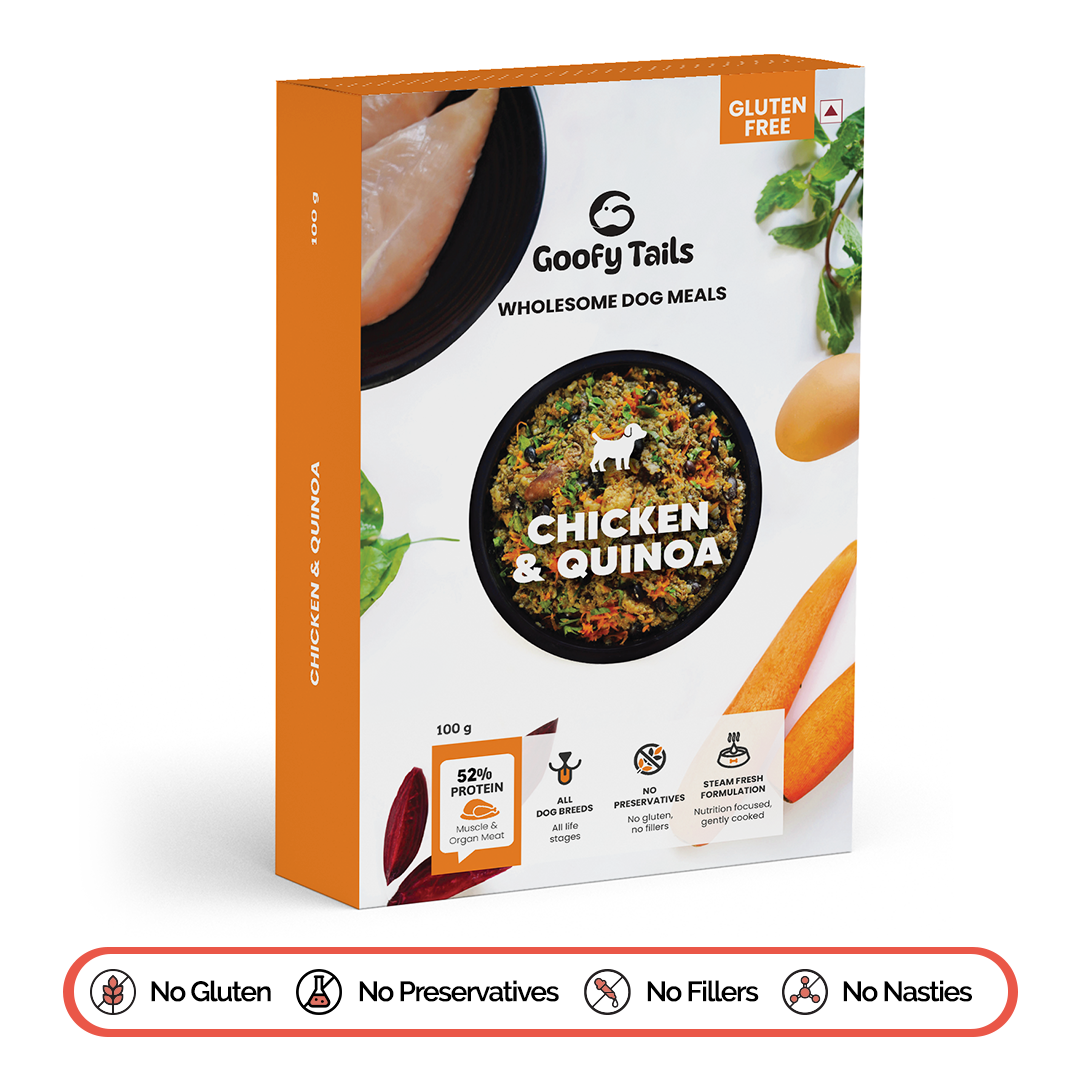
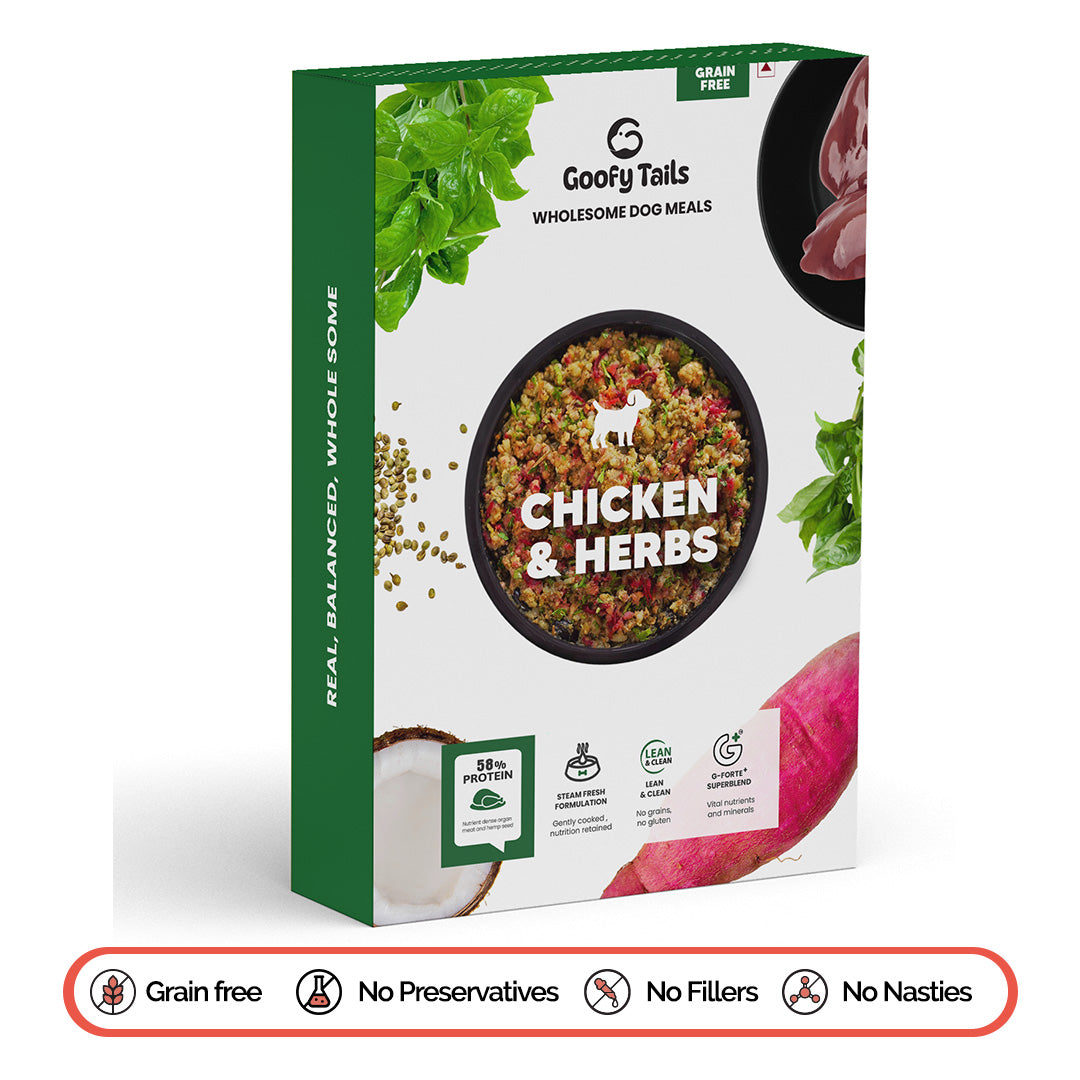
Among the full range, two meals stand out as particularly well-suited for Pomeranians:
"As a Vet I recommend clean, honest and wholesome ingredients and an active lifestyle. Therefore, I trust and recommend Goofy Tails."Dr. Madhurita, President, Myvets Charitable Trust & Research Centre
4. Home-Cooked Meals for Your Pomeranian
Home cooking for your Pomeranian is an excellent way to ensure ingredient quality and manage specific sensitivities, but it requires genuine precision. Poms are very small dogs whose nutritional gaps show quickly -- a deficiency in biotin shows in the coat within weeks, and inadequate calcium affects dental and bone health over months. A well-planned home-cooked diet for a Pomeranian is one of the most attentive feeding approaches available; a poorly planned one causes harm faster than it would in a larger breed. See our detailed guide to homemade grain-free dog food for a complete framework.
A Simple Balanced Home-Cooked Base Recipe (Per 2.5 kg Adult Pomeranian)
| Ingredient | Quantity (per meal) | Purpose |
|---|---|---|
| Chicken breast (boiled, boneless) | 35 to 45 g | Lean complete protein, coat amino acids, muscle maintenance |
| Quinoa or sweet potato (cooked) | 15 to 20 g | Complete amino acids or slow-release carbohydrate; both gluten-free and low-GI, suitable for small-breed blood sugar stability |
| Pumpkin (boiled or steamed) | 10 to 15 g | Gentle gut fibre, beta-carotene, digestive regularity for sensitive small-breed stomachs |
| Carrot (raw grated or boiled) | 8 g | Beta-carotene, natural fibre, dental-friendly crunchy texture |
| Spinach or leafy greens | 5 g | Iron, folate, antioxidant vitamins without calorie cost |
| Whole egg (boiled) | half a small egg | Complete protein, biotin for coat and skin health -- essential for double-coated breeds |
| Hemp seed oil or coconut oil | quarter tsp | Omega-3 and omega-6 for skin barrier and coat lustre; medium-chain fats for sustained small-breed energy |
| Bone broth (as liquid base) | 30 to 50 ml | Passive hydration, collagen for joints and gut lining, makes meals irresistible for picky Poms |
Safe Human Foods to Add as Toppers
- Watermelon (seedless, tiny pieces): very hydrating, extremely low calorie; ideal in Indian summers for a breed that loses heat through panting
- Boiled sweet potato (small amount): complex carbs, beta-carotene, gut fibre; keeps blood sugar stable between meals
- Plain boiled chicken liver (very small amounts, 2 to 3 times weekly): nutrient-dense, biotin and iron-rich; supports coat renewal and energy
- Cucumber slices (tiny pieces): high water content, zero meaningful calories; ideal as a hot-weather snack
- Plain curd / yogurt (very small amounts): probiotics, cooling, supports digestive regularity; Poms typically love it
- Banana (tiny piece): potassium, natural energy; use sparingly given sugar content
- Blueberries (1 to 2 berries): powerful antioxidant toppers at an appropriate tiny-breed portion size
5. Hydration and Bone Broth: Essential for Pomeranians in India

Pomeranians are natural reluctant drinkers. Their small size means dehydration occurs more rapidly than in larger breeds -- a 2.5 kg Pom requires approximately 200 to 300 ml of water per day under normal conditions, rising meaningfully during Indian summers or after activity. Dogs fed primarily on dry kibble are in a state of chronic mild dehydration, which over time contributes to urinary tract issues, kidney strain, and poor coat condition. For Indian Poms in high-pollution urban environments, adequate hydration also supports the body's ability to clear airborne irritants. See our guide on how air pollution affects dogs in Indian cities.
Why Bone Broth Is Non-Negotiable for Pomeranians
Bone broth is the most practical hydration solution for a breed that rarely drinks enough water voluntarily. Poured warm over any meal, it delivers fluid passively alongside collagen and glycine for joint tissue support and gut lining integrity. For Pomeranians -- a breed with small, delicate joints under the pressure of daily activity -- the daily collagen from bone broth is a meaningful functional nutrition contribution. For picky Poms who turn their noses up at plain food, warm broth transforms meal engagement reliably.


💧 Hydration Tip: The Daily Broth Bowl for Pomeranians
Pour 30 to 50 ml of Goofy Tails Chicken Bone Broth warm over your Pomeranian's meal once or twice daily. This delivers additional fluid passively, contributes natural collagen, and makes any meal irresistible for a picky Pom. For Indian summers, freeze diluted bone broth in small silicone moulds and offer as an afternoon cooling treat. Pomeranians are heat-sensitive given their dense coat -- frozen broth enrichment is one of the most effective and practical summer management tools available for Indian Pom owners.
Shop Chicken Bone Broth →6. The Right Treats for Pomeranians
Pomeranians are intelligent and responsive to treat-based training, but their small size means the calorie budget for treats is genuinely tiny. For a 2.5 kg adult Pom eating 280 kcal/day, the 10% treat rule allows just 28 kcal in treats per day -- roughly one standard commercial dog treat. Every treat must earn its place: use only high-value, low-calorie options that can be broken into fragments small enough for a tiny jaw. Dental health is the most critical non-dietary health intervention for this breed; treat selection should serve both training goals and oral hygiene wherever possible.


7. Supplements: Targeted Support for a Healthy Pomeranian
Pomeranians are vigorous little dogs with specific nutritional vulnerabilities that targeted daily supplementation addresses directly: immune resilience for a breed prone to skin and coat conditions, gut health for small-breed digestive sensitivity, and vitality support for a breed that lives 12 to 16 years and needs consistent micronutrient coverage across that long lifespan. For Poms showing early signs of mobility concern or those in their senior years, see our guide on degenerative myelopathy and how it affects dogs. Goofy Tails Canine Vitality is purpose-built for exactly this broad daily support, and for a small breed with a long life expectancy, starting early and maintaining consistently makes the greatest difference.

Why Canine Vitality is the #1 supplement for Pomeranians:
-
Turmeric Curcumin reduces systemic and skin inflammation. Shih Tzus are prone to skin fold dermatitis and allergic skin reactions -- curcuminoids regulate the immune pathways driving chronic skin inflammation, reducing flare frequency and severity when used consistently.
- Ashwagandha is a natural adaptogen that helps regulate cortisol and support the stress response. Stress is a documented trigger for skin flare-ups, dermatitis episodes, and immune suppression in small breeds. Daily ashwagandha reduces the cortisol spikes that drive these responses, supporting both emotional stability and physical health.
-
Boswellia Extract reduces swelling and immune overreaction, particularly valuable for Shih Tzus with recurring skin irritation or early joint stiffness. It works synergistically with curcumin for a broader anti-inflammatory effect.
-
Collagen Peptides support skin barrier integrity from within and provide structural support for joint cartilage and connective tissue. A strong skin barrier reduces allergen penetration -- the primary mechanism behind atopic dermatitis in small breeds. Joint support becomes increasingly important from around age 6 onwards.
8. Can Pomeranians Eat a Vegetarian Diet?
If your household is vegetarian and you prefer a plant-based option for your dog, Goofy Tails offers one carefully formulated choice. Here is what it delivers, and what a complete vegetarian diet for a Pomeranian must always include:

What a complete vegetarian diet for a Pomeranian must always include:
- Complete plant protein sources: paneer and yellow lentils together provide a broad amino acid profile, but taurine, biotin, and L-carnitine (found naturally in meat) must be monitored if feeding fully vegetarian long-term. For a breed as coat-dependent as the Pomeranian, biotin deficiency from inadequate animal protein is a very real risk.
- Hemp seeds and flaxseed (daily): the primary plant-based omega-3 source (ALA) in this meal. Essential for the Pom's skin and coat health -- without adequate omega-3 intake, the double coat becomes dull and brittle within weeks. Both hemp seeds and flaxseed are present in this formulation for meaningful daily dosing.
- Quinoa over rice: quinoa is a complete protein containing all essential amino acids, significantly superior to plain rice as a carbohydrate base for a small breed with high protein requirements. It also has a lower glycaemic index, supporting more stable small-breed blood sugar.
- Canine Vitality daily regardless of meal base: probiotics, prebiotics, ashwagandha, and B vitamins are equally critical on vegetarian meal days as on meat-based days. Do not skip supplementation on rotation days -- the gut microbiome and immune support it provides are not meal-dependent.
9. Frequently Asked Questions
Q: What is the best food for a Pomeranian in India?
The best food for a Pomeranian in India is a high-protein, high-moisture, low-starch wet food made with named whole-meat ingredients and no artificial preservatives. Goofy Tails Chicken and Quinoa (52% protein, gluten-free) and Chicken and Herbs (58% protein, grain-free with G-Forte+ superblend) are the top choices for Indian Poms. Both deliver the lean protein the breed's coat and fast metabolism demand, in a high-moisture format that directly addresses the Pom's chronic hydration deficit on dry kibble. Wet food is strongly preferred over dry kibble for Pomeranians across all life stages. For understanding protein choices, see our guide on lamb vs chicken for dogs.
Q: How much should I feed my adult Pomeranian?
A typical adult Pomeranian (1.8 to 3.5 kg) requires approximately 200 to 350 kcal per day depending on age, activity level, and whether they are spayed or neutered. For Goofy Tails wet food at approximately 150 to 180 kcal per 200g pack, most adult Poms need roughly 1 to 1.5 packs per day split across 2 to 3 small meals. Never rely on your Pom's appetite as a guide -- Pomeranians are enthusiastic eaters who will consume more than they need if given the opportunity. Always weigh meals and weigh your dog every 4 weeks. At 2 to 3 kg, even 100g of excess body weight is a meaningful proportion of total bodyweight with real health consequences. Read the complete guide to managing obesity in dogs.
Q: Is wet food better than dry kibble for Pomeranians?
Yes, significantly. Wet food delivers 75 to 80% moisture versus kibble's 6 to 10%, directly addressing the chronic dehydration risk in a breed that naturally drinks very little. Wet food is more digestible, delivers higher bioavailable protein per gram, and carries a fraction of the starch load that makes kibble-fed Poms prone to tartar buildup and blood sugar instability. For a breed whose primary health risk is dental disease driven by high-starch diet, removing those starches from the daily diet is one of the most impactful health decisions you can make. If you do feed kibble, always add water or bone broth to every single meal. For more detail, see the science behind grain-free dog food.
Q: Do Pomeranians need supplements?
Yes -- and the most important for this breed is Goofy Tails Canine Vitality. Pomeranians benefit from daily probiotic and prebiotic support for their sensitive small-breed digestive systems, ashwagandha for their emotionally responsive, stress-prone nature, and Vitamin B Complex for their fast metabolism and coat renewal requirements. For Poms on home-cooked diets, Canine Vitality is especially important as it closes the inevitable micronutrient gaps that home cooking creates. Start from puppyhood and maintain daily -- the cumulative benefit of consistent supplementation across a 12 to 16 year lifespan is substantial.
Q: Why do Pomeranians get skin and coat problems, and can diet help?
Skin and coat issues are among the most common health concerns in Pomeranians. The causes range from omega-3 deficiency (the most common dietary cause), to food allergens like wheat and soy triggering dermatitis and atopic reactions, to stress-triggered skin flare-ups in an emotionally sensitive breed. Diet addresses the first two directly: switching to a grain-free whole-ingredient wet food like Goofy Tails Chicken and Herbs (with hemp seed as a natural omega-3 source) typically produces visible coat improvement within 4 to 6 weeks. The ashwagandha in Canine Vitality addresses the stress-triggered skin pathway. For a full overview, read our guide on grain-free food for skin and coat health.
Q: What should I feed my Pomeranian during the Indian summer?
In Indian summers (March through June), Pomeranians are at elevated heat stress risk given their thick double coat. Prioritise hydration above all else. Switch to Goofy Tails wet food as the primary diet if you have not already, and add Chicken Bone Broth over every meal. Freeze diluted bone broth in small ice cube trays for afternoon cooling enrichment. Reduce outdoor exercise to early morning (before 8am) and late evening (after 7pm). Keep indoor spaces air-conditioned or fan-cooled. Never shave the coat -- the double coat also provides insulation from heat, and shaving damages the coat structure. Brush regularly to remove excess undercoat and improve airflow. For city-based Pom owners, air pollution adds a further respiratory burden during summer months.
Q: How do I manage my Pomeranian's weight?
Weight management in Pomeranians is more critical than most owners appreciate. At 2 to 3 kg, 200g of excess weight is the equivalent of a 70 kg human carrying an extra 5 kg everywhere, every day -- compressing small joints and worsening tracheal collapse. Weigh every meal using a kitchen scale. Choose high-protein, controlled-fat meals: Chicken and Quinoa and Chicken and Herbs are the correct primary meals for weight-conscious Pom owners. Use only very small treat portions: crumble Freeze Dried Chicken Liver Cubes into tiny fragments. Do not feed table scraps. Weigh your Pom every 4 weeks -- trends in body weight are the most reliable early warning available. Obesity in Pomeranians is also a documented risk factor for diabetes in dogs.
Q: Should I give my Pomeranian chicken or lamb-based food?
Chicken is the preferred first choice for most Pomeranians: lean, digestible, biotin-rich, and the base of both Goofy Tails Pom-optimised meals (Chicken and Quinoa and Chicken and Herbs). If your Pom shows signs of chicken sensitivity -- persistent itching, recurring ear infections, loose stools despite management -- switching to a lamb-based option is a clean protein rotation. Adding Lamb Bone Broth alongside any meal provides additional collagen and hydration regardless of the primary protein. For a detailed comparison, see our guide on lamb vs chicken for dogs.
Q: What are the best treats for training a Pomeranian?
Pomeranians are intelligent and highly trainable, but their tiny calorie budget means treat selection requires real discipline. Goofy Tails Freeze Dried Chicken Liver Cubes are the top choice: intensely palatable, only 2g fat per serving, grain-free, and easily crumbled into the very small fragments a Pom can handle efficiently. For daily dental maintenance, Active Dental Sticks (Seaweed) used after the evening meal provide a satisfying chew that simultaneously provides essential tartar reduction. Avoid commercial biscuit treats entirely -- they are high in starch and calories, and contribute directly to the dental disease and weight gain that most affect Pomeranian health outcomes.
Q: Can Pomeranians eat home-cooked food exclusively?
Yes, but only with careful planning and consistent supplementation. A home-cooked diet without Canine Vitality is almost certainly deficient in B vitamins, calcium, zinc, and the probiotic support the breed's small digestive system genuinely needs. Use the balanced base recipe in Section 4 as your foundation, add Canine Vitality daily, use Chicken or Lamb Bone Broth as the liquid base, and have your vet review the diet every 6 months. For more detail, see our complete guide to homemade grain-free dog food.
Q: What are the most common health problems in Pomeranians?
The most common health issues in Pomeranians are: dental disease and periodontal disease (by far the most prevalent, driven by small crowded teeth and high-starch diets); luxating patella (knee joint instability common in toy breeds); tracheal collapse (particularly in overweight Poms); hypoglycaemia in puppies; skin and coat conditions including dermatitis; and alopecia X (a hormonal coat loss condition specific to Pomeranians and other Spitz types). Diet addresses several of these directly: low-starch wet food reduces dental disease risk, weight management reduces tracheal collapse severity, high-protein meals support coat health, and daily Canine Vitality supports the immune and gut foundation that reduces skin flare frequency. For a broader overview, see our guide to common health problems in dogs.
Q: Where can I buy Goofy Tails products for my Pomeranian?
Goofy Tails wet food meals are available for quick delivery across India on Blinkit (same-day in select cities), Swiggy Instamart, Zepto, BigBasket, Amazon India, and Supertails. For the complete Pomeranian care range, including Canine Vitality, Chicken Bone Broth, Lamb Bone Broth, Active Dental Sticks (Seaweed), and Freeze Dried Chicken Liver Cubes, visit goofytails.com directly. The Trial Pack (all 6 wet food flavours) is the ideal starting point to discover which meal your Pom engages with most enthusiastically before committing to a full routine.
10. Other Toy and Companion Breeds: Meet the Family
The Pomeranian shares its place in the toy and companion group with some of the most charming small breeds in the world -- each with their own distinct history, temperament, and care needs. All breed profiles are available in full on the Goofy Tails Dog Wiki →


Conclusion: Feed Your Pomeranian Like the Champion They Are

The Pomeranian is one of the most captivating dogs to share your life with: bold, brilliant, deeply devoted, and possessed of a coat so magnificent that strangers stop in the street to admire it. That remarkable coat, and the vibrant personality behind it, depend on getting the nutrition right every single day. Feed a high-starch, low-moisture diet and you will see the consequences in dull fur, frequent dental scaling appointments, and a dog that ages faster than the breed's 12 to 16 year potential allows. Feed real whole-meat protein, high moisture, low starch, and consistent targeted supplementation -- and you give your Pom the foundation for an extraordinarily long, healthy, and gleaming life.
The choices are clear. Real food, real moisture, real whole-meat protein, daily bone broth, daily Canine Vitality, and smart dental-focused treat selection. That is what a Pomeranian deserves, and that is exactly what Goofy Tails is built to deliver for Indian pet parents.
- Feed high-protein, controlled-fat, high-moisture meals: wet food is the gold standard for Poms in India
- Use Chicken and Quinoa or Chicken and Herbs as the primary Goofy Tails meal for your Pomeranian
- Add Chicken Bone Broth as a daily topper for passive hydration, collagen, and palatability
- Start Canine Vitality from puppyhood for immune, gut, and vitality support across a long lifespan
- Use Active Dental Sticks (Seaweed) daily after the evening meal -- dental health is the most critical preventive priority for this breed
- Use Freeze Dried Chicken Liver Cubes for training: crumble into tiny pieces, high value, minimal calories
- If cooking at home, always supplement with Canine Vitality to fill inevitable micronutrient gaps
- Weigh your Pomeranian every 4 weeks and adjust portions based on body condition, not appetite
- Feed Pom puppies every 3 to 4 hours without exception to prevent hypoglycaemia
- Never free-feed a Pomeranian: precise portion control is non-negotiable for this breed
- Never feed onion, garlic, grapes, chocolate, xylitol, namkeen, chai, or any salted or spiced human food
- Never rely on dry kibble as the sole diet: starch and dehydration are the two greatest dietary risks for Pomeranians
- Never skip dental care: periodontal disease in Poms is common, painful, and almost entirely preventable with daily dental sticks and annual vet checks
🐾 Start Your Pomeranian's Nutrition Journey with Goofy Tails
Human-grade, preservative-free, FSSAI-compliant, and vet-formulated. Wet meals, bone broth, Canine Vitality immune and gut supplement, dental treats, and freeze-dried training rewards: everything your Pomeranian needs to thrive at every life stage. Rated 4.5/5 across 850+ reviews by Indian pet parents.
Shop Pomeranian Essentials →
Leave a comment