



Best Food for Great Danes in India
India's complete nutrition guide for Great Danes - covering the perfect meal composition, wet food choices, home-cooked options, hydration, treats, supplements, and everything a healthy Great Dane needs at every life stage.
If you share your home with a Great Dane, you already understand the paradox: the world's tallest dog breed, capable of towering over a dining table, is also one of the gentlest, most affectionate animals you will ever know. Great Danes are not built for aggression or excessive exertion - they are built for companionship, calm dignity, and close family bonds. But that giant body comes with giant nutritional demands and a set of breed-specific health vulnerabilities that make getting the diet right not just important, but genuinely life-extending.
Great Danes are among the most bloat-prone breeds on earth. Their deep chests, rapid growth, and large stomach capacity make Gastric Dilatation-Volvulus (GDV) the single greatest dietary risk they face. They also mature slowly, and overfeeding during puppyhood causes the rapid bone growth that accelerates joint disease. At the other end of life, they age faster than any other breed of comparable intelligence. Every stage of a Great Dane's life demands specific, thoughtful nutrition. This guide covers all of it. For a broader context on caring for large and giant breeds in Indian homes, see our dedicated guide. Understanding dog breed categories can also help you see how Great Danes fit within the giant breed group.
1. The Great Dane: The Apollo of Dogs

The Great Dane, known in Germany as the Deutsche Dogge (German Mastiff), is the tallest dog breed in the world. Despite the name suggesting Danish origins, the breed was developed in Germany - likely from crosses between English Mastiffs and Irish Wolfhounds. By the 17th century, German nobility kept large boarhounds resembling today's Danes; the breed was refined through the 18th and 19th centuries into the elegant giant we know today.
Great Danes have been gaining steady popularity in India, particularly among owners with space, who are drawn to their calm indoor temperament, striking appearance, and deep, affectionate bonds with family. For a full breed profile covering history, temperament, training, and health, visit the Goofy Tails Great Dane Breed Wiki. For context on how Great Danes compare within the 30 largest dog breeds in the world, see our complete guide.
| Breed Fact | Detail |
|---|---|
| Origin | Germany (developed from English Mastiff and Irish Wolfhound crosses) |
| Size | Giant - 50-90 kg; males 76-86 cm at the shoulder; among the tallest dogs in the world |
| Coat | Short, thick, smooth - minimal grooming requirements |
| Colours | Fawn, brindle, blue, black, harlequin, mantle, merle |
| Lifespan | 7-10 years - one of the shortest lifespans of any breed |
| Energy Level | Moderate - calmer than most large breeds indoors; needs 1-2 hours of gentle daily exercise |
| Key Health Concerns | Bloat/GDV (highest risk of any breed), hip and elbow dysplasia, dilated cardiomyopathy (DCM), wobbler syndrome, hypertrophic osteodystrophy in puppies, and mobility issues |
| Temperament | Gentle, affectionate, patient, loyal, good-natured - the "friendly giant." |
2. What the Perfect Great Dane Meal Looks Like
Feeding a Great Dane is not simply a matter of feeding more of whatever you'd give a medium-sized dog. Giant breeds have specific nutritional requirements that are meaningfully different from other dogs - and Great Danes, with their extreme size, rapid early growth, and documented health vulnerabilities, have requirements that are more precise still. See our complete guide to dog nutrition for Indian pet parents for broader context.
The 5 Pillars of a Great Dane-Optimised Diet
| Nutrient Pillar | Why Great Danes Need It | What to Look For |
|---|---|---|
| Moderate-High Quality Protein (25-30%) | Great Danes need adequate protein to maintain their extraordinary muscle mass, but excess protein during puppyhood accelerates bone growth and causes skeletal abnormalities (HOD, panosteitis, wobbler syndrome). Adults need protein for muscle maintenance without excess that stresses kidneys in later life. | Named whole meat first - chicken, buffalo, eggs. Avoid excess organ meat or very high-protein formulas during the growth phase. Quality over quantity. |
| Controlled Fat (12-16%) | Great Danes are among the highest-risk breeds for GDV. High-fat meals slow gastric emptying, increasing the time food ferments in the stomach - raising bloat risk. Fat is essential for the coat, brain, and energy, but must be at a controlled level, not in excess. | Moderate fat from quality sources: chicken, coconut oil. Avoid meals with very high animal fat content. Wet food's lower fermentation rate vs kibble is a meaningful safety advantage for this breed. |
| Joint-Supporting Nutrients | The mechanical stress on a 70-90 kg dog's joints is extraordinary. Great Danes are at high lifetime risk of hip and elbow dysplasia, and the breed's rapid early growth can cause permanent joint damage if the diet is incorrect. Understanding dysplasia helps frame why proactive joint nutrition matters from puppyhood. | Glucosamine, chondroitin, collagen, omega-3 (EPA/DHA). Bone broth as a daily collagen and glycine source. Start joint supplementation by 18 months. |
| High Moisture Content | Great Danes are prone to urinary and kidney issues as they age, and chronic dehydration from dry kibble compounds this risk. High moisture also reduces food fermentation rate in the stomach - directly relevant for bloat prevention. Adequate hydration is especially critical for this breed. | Wet food at 75-80% moisture as the primary diet. Bone broth daily. Always fresh water available, especially before and after meals. |
| Grain-Free or Low-Fermentation Carbohydrates | High-starch, rapidly fermenting foods increase gas production in the large stomach - a primary contributor to bloat risk. Grain-free and low-fermentation diets meaningfully reduce this risk for giant breeds. | Pumpkin, sweet potato, and chia seeds are carbohydrate sources. Avoid meals listing corn, wheat, soy, or unnamed cereals. Grain-free is preferred for bloat-prone breeds. |
Calorie Guide for Great Danes by Life Stage
| Life Stage | Weight Range | Daily Calories (Active) | Feeding Frequency |
|---|---|---|---|
| Puppy (2-6 months) | 10-30 kg | 1,200-2,000 kcal | 3-4 meals/day (small portions) |
| Puppy (6-18 months) | 30-60 kg | 2,000-2,800 kcal | 3 meals/day |
| Adult (18 months-5 years) | 50-90 kg | 2,500-3,500 kcal | 2-3 meals/day |
| Senior (5+ years) | 45-80 kg | 2,000-2,800 kcal | 2-3 meals/day (smaller portions, higher frequency) |
3. Goofy Tails Wet Meals: The Best Food for Great Danes

Every Goofy Tails wholesome wet meal is made with 75-80% natural moisture, real whole-meat protein, and no artificial preservatives or fillers. For Great Danes, the high-moisture, grain-free format is ideal: the low fermentation rate reduces bloat risk, the named whole-meat proteins deliver bioavailable nutrition without starch fillers, and the joint-supporting ingredients directly address the breed's primary health vulnerabilities. Two meals stand out as particularly well-suited to Great Danes. For more on grain-free food for sensitive stomachs and grain-free food for skin and coat health, see our dedicated guides.
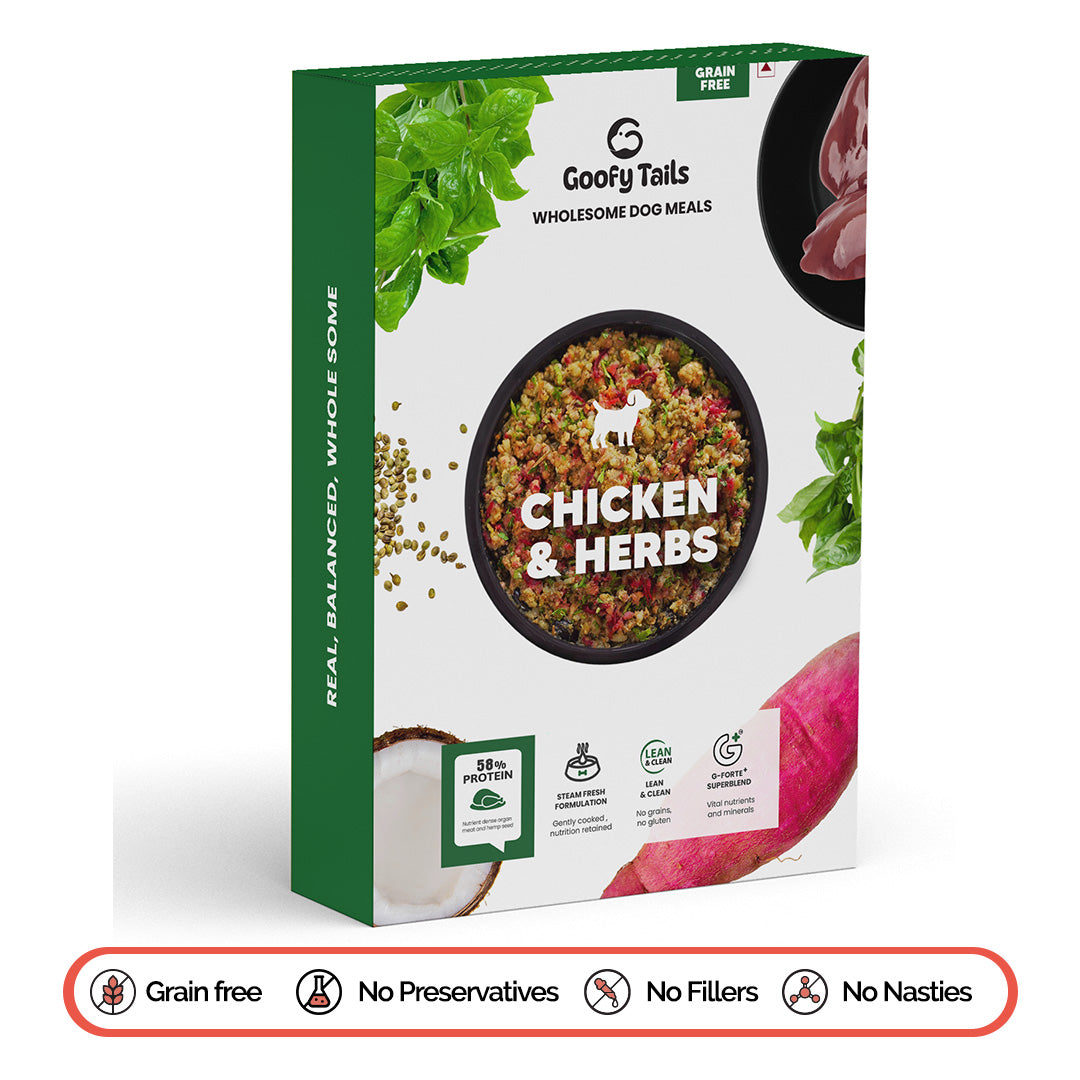
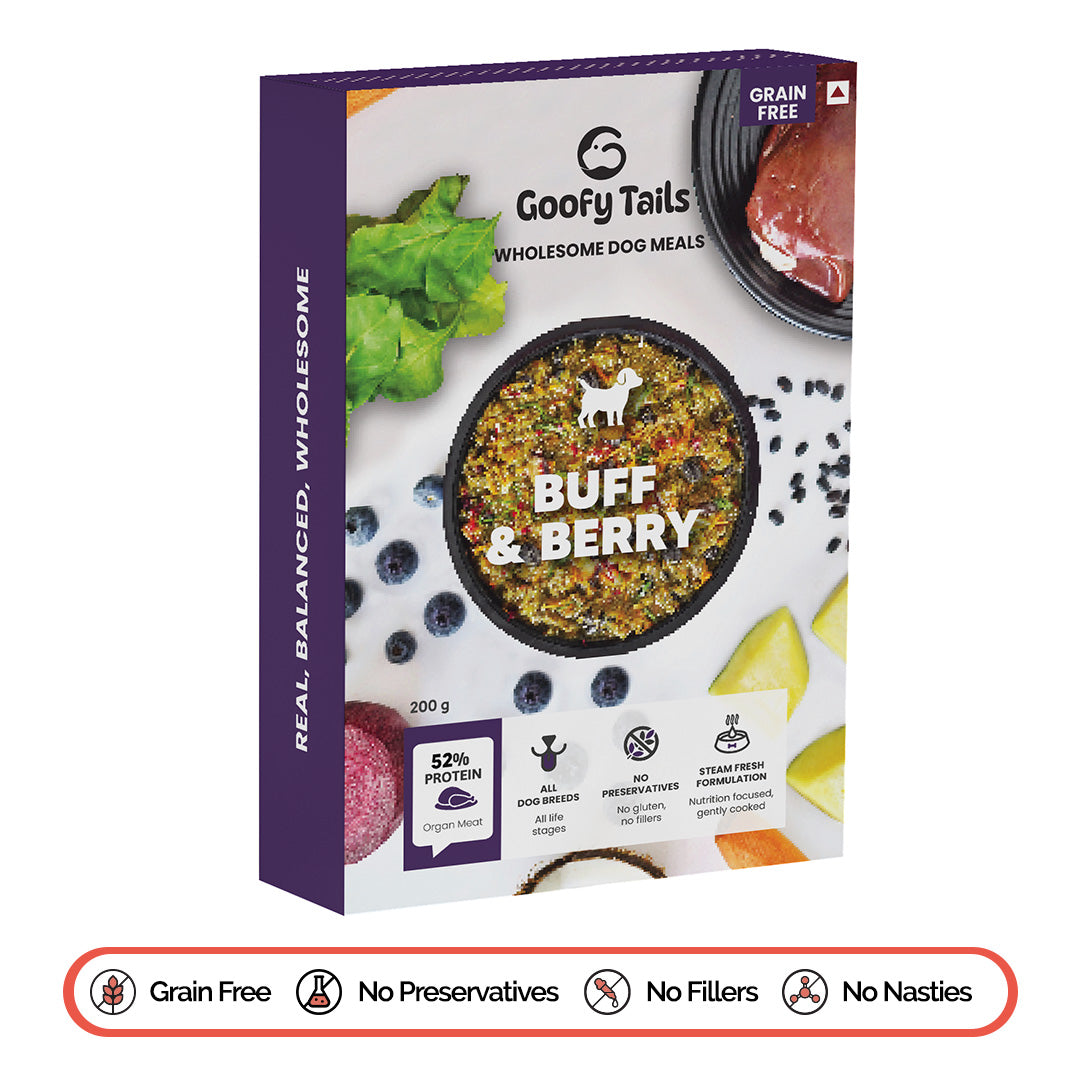
"As a Vet I recommend clean, honest and wholesome ingredients and an active lifestyle. Therefore, I trust and recommend Goofy Tails."Dr. Madhurita, President, Myvets Charitable Trust & Research Centre
4. Home-Cooked Meals for Your Great Dane
Home cooking for a Great Dane is entirely possible and offers full ingredient transparency - important for owners managing food sensitivities, growth-phase nutrition, or senior dietary needs. However, feeding a 70-90 kg dog from scratch requires genuine planning. See our guide to homemade grain-free dog food for a detailed framework.
A Balanced Home-Cooked Base Recipe (Per 70 kg Adult Great Dane)
| Ingredient | Quantity (per meal) | Purpose |
|---|---|---|
| Chicken breast or buffalo (boneless, boiled) | 300-380 g | Complete lean protein, muscle maintenance |
| Pumpkin (boiled or steamed) | 80-100 g | Low-fermentation fibre - critical for bloat prevention and gut health |
| Sweet potato (boiled) | 60-80 g | Slow-release complex carbohydrate, beta-carotene, and potassium |
| Carrot (raw, grated or boiled) | 40 g | Beta-carotene, natural fibre, dental-friendly crunch |
| Whole eggs (boiled) | 2 eggs | Complete protein, biotin, healthy fat |
| Spinach or leafy greens | 30 g | Iron, folate, antioxidant vitamins |
| Hemp seed oil or coconut oil | 1.5 tsp | Omega-3/6, skin and coat, anti-inflammatory support |
| Bone broth (as a liquid base) | 100-150 ml | Collagen, glycine, passive hydration, palatability |
Safe Human Foods to Add as Toppers
- Watermelon (seedless) - hydrating, low-calorie; excellent for Indian summer months
- Boiled sweet potato - complex carbs, beta-carotene, slow-release energy; gentler on the gut than white potato
- Plain boiled chicken liver (small amounts, max 3x/week) - nutrient-dense, iron and B12-rich
- Cucumber slices - high water content, low-calorie, cooling post-exercise treat
- Banana (small pieces) - potassium, natural energy boost after exercise
- Plain curd/yogurt (small amounts) - natural probiotics; beneficial for digestive regularity
5. Hydration and Bone Broth: Essential for the Great Dane

A 70 kg adult Great Dane requires approximately 2.5-3.5 litres of water per day, rising significantly after exercise or in Indian summer heat. Read the complete guide to hydration in dogs for a full breakdown of how to meet your dog's daily fluid needs. For summer-specific care, see our guide to looking after dogs during Indian summers.
Why Bone Broth Is Particularly Valuable for Great Danes
Bone broth delivers passive hydration, collagen for joint tissue repair and gut lining support, and glycine, which has a documented anti-inflammatory effect. For Great Danes, whose joints are under extraordinary mechanical stress, the collagen and glycine in slow-cooked bone broth represent a daily functional food investment. Pour 100-150ml of warm over every meal.


💧 Hydration Tip: Frozen Broth Enrichment in Indian Summer
In India's peak summer months (April-June), dilute Goofy Tails Bone Broth 50/50 with water and freeze in large silicone moulds. Give your Great Dane 2-3 frozen broth blocks as afternoon enrichment. It delivers passive hydration, keeps your Dane occupied during the hottest part of the day, and provides collagen passively. Great Danes are heat-sensitive, given their size - frozen enrichment is one of the most practical summer management tools available.
Shop All Bone Broths →6. The Right Treats for Great Danes
At 70-90 kg, a Great Dane's treat calorie budget is not as large as owners expect. The 10% rule still applies: for an adult eating 3,000 kcal/day, that's 300 kcal in treats. Choose high-value treats that can be used in small quantities without excessive calories. Treats should also be low-fermentation - avoid starchy biscuit treats that add to the daily fermentable load in a bloat-prone breed.


7. Supplements: Targeted Support for a Healthy Great Dane
Given the Great Dane's extreme size, very high predisposition to joint disease, and one of the shortest lifespans of any breed, proactive supplementation is not optional - it is one of the most impactful decisions you can make for your Dane's quality of life and longevity. See our guide to caring for dogs with mobility issues to understand how early intervention changes outcomes. Canine Mobility+ should be started by 18 months, earlier for fast-growing, heavy individuals.

Why Canine Mobility+ is essential for Great Danes:
- Glucosamine helps maintain healthy cartilage, supports joint lubrication, and reduces stiffness. For a dog carrying 70-90 kg on joints under extraordinary daily mechanical stress, glucosamine is a true dietary necessity. Start before signs of stiffness appear - by 18 months.
- Chondroitin works synergistically with glucosamine to support mobility and flexibility. The combination is more effective than either compound alone - meaningfully important for a breed where joint deterioration often begins silently years before visible lameness.
- Collagen Peptides provide structural building blocks for joint cartilage, connective tissue, and gut lining integrity. Great Danes' connective tissue is under continuous high-load stress; collagen supplementation supports both repair and maintenance, particularly through the rapid growth phase (6-18 months).
- Curcuminoids from turmeric extract reduce chronic low-grade joint inflammation. For Great Danes - a breed that often lives with subclinical joint inflammation for years before it becomes clinically apparent - daily curcumin reduces the inflammatory burden that accelerates cartilage breakdown. Particularly valuable from middle age (4+ years).
8. Can Great Danes Eat a Vegetarian Diet?
If your household is vegetarian and you prefer a plant-based option for occasional rotation, Goofy Tails offers one carefully formulated vegetarian meal. It is best used as a 1-2 day per week rotation alongside meat-based meals, never as the primary diet for this breed.

If used as an occasional rotation, ensure your Great Dane's weekly diet also includes:
- Adequate meat-based protein on 5-6 days per week minimum - Great Danes cannot meet their taurine, L-carnitine, and complete amino acid requirements from plant proteins alone. The risk of DCM in this breed makes meat-based protein non-negotiable as the dietary foundation.
- Canine Mobility+ daily - provides the glucosamine, collagen, and curcumin joint support this breed requires regardless of meal base. Do not skip supplementation on vegetarian meal days.
- Bone broth daily - even on vegetarian meal days, bone broth provides collagen, glycine, and passive hydration that support joint and gut health, closing the nutritional gap from the plant-based meal.
- Veterinary monitoring of cardiac health - if feeding any grain-free legume-heavy diet regularly to a Great Dane, ask your vet to check cardiac function annually given the breed's baseline DCM risk.
9. Frequently Asked Questions
Q: How much should I feed my adult Great Dane?
A typical adult Great Dane (50-90 kg) requires approximately 2,500-3,500 kcal per day, depending on activity level, age, and sex. For Goofy Tails wet food at roughly 150-180 kcal per 200g pack, a 70 kg active adult will need 5-7 packs per day across 2-3 meals, alongside toppers and treats. Always split intake across at least two meals - never one large meal - to reduce bloat risk. Adjust based on monthly body condition assessment: you should be able to feel the ribs with light pressure but not see them.
Q: What is the single most important dietary rule for Great Danes?
Never feed one large meal per day. Bloat (GDV) is the leading cause of death in this breed, and the risk is directly influenced by meal size, meal frequency, exercise timing, and food type. Always split daily intake across at minimum two meals, never exercise within 60-90 minutes of a meal, choose wet food over dry kibble, and avoid high-fat, rapidly fermenting ingredients. Ask your vet about prophylactic gastropexy at the time of neutering - this surgical procedure reduces GDV mortality risk by over 90% and is strongly recommended for all Great Danes. Read the complete guide to bloat in dogs.
Q: Do Great Danes need joint supplements?
Yes - and earlier than most owners expect. The mechanical stress on a 70-90 kg dog's joints is extraordinary, and Great Danes are at high lifetime risk of hip and elbow dysplasia. Subclinical joint damage begins years before it manifests as visible lameness. Proactive joint supplementation with Canine Mobility+ should begin by 18 months of age - earlier for heavier individuals. By the time a Great Dane is showing visible stiffness, significant cartilage damage has usually already occurred. Early intervention with glucosamine, chondroitin, collagen, and curcuminoids extends the period of comfortable, pain-free movement and meaningfully improves quality of life. Read more about hip and elbow dysplasia in dogs.
Q: Is grain-free food better for Great Danes?
For most Great Danes, yes - with one important caveat. Grain-free food has a lower fermentation rate in the stomach than starch-heavy kibble, which is directly relevant for bloat prevention. However, there is a DCM concern associated specifically with grain-free diets high in legumes (peas, lentils) - a condition Great Danes are already predisposed to, independently of diet. Choose grain-free foods where the carbohydrate base is vegetables (pumpkin, sweet potato) rather than legumes, and have your vet check cardiac function annually. Goofy Tails' grain-free meals use pumpkin and sweet potato as their carbohydrate base, avoiding the legume-heavy formulations associated with DCM concerns. Read more about grain-free food for sensitive stomachs.
Q: How do I feed a Great Dane puppy correctly?
Great Dane puppies are among the most nutritionally sensitive puppies of any breed. Overfeeding during the growth phase (2-18 months) causes the rapid bone growth that leads to HOD, panosteitis, and wobbler syndrome. Feed for lean, steady growth - not maximum growth. Divide meals across 3-4 small portions daily. Avoid supplementing with extra calcium during puppyhood - excess calcium disrupts the phosphorus-calcium balance and accelerates skeletal problems in giant breed puppies. Monitor body weight weekly in the first 12 months. For context on managing giant breed puppies alongside their peers, see our guide to the 30 largest dog breeds.
Q: How do I manage a Great Dane's diet during the Indian summer?
Great Danes are heat-sensitive: their large body mass generates and retains heat. In India's peak summer (April-June), caloric needs may drop by 10-15% as activity decreases, but fluid needs increase significantly. Prioritise wet food and bone broth to ensure passive hydration. Freeze bone broth into enrichment blocks for afternoon cooling. Walk only in the early morning (before 7:30 AM) and after sunset. Keep indoor spaces cool with fans or air conditioning. Monitor for lethargy, excessive panting, or reduced appetite - all early signs of heat stress. See our dedicated guide on caring for dogs during Indian summers.
Q: What are the best treats for training a Great Dane?
Great Danes are gentle, moderately food-motivated dogs who respond well to training without requiring very high-frequency treat delivery. Goofy Tails Freeze Dried Chicken Liver Cubes are the ideal training reward - intensely palatable, only 2g fat per serving, grain-free, and easy to break into small pieces. Active Dental Sticks (Seaweed) serve as the daily end-of-session reward that simultaneously maintains oral health. Avoid large biscuit-format treats that deliver excess carbohydrates and fermentable starch - particularly relevant for bloat-prone breeds where you want total daily fermentation load to remain low.
Q: How do I care for a senior Great Dane's diet?
Great Danes are considered senior from around 5-6 years. Senior nutritional management requires: maintaining protein intake to prevent muscle wasting (do not reduce protein unless there is confirmed kidney disease with veterinary guidance); increasing meal frequency to 3 small meals; ramping up joint supplementation; ensuring bone broth daily for collagen, glycine, and passive hydration; and monitoring body weight monthly. Read the complete guide to caring for your ageing dog.
Q: Where can I buy Goofy Tails products for my Great Dane?
Goofy Tails wet food meals are available for quick delivery across India on Blinkit (same-day in select cities), Swiggy Instamart, Zepto, BigBasket, Amazon India, and Supertails. For the complete Great Dane care range - Canine Mobility+, Chicken Bone Broth, Lamb Bone Broth, Active Dental Sticks, and Freeze Dried Chicken Liver Cubes - visit goofytails.com directly.
10. The Giant Breed Family: Meet the Great Dane's Companions
The Great Dane shares its place in the giant breed group with some of the most impressive dogs in the world. All breed profiles are available on the Goofy Tails Dog Breed Wiki → For a broader guide, see our guide to the 30 largest dog breeds.


Conclusion: Feed Your Great Dane Like the Giant They Are

The Great Dane is one of the most extraordinary dogs you can share your life with - gentle, majestic, deeply bonded, and breathtakingly beautiful. Their short lives demand that every year counts. The diet decisions you make from puppyhood onward determine whether your Dane's joints hold up through their working years, whether bloat cuts a life short, whether their senior years are comfortable and active, or shadowed by pain and immobility. Get it right, and you give a Great Dane the platform for a decade of vibrant, healthy companionship.
- Feed grain-free, high-moisture wet food as the daily foundation - Chicken & Herbs and Buff & Berry are the primary meals
- Split every day's intake across 2-3 meals minimum - never one large meal
- Never exercise within 60-90 minutes before or after meals
- Add Chicken or Lamb Bone Broth daily for hydration, collagen, and gut support
- Start Canine Mobility+ by 18 months for proactive joint protection
- Use Freeze Dried Chicken Liver as the training treat - high value, low fat
- Use Active Dental Sticks daily after the evening meal for oral health
- Ask your vet about prophylactic gastropexy at the time of neutering
- Monitor body condition monthly - lean and muscular is correct for Great Danes
- If cooking at home, always supplement to close calcium, glucosamine, and micronutrient gaps
- Never feed one large meal - bloat is the leading cause of Great Dane death and this is the single most important preventive measure
- Never use raised food bowls - current evidence associates them with increased bloat risk in giant breeds
- Never overfeed during puppyhood - rapid growth causes the skeletal damage that shortens Great Dane lives
- Never feed onion, garlic, grapes, chocolate, or any salted or spiced human food
🐾 Start Your Great Dane's Nutrition Journey with Goofy Tails
Human-grade, preservative-free, FSSAI-compliant, and vet-formulated. Wet meals, grain-free options, bone broth, joint supplements, dental treats, and freeze-dried training rewards - everything your Great Dane needs to thrive at every life stage.
Shop Great Dane Essentials →
Leave a comment