



Cavachon

Breed History:
The Cavachon is a designer companion breed that originated in the United States during the late 1990s. It was developed by crossing the Cavalier King Charles Spaniel with the Bichon Frise to combine the Cavalier's affectionate temperament with the Bichon's cheerful personality and low-shedding coat. Breeders aimed to create a small, adaptable family dog that was friendly, intelligent, and well-suited to modern households.
Since its introduction, the Cavachon has gained popularity for its gentle nature, charming appearance, and compatibility with children, seniors, and other pets. Although not recognised as a purebred by major kennel clubs, it is widely appreciated as a devoted companion dog.
Today, the Cavachon is admired as a loving family companion known for its affectionate personality, intelligence, and adaptable nature.
If you want to learn about other mixed breeds, check out our page "Different Types of Mixed Dog Breeds".
|
Gender |
Height |
Weight |
|
Male |
30–33 cm |
6-9 kg |
|
Female |
28–31 cm |
5-8 kg |
Size – Small
Life Expectancy: 12–15 years

Breed Appearance:
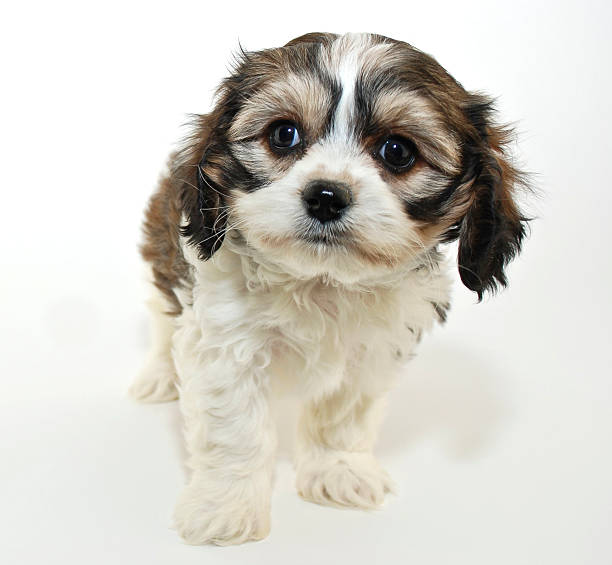
The Cavachon is a compact, well-balanced dog with a soft, elegant appearance.
The breed commonly features:
- Rounded head
- Medium-length muzzle
- Large, dark, expressive eyes
- Long, pendant ears
- Compact chest
- Moderately long neck
- Straight, well-developed limbs
- Plumed tail carried over the back or level
Its soft, medium-length coat may be straight, wavy, or lightly curled depending on the individual dog.
Common coat colours include:
- White
- White and apricot
- White and tan
- White and sable
- Tricolour
- Cream
The breed's fluffy coat and expressive face reflect the traits inherited from both parent breeds.
Breed Type – Companion Dog:
The Cavachon is an affectionate, intelligent, and gentle companion breed.
It is known for being:
- Loyal
- Affectionate
- Friendly
- Intelligent
- Playful
- Gentle
The breed forms exceptionally strong bonds with its family and is generally excellent with children, seniors, strangers, and other pets when properly socialised.

Training:
The Cavachon is intelligent and eager to please.
Training should focus on:
- Early socialisation
- Positive reinforcement methods
- Basic obedience training
- House training
- Recall training
- Leash manners
The breed excels in:
- Obedience
- Rally
- Agility
- Trick training
- Therapy work
- Companion activities
Structured, reward-based training helps the breed become a confident and well-mannered companion.
Health & Care:
The Cavachon is generally healthy but may inherit conditions seen in either parent breed, including:
- Hip dysplasia
- Allergies
- Progressive retinal atrophy
- Cataracts
- Mitral valve disease
- Patellar luxation
Routine veterinary care, responsible breeding, regular exercise, and maintaining a healthy weight help support long-term health.
Living Conditions:
The Cavachon adapts well to a variety of living environments provided it receives regular companionship and moderate daily exercise.
Ideal environments include:
- Apartments
- Houses
- Urban or suburban homes
- Families
- Seniors
- First-time dog owners
The breed prefers living indoors with its family and is not suited to prolonged isolation.
Exercise:
The Cavachon has moderate exercise requirements.
Recommended activities include:
- Daily walks
- Interactive play
- Puzzle toys
- Basic obedience training
- Short games of fetch
- Mental enrichment activities
Regular physical activity and mental stimulation help maintain the breed's physical and emotional well-being.
Grooming:
The soft coat requires moderate maintenance.
- Brushing three to four times per week
- Professional grooming every six to eight weeks
- Occasional bathing
- Routine ear cleaning and nail trimming
- Regular dental care
The breed sheds lightly, though coat type can vary depending on genetics.
