



Best Food for Golden Retrievers: Best Wet Food and Broths for Golden Retrievers
India's complete nutrition guide for Golden Retrievers: covering the perfect meal composition, wet food choices, home-cooked options, hydration, treats, supplements, and everything a healthy Golden needs at every life stage.
If you share your home with a Golden Retriever, you already know the combination: relentless warmth, an instinct to make every person in the room feel loved, and a profound enthusiasm for food that never really diminishes with age. That gentle temperament and food motivation make Goldens one of the most rewarding dogs to care for, but they also mean that what goes in the bowl matters enormously. The right diet protects against the joint disease and obesity that threaten this breed's longevity. The wrong diet accelerates both.
This guide covers everything you need to know about feeding your Golden Retriever in India: from understanding the breed's specific nutritional needs to practical meal planning, home-cooked recipes, the best Goofy Tails products for Goldens, and honest answers to every common question Indian pet parents ask.
1. The Golden Retriever: India's Gentle Heart

The Golden Retriever was developed in the Scottish Highlands in the mid-19th century by Sir Dudley Marjoribanks, later Lord Tweedmouth, who systematically crossed flat-coated retrievers with the now-extinct Tweed Water Spaniel, Irish Setters, and Bloodhounds to create the ideal gundog: one that could retrieve game gently from both land and water, work all day in Scotland's rugged terrain, and remain calm and biddable in the field. The breed was recognised by The Kennel Club of England in 1911 and rapidly spread across the world.
In India, the Golden has become one of the most popular family breeds, prized for their patience with children, their trainability, and their adaptability to Indian urban living. Indian Goldens tend to run large, with males often reaching 30 to 34 kg, and the breed's thick double coat makes India's heat a significant management challenge year-round. Their naturally high food drive, combined with a predisposition toward joint disease and cancer, makes diet one of the most important levers a Golden owner has. For Indian Goldens in cities with high pollution levels, see our guide on how air pollution affects dogs and what you can do to help.
| Breed Fact | Detail |
|---|---|
| Origin | Scotland (developed by Lord Tweedmouth, 1860s) |
| Size | Large: 29 to 34 kg (male), 25 to 29 kg (female) |
| Coat | Dense, water-repellent double coat; flat or wavy; feathering on chest, legs, tail |
| Colours | Rich golden to cream; darker gold shades most common in India |
| Lifespan | 10 to 12 years |
| Energy Level | High (especially 0 to 3 years); remains playful well into adulthood |
| Key Health Concerns | Hip and elbow dysplasia, obesity, cancer (notably lymphoma and hemangiosarcoma), heart disease, skin allergies and dermatitis |
| Temperament | Gentle, intelligent, food-motivated, eager to please, affectionate, patient |
2. What the Perfect Golden Retriever Meal Looks Like
Golden Retrievers are large, active dogs with nutritional requirements shaped by their size, their dense coat, and their breed-specific health vulnerabilities, particularly their high predisposition to joint disease and cancer. A Golden's ideal diet is meaningfully different from what works for smaller or less health-burdened breeds. Here is what every Golden meal should deliver.
The 5 Pillars of a Golden-Optimised Diet
| Nutrient Pillar | Why Goldens Need It | What to Look For |
|---|---|---|
| High-Quality Protein (min. 25 to 30%) | Supports Goldens' naturally muscular build; maintains lean mass as they age; fuels their active lifestyle | Named whole meat first (chicken breast, lamb, eggs), not "meat meal" or unnamed by-products |
| Controlled Fat (12 to 18%) | Goldens gain weight readily; excess dietary fat is a primary driver of obesity in the breed, worsening joint load and cancer risk. Read the complete guide to managing obesity in dogs. | Lean proteins (chicken, fish); healthy fats from coconut oil, hemp, or omega-3 sources |
| Joint-Supporting Nutrients | Hip and elbow dysplasia affect a significant proportion of Goldens; proactive joint nutrition from puppyhood is essential | Glucosamine, chondroitin, collagen, omega-3 fatty acids (EPA/DHA); bone broth as a natural collagen source |
| High Moisture Content | India's heat places Goldens at real risk of chronic dehydration; dry kibble at 6 to 10% moisture cannot meet hydration needs in Indian summers | Wet food at 75 to 80% moisture; bone broth topper daily; fresh water always available |
| Antioxidant-Rich Ingredients | Goldens have one of the highest cancer rates of any breed; dietary antioxidants (beta-carotene, curcumin, mixed berries) support immune surveillance and reduce oxidative damage | Pumpkin, carrot, spinach, turmeric curcumin; hemp seeds for omega-3 anti-inflammatory support |
Calorie Guide for Goldens by Life Stage
| Life Stage | Weight Range | Daily Calories (Active) | Feeding Frequency |
|---|---|---|---|
| Puppy (2 to 6 months) | 5 to 15 kg | 700 to 1,200 kcal | 3 to 4 meals/day |
| Puppy (6 to 12 months) | 15 to 25 kg | 1,200 to 1,600 kcal | 2 to 3 meals/day |
| Adult (1 to 7 years) | 25 to 34 kg | 1,400 to 1,800 kcal | 2 meals/day |
| Senior (7+ years) | 24 to 32 kg | 1,200 to 1,500 kcal | 2 meals/day (smaller portions) |
3. Goofy Tails Wet Meals: The Best Food for Golden Retrievers

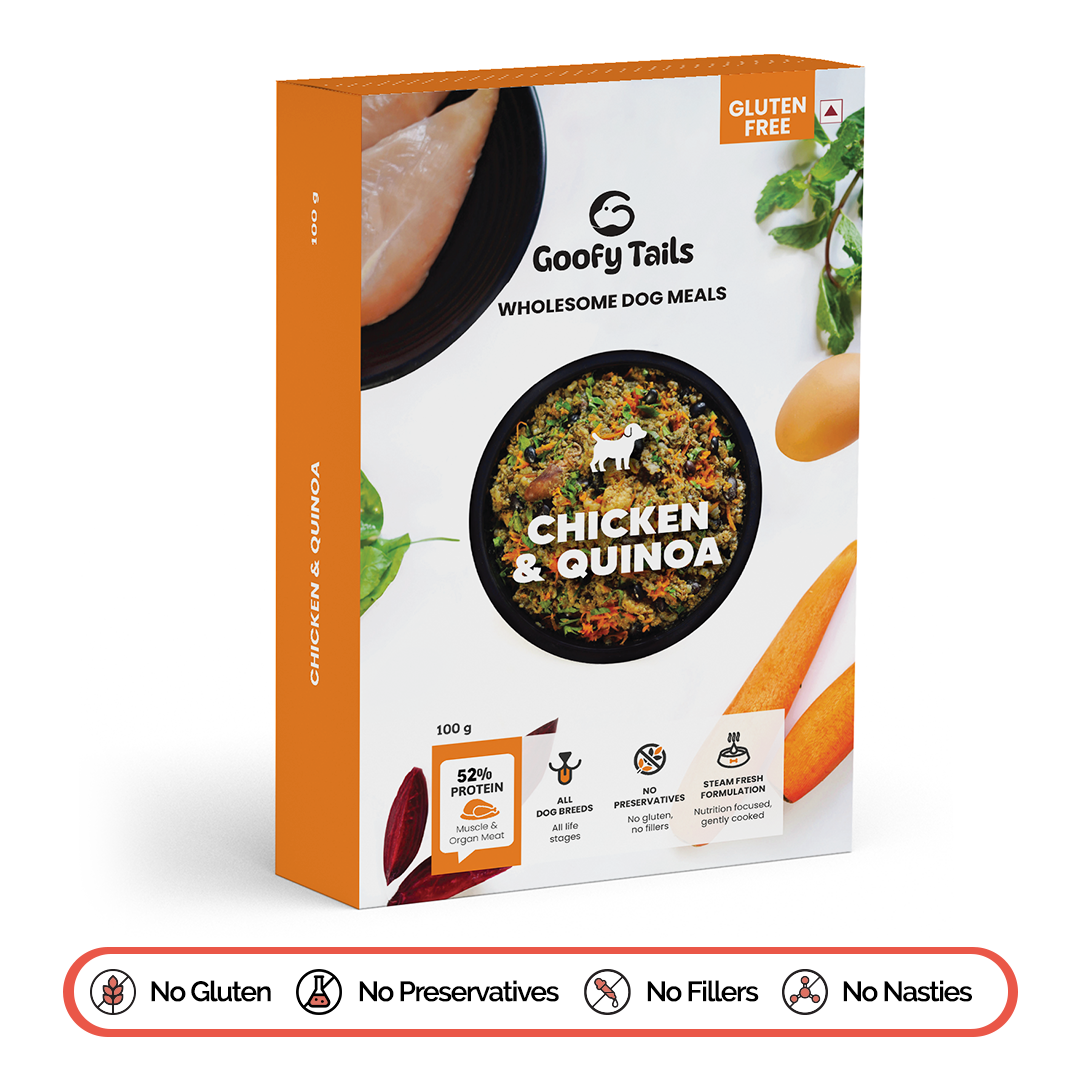
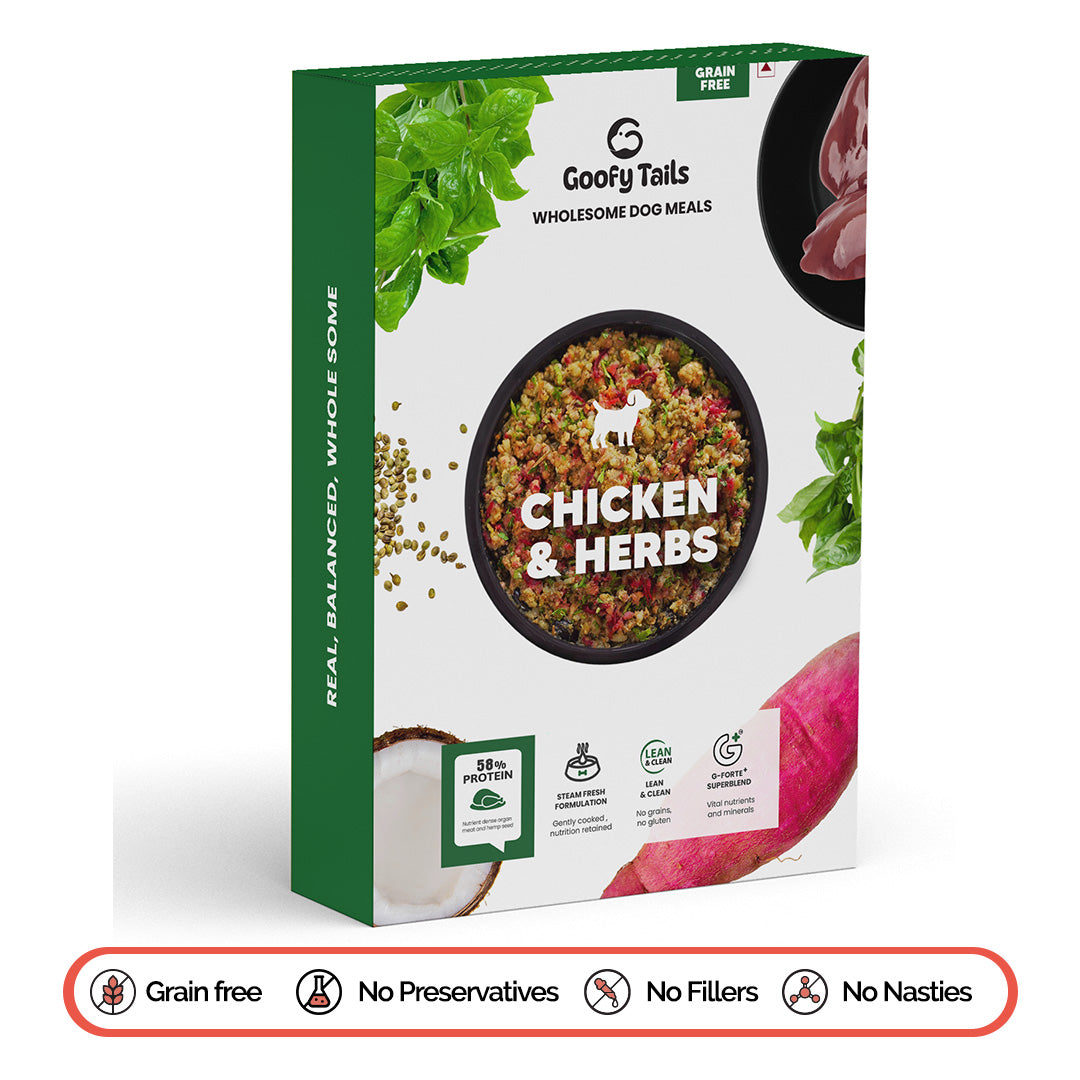
Every Goofy Tails wholesome wet meal is made with 75 to 80% natural moisture, real whole-meat protein, and no artificial preservatives or fillers. For Golden Retrievers, this format is not just convenient. It is genuinely superior to dry kibble in every way that matters for this breed. The high moisture content addresses India's chronic dehydration challenge, the lean protein profile supports weight management, the natural antioxidant-rich ingredients provide meaningful immune support, and the complete absence of filler starches and synthetic additives removes a significant source of dietary inflammation. For more on choosing the right format, see our guides on grain-free food for skin and coat health and the science behind grain-free dog food.
Among the full range, two meals stand out as particularly well-suited for Golden Retrievers:
"As a Vet I recommend clean, honest and wholesome ingredients and an active lifestyle. Therefore, I trust and recommend Goofy Tails."Dr. Madhurita, President, Myvets Charitable Trust & Research Centre
4. Home-Cooked Meals for Your Golden Retriever
Home cooking for your Golden is an excellent way to ensure ingredient transparency and cater to specific sensitivities, but it requires genuine nutritional planning. Goldens are large, active dogs with significant protein, fat, and micronutrient requirements. A poorly balanced home-cooked diet can lead to deficiencies just as damaging as a poor commercial diet, and for a breed already at elevated cancer risk, nutritional gaps matter more, not less. See our detailed guide to homemade grain-free dog food for a complete framework.
A Simple Balanced Home-Cooked Base Recipe (Per 30 kg Adult Golden)
| Ingredient | Quantity (per meal) | Purpose |
|---|---|---|
| Chicken breast (boiled, boneless) | 150 to 180 g | Lean complete protein |
| Brown rice or quinoa (cooked) | 60 to 80 g | Complex carbohydrate, sustained energy |
| Pumpkin (boiled or steamed) | 50 g | Fibre, digestion, beta-carotene antioxidants |
| Carrot (raw grated or boiled) | 30 g | Beta-carotene, immune support, crunchy fibre |
| Spinach or leafy greens | 20 g | Iron, folate, vitamins, antioxidants |
| Whole egg (boiled) | 1 egg | Complete protein, biotin, healthy fat |
| Coconut oil or hemp seed oil | 1 tsp | Healthy fat, Omega-3/6 balance, coat support |
Safe Human Foods to Add as Toppers
- Watermelon (seedless): hydrating, low calorie; ideal in Indian summers
- Boiled sweet potato: complex carbs, beta-carotene, gut fibre
- Plain boiled chicken liver (small amounts): nutrient-dense, iron-rich, Goldens love it
- Cucumber slices: high water content, excellent low-calorie cool-down snack
- Plain curd / yogurt (small amounts): probiotics, cooling, well-tolerated by most Goldens
- Banana (small pieces): potassium, energy boost post-exercise
- Blueberries: one of the best antioxidant toppers for cancer-prone breeds; safe in small amounts
5. Hydration and Bone Broth: Essential for Golden Retrievers in India

Golden Retrievers are large dogs with a thick double coat, and India's climate makes hydration a year-round management challenge. A 30 kg adult Golden requires approximately 1.5 to 2 litres of water per day under normal conditions, rising to 2 to 2.5 litres during Indian summers or after vigorous exercise. Dogs fed primarily on dry kibble are in a state of chronic mild dehydration, which over time contributes to kidney strain, urinary tract infections, and systemic inflammation, all of which worsen outcomes for a breed already at elevated health risk. For Indian Goldens in high-pollution urban environments, adequate hydration also supports the body's ability to flush airborne irritants that accumulate in the respiratory system. See our guide on how air pollution affects dogs in Indian cities.
Why Bone Broth Is Non-Negotiable for Goldens
Bone broth is one of the highest-impact daily additions you can make to a Golden's diet. It delivers fluid intake passively (even reluctant drinkers rarely refuse warm broth), contributes collagen and glycine for joint tissue repair and gut lining integrity, and provides natural anti-inflammatory compounds that complement the antioxidant profile Goldens need. For Goldens in Indian summers, freezing diluted bone broth into ice cubes creates an enriching, cooling afternoon treat that simultaneously addresses hydration and joint health.


💧 Hydration Tip: The Daily Broth Bowl
Pour one Goofy Tails Chicken Bone Broth pack (100ml) warm over your Golden's meal once daily. This delivers approximately 90 to 95ml of additional fluid passively, contributes natural collagen for joint tissue support, and makes any meal dramatically more appealing. For Goldens in Indian summers, freeze diluted bone broth into ice cube trays and offer as an afternoon enrichment treat.
Shop Chicken Bone Broth →6. The Right Treats for Golden Retrievers
Goldens are highly treat-motivated, which makes them a joy to train but also means treats can silently contribute a significant proportion of daily calories. The rule is firm: treats should account for no more than 10% of total daily calorie intake. For a 30 kg adult Golden eating 1,600 kcal/day, that is approximately 160 kcal in treats. Choose wisely, choose deliberately.


7. Supplements: Targeted Support for a Healthy Golden
Given Goldens' significant predisposition to hip and elbow dysplasia, proactive joint supplementation is one of the most evidence-backed investments you can make in your dog's long-term quality of life. Mobility decline in Goldens is often accompanied by reduced activity, which in turn accelerates weight gain and worsens joint load, a cycle that Canine Mobility+ helps interrupt from the start. For Goldens with progressive mobility concerns, see our guide on degenerative myelopathy and how it affects dogs. Canine Mobility+ is purpose-built for exactly this, and for a breed like the Golden Retriever, starting early matters.

Why Canine Mobility+ is the #1 supplement for Golden Retrievers:
- Glucosamine is a key compound that helps maintain healthy cartilage, supports joint lubrication, and reduces stiffness. For Goldens, who carry significant genetic risk for hip and elbow dysplasia, starting glucosamine supplementation by age 3 to 4 (before clinical symptoms appear) provides meaningful preventive benefit to joint cartilage integrity and synovial fluid quality.
- Chondroitin inhibits the cartilage-degrading enzymes that accelerate joint deterioration. It improves mobility and flexibility, and works synergistically with glucosamine for a combined effect greater than either alone, which is important for a breed where joint degeneration, once started, progresses steadily.
- Collagen Peptides provide the structural building blocks for joint cartilage, connective tissue, and gut lining integrity. For Golden Retrievers, who are large-framed dogs placing consistent load on their joints across 10 to 12 years of life, daily collagen supplementation supports the ongoing repair and regeneration that prevents cumulative damage.
- Turmeric Curcumin targets the cytokine pathways that drive chronic joint inflammation. For Goldens, a breed predisposed not only to joint disease but to systemic inflammatory conditions, curcumin's natural anti-inflammatory action is particularly valuable, reducing pain, slowing cartilage degradation, and contributing to overall immune resilience.
8. Can Golden Retrievers Eat a Vegetarian Diet?
If your household is vegetarian and you prefer a plant-based option for your dog, Goofy Tails offers one carefully formulated choice. Here is what it delivers, and what a complete vegetarian diet for a Golden must always include:

What a complete vegetarian diet for a Golden must always include:
- Complete plant protein sources: paneer and yellow lentils together provide a broad amino acid profile, but taurine and L-carnitine (found naturally in meat) must be monitored and supplemented if feeding fully vegetarian long-term; this is especially important for Goldens given the breed's cardiac risk profile.
- Pumpkin (daily): rich in soluble and insoluble fibre for gut health, beta-carotene for immune and antioxidant support, and natural moisture for kidney function. One of the most important vegetables for any vegetarian Golden diet.
- Hemp seeds or flaxseed (daily): the primary plant-based Omega-3 source (ALA); essential for skin, coat, and reducing the systemic inflammation that Goldens are predisposed to. This meal includes both hemp seeds and flaxseed for meaningful daily dosing.
- Quinoa over rice: quinoa is a complete protein containing all essential amino acids, making it significantly superior to plain rice as a carbohydrate base in any vegetarian dog diet, and particularly important for a large breed with high protein requirements.
- Sweet potato: complex carbohydrate rich in beta-carotene, potassium, and gut fibre. Lower glycaemic index than white potato, helping manage the Golden's inherent weight gain tendency even on a plant-based diet.
9. Frequently Asked Questions
Q: How much should I feed my adult Golden Retriever?
A typical adult Golden (25 to 34 kg) requires approximately 1,400 to 1,800 kcal per day depending on activity level. For Goofy Tails wet food, 2 to 3 packs of 200g per day (split across two meals, with bone broth as a daily topper) provides a strong nutritional foundation. Always adjust based on your dog's body condition score: you should be able to feel the ribs easily but not see them. Goldens are prone to obesity, so regular weigh-ins every 4 to 6 weeks are recommended regardless of age. Read the complete guide to managing obesity in dogs.
Q: Is wet food better than dry kibble for Golden Retrievers?
Yes, significantly, and particularly in the Indian context. Wet food delivers 75 to 80% moisture versus kibble's 6 to 10%, directly addressing the chronic dehydration risk that affects large breeds in India's climate. Wet food is more digestible, delivers higher bioavailable protein, and carries a fraction of the starch and carbohydrate load that makes kibble-fed Goldens more prone to weight gain and systemic inflammation. For a breed predisposed to cancer, joint disease, and cardiac conditions, removing ultra-processed filler ingredients from the daily diet is a meaningful long-term health decision. If you do feed kibble, always add water or bone broth to every single meal. For more on how grain-free wet food benefits sensitive Goldens, see our guide on grain-free food for sensitive stomachs.
Q: Do Golden Retrievers need joint supplements?
Yes. Goldens are one of the breeds most affected by hip and elbow dysplasia, and the joint damage begins well before any limping or stiffness becomes visible. Proactive joint supplementation starting by age 3 to 4 is one of the most impactful preventive health investments you can make. Goofy Tails Canine Mobility+ provides a comprehensive joint formula (glucosamine, chondroitin, collagen peptides, and turmeric curcumin) in a palatable liquid served over food. It is suitable from 3 months of age and is available exclusively on goofytails.com.
Q: What should I feed my Golden Retriever in the Indian summer?
In Indian summers (March through June), prioritise hydration above all else. Switch to Goofy Tails wet food as the primary diet if you have not already, and add Chicken Bone Broth over every meal. Freeze diluted bone broth into ice cubes for afternoon enrichment and cooling. Reduce exercise to early morning (before 8am) and late evening (after 7pm) when ambient temperatures are lower. Goldens with thick double coats are particularly vulnerable to heat stress; never shave the coat, as it also provides insulation from heat, but ensure regular brushing to remove the dense undercoat and improve airflow. For city-based Golden owners, air pollution adds a further health burden during summer months, and high moisture diets help support the body's natural detoxification pathways.
Q: How do I manage my Golden Retriever's weight?
Weight management in Goldens begins with honest portion control. Measure every meal by weight, not by volume. Choose high-protein, lower-fat meals: Chicken and Quinoa (52% protein) and Chicken and Herbs (58% protein, grain-free) are the right primary meals for weight-conscious Goldens. Feed to your dog's ideal body weight, not their current weight. Use only low-calorie treats: Freeze Dried Chicken Liver Cubes (2g fat per serving) and cucumber slices are both excellent. Start Canine Mobility+ immediately if your Golden is overweight, as excess body weight accelerates joint damage that is already occurring. Obesity in Goldens is also a documented risk factor for diabetes in dogs, making long-term weight management a genuine life-extension strategy for this breed.
Q: Should I give my Golden Retriever chicken or lamb-based food?
Chicken is the preferred first choice for most Goldens: it is the leanest complete protein available, easily digestible, and the base of the two Golden-optimised Goofy Tails meals (Chicken and Quinoa and Chicken and Herbs). If your Golden shows signs of chicken sensitivity (persistent itching, loose stools, recurrent ear infections despite other management), switching to Lamb and Pumpkin or Lamb and Rosemary is a clean protein rotation. Adding Lamb Bone Broth alongside any meal provides additional collagen and hydration regardless of the primary protein choice. For a detailed breakdown of both proteins, see our guide on lamb vs chicken for dogs.
Q: What are the best treats for training a Golden Retriever?
High-value, low-calorie, small-format treats are ideal for Goldens in training. Goofy Tails Freeze Dried Chicken Liver Cubes are the top choice: intensely palatable, only 2g fat per serving, grain-free, and easy to break into small pieces for rapid-fire reward sequences. For daily dental maintenance, Active Dental Sticks (Seaweed) used after the evening meal provide a satisfying chew that simultaneously reduces tartar. Both treats are available on goofytails.com.
Q: Can Golden Retrievers eat home-cooked food exclusively?
Yes, but it requires careful planning. A home-cooked diet without supplementation is almost certainly deficient in calcium, zinc, vitamin D, and certain essential amino acids. If cooking from scratch, always add Canine Mobility+ for joint support and omega-3s, and consider Canine Vitality+ for the full micronutrient spectrum. Use the balanced base recipe in Section 4 of this guide as your foundation, and have your vet review the diet every 6 months. For more detail, see our complete guide to homemade grain-free dog food.
Q: Do Golden Retrievers get skin problems, and can diet help?
Yes, skin allergies, dermatitis, and recurring ear infections are among the most common non-joint health issues in Goldens. Diet is directly relevant: omega-3 deficiency from low-quality kibble is a documented driver of skin barrier dysfunction, and food allergens (wheat, soy, artificial additives) can trigger or worsen atopic reactions. Switching to a grain-free, whole-ingredient wet food like Goofy Tails Chicken and Herbs (with hemp seed as a natural omega-3 source) often produces visible coat and skin improvement within 4 to 6 weeks. For the full evidence on grain-free food for skin and coat health, see our dedicated guide.
Q: How do I transition my Golden from kibble to wet food?
Transition gradually over 7 to 10 days: 25% wet food mixed into kibble for days 1 to 3, 50/50 for days 4 to 6, 75% wet for days 7 to 9, then full wet food from day 10. This allows the digestive microbiome to adjust, minimising the risk of temporary loose stools during the change. Goldens typically make this transition very willingly because wet food is significantly more palatable. Add warm Chicken Bone Broth from day 1 of the transition to further encourage acceptance and support gut health during the changeover.
Q: What are the most common health problems in Golden Retrievers?
The most common health issues in Golden Retrievers are: hip and elbow dysplasia, obesity, cancer (lymphoma and hemangiosarcoma are the most frequently diagnosed), cardiac conditions, skin allergies and dermatitis, and ear infections. Diet addresses several of these directly: lean high-protein meals reduce obesity risk, antioxidant-rich ingredients support immune surveillance, omega-3 fatty acids reduce the systemic inflammation that drives both joint disease and cancer progression, and high moisture intake from wet food reduces kidney and urinary strain. For a broader overview, see our guide to common health problems in dogs.
Q: Where can I buy Goofy Tails products for my Golden Retriever?
Goofy Tails wet food meals are available for quick delivery across India on Blinkit (same-day in select cities), Swiggy Instamart, Zepto, BigBasket, Amazon India, and Supertails. For the complete Golden care range, including Canine Mobility+, Chicken Bone Broth, Lamb Bone Broth, Active Dental Sticks, and Freeze Dried Chicken Liver Cubes, visit goofytails.com directly. The Trial Pack (all 6 wet food flavours) is the ideal starting point to discover which meal your Golden loves most.
10. Other Retriever and Doodle Breeds: Meet the Family
The Golden Retriever sits at the heart of one of the most beloved breed families in the world. Its warmth and trainability have made it the foundation for beloved crossbreeds like the Goldendoodle and Labradoodle, and it shares a working heritage with the other retriever breeds. If you are curious about related breeds, or considering a second dog, here is your guide. All breed profiles are available in full on the Goofy Tails Dog Wiki →


Conclusion: Feed Your Golden Like the Champion They Are

The Golden Retriever is one of the most rewarding dogs to share your life with: warm, intelligent, endlessly affectionate, and deeply loyal. That golden temperament comes with a set of health vulnerabilities (joint disease, obesity, cancer, cardiac conditions) that make diet one of the most powerful tools you have for extending the quality and length of your Golden's life. Get the nutrition right and you give your dog the foundation for a decade or more of vibrant, active, joyful living. Feed a diet of ultra-processed filler and chronic dehydration and you chip away at that potential year by year.
The choices are clear. Real food, real moisture, real whole-meat protein, daily bone broth, proactive joint supplementation, and smart treat selection. That is what a Golden Retriever deserves, and that is exactly what Goofy Tails is built to deliver for Indian pet parents.
- Feed high-protein, controlled-fat, high-moisture meals: wet food is the gold standard for Goldens in India
- Use Chicken & Quinoa or Chicken & Herbs as the primary Goofy Tails meal for your Golden
- Add Chicken Bone Broth as a daily topper for hydration, collagen, and palatability
- Start Canine Mobility+ by age 3 to 4 for proactive joint protection, earlier for heavier dogs
- Use Freeze Dried Chicken Liver Cubes for training: high value, only 2g fat per serving
- Use Active Dental Sticks (Seaweed) daily after the evening meal to prevent tartar and maintain oral health
- If cooking at home, always supplement to fill the inevitable micronutrient gaps
- Weigh your Golden every 4 to 6 weeks and adjust portions based on body condition, not appetite
- Never free-feed a Golden Retriever: strict portion control is non-negotiable for this breed
- Never feed onion, garlic, grapes, chocolate, namkeen, chai, or any salted or spiced human food
- Never rely on dry kibble as the sole diet: chronic dehydration worsens every health risk this breed carries
- Never ignore early joint stiffness: early intervention with Canine Mobility+ changes long-term outcomes
🐾 Start Your Golden's Nutrition Journey with Goofy Tails
Human-grade, preservative-free, FSSAI-compliant, and vet-formulated. Wet meals, bone broth, joint supplements, dental treats, and freeze-dried training rewards: everything your Golden Retriever needs to thrive at every life stage. Rated 4.5/5 across 850+ reviews by Indian pet parents.
Shop Golden Essentials →
Leave a comment