



Best Food for Belgian Malinois: High Energy Dog Nutrition Guide for Best Wet Food
India's complete nutrition guide for Belgian Malinois -- covering the perfect high-energy meal composition, wet food choices, home-cooked options, hydration, treats, supplements, and everything a healthy Malinois needs at every life stage.
If you share your home with a Belgian Malinois, you already understand the paradox: one of the most physically and mentally demanding dogs in the world is also one of the most intensely loyal, deeply bonded, and singularly rewarding companions you can have. The Belgian Malinois is not a dog for the unprepared -- it is a dog for the committed. And that commitment starts in the bowl. A Malinois working at full capacity -- running, tracking, training, guarding -- burns energy at a rate that most owners significantly underestimate, and an inadequate diet shows up immediately in performance, coat condition, recovery time, and temperament.
This guide covers everything you need to know about feeding your Belgian Malinois in India: from understanding the breed's specific high-energy working-dog nutritional requirements to practical meal planning, home-cooked recipes, the best Goofy Tails products for a Malinois, and honest answers to every common question Indian pet parents ask. For context on how Malinois compare to other working and guardian breeds, see our guide to the top guard dog breeds in India. Understanding dog breed categories also helps place the Malinois within the broader herding and working group.
1. The Belgian Malinois: The World's Premier Working Dog

The Belgian Malinois is one of four varieties of Belgian Shepherd, taking its name from the city of Malines (Mechelen) in northern Belgium where it was developed in the late 19th century. Originally bred as a herding dog for Belgian sheep farms, the Malinois' extraordinary combination of speed, endurance, intelligence, and trainability rapidly made it the breed of choice for police forces, military units, and protection work across Europe -- a role it now holds globally. Belgian Malinois serve with military and police forces in over 50 countries, including as the breed behind the most celebrated special operations dogs in history.
In India, the Malinois is increasingly popular among serious working dog enthusiasts, protection sport competitors, and urban families who want the capability of a working dog within an apartment-friendly size. For a full breed profile, visit the Goofy Tails Belgian Malinois Breed Wiki. For context on common health problems in dogs and how working breed vulnerabilities differ from companion breeds, see our dedicated guide.
| Breed Fact | Detail |
|---|---|
| Origin | Belgium (Malines/Mechelen region; one of four Belgian Shepherd varieties) |
| Size | Medium to large -- 25 to 34 kg (male); 20 to 27 kg (female); 60 to 66 cm at the shoulder |
| Coat | Short, straight, weather-resistant double coat with dense undercoat; fawn to mahogany with black mask and ears |
| Colours | Fawn, mahogany, red -- all with characteristic black mask, black-tipped hairs, and black ears |
| Lifespan | 12 to 14 years -- healthy lifespan for a medium-large working breed |
| Energy Level | Extremely high -- among the highest of any breed; requires 2 or more hours of vigorous daily activity plus ongoing mental stimulation. An under-exercised Malinois is a destructive Malinois |
| Key Health Concerns | Hip and elbow dysplasia, bloat/GDV (deep-chested risk), skin conditions, epilepsy, progressive retinal atrophy (PRA), degenerative myelopathy, and overtraining injuries |
| Temperament | Alert, confident, highly intelligent, deeply loyal, intensely driven -- a true working partner that demands equal commitment from its handler |
2. What the Perfect Belgian Malinois Meal Looks Like
Feeding a Belgian Malinois is not simply a matter of feeding a medium-sized dog. A working Malinois operating at high intensity burns calories at a rate comparable to large breeds at full activity -- but in a compact, lean body that has almost no nutritional margin for error. Under-fuelled, a Malinois loses muscle condition, recovery slows, coat becomes dull, and behaviour deteriorates. Overweight, the same working joints that make this dog exceptional become chronically inflamed. Getting the diet precisely right matters more for this breed than for almost any other. Understanding the science behind dog food formulation is the foundation for every good decision.
The 5 Pillars of a Belgian Malinois-Optimised Diet
| Nutrient Pillar | Why Belgian Malinois Need It | What to Look For |
|---|---|---|
| High-Quality Protein (30 to 38%) | The Malinois' lean, dense musculature requires significantly more protein than companion breeds -- not just to build and maintain muscle, but to support the rapid tissue repair that follows daily high-intensity working activity. Protein also fuels the immune system and supports the coat renewal that a double-coated, active dog demands year-round. A working Malinois that is protein-deficient will show it in muscle wasting, slow recovery, and poor coat condition within weeks | Named whole meat first -- chicken liver, chicken breast, buffalo, eggs. Not "meat meal" or unnamed by-products. Chicken and Herbs at 58% protein (G-Forte+ superblend) is the primary high-demand meal; Buff and Berry at 52% protein with lean buffalo provides an excellent grain-free red-meat rotation. For a protein comparison, see our guide on lamb vs chicken for dogs. |
| Quality Fat (16 to 22%) for Sustained Energy | Dogs use fat as their primary fuel source for sustained aerobic activity. A Malinois working through a 2 to 3 hour training session relies on fat metabolism for endurance energy in a way that a Labrador on a 30-minute walk does not. The fat quality matters as much as the quantity: natural fats from whole meat, coconut oil, and omega-rich seeds provide clean, sustained energy with anti-inflammatory co-benefits -- very different from the rendered animal fats in lower-quality kibble | Natural fat from named sources: chicken skin, lamb, coconut oil, hemp seed, chia seeds. Omega-3 fatty acids specifically (EPA/DHA and ALA) for joint anti-inflammatory support under the daily mechanical load of working activity |
| Joint-Supporting Nutrients | A Malinois running, jumping, pivoting, and landing at full working intensity places repetitive high-impact load on joints that, over years, accumulates into the cartilage damage that leads to visible lameness. The breed's predisposition to hip and elbow dysplasia means this joint load falls on a system that is already starting at a disadvantage. Proactive joint nutrition is not optional for a working Malinois -- it is front-line health management | Glucosamine, chondroitin, collagen, omega-3. Bone broth as a daily collagen and glycine source. Canine Mobility+ started by 18 months of age -- earlier for intensively working individuals |
| High Moisture Content | A working Malinois loses fluid rapidly through exertion and panting -- particularly in India's heat. Adequate hydration is directly relevant to performance, recovery, and long-term kidney health. Dogs on dry kibble alone are chronically mildly dehydrated, and that deficit compounds over years into kidney strain that accelerates ageing in a breed expected to work well into its senior years | Wet food at 75 to 80% moisture as the primary diet. Bone broth daily. Always fresh water available before, during, and after training sessions |
| Grain-Free or Low-Fermentation Carbohydrates | A Malinois that experiences gut discomfort, gas, or bloating during or after training is a Malinois that cannot perform or recover properly. High-starch, rapidly fermenting foods contribute directly to digestive discomfort and increase bloat risk in a deep-chested active breed. Grain-free diets with low-fermentation carbohydrate bases (pumpkin, sweet potato) eliminate this risk while providing the complex carbohydrate energy that supports sustained working output | Pumpkin, sweet potato, and chia seeds as carbohydrate sources. No corn, wheat, soy, or unnamed cereals. Grain-free formats are ideal for working and sport dogs |
Calorie Guide for Belgian Malinois by Life Stage and Activity Level
| Life Stage / Activity | Weight Range | Daily Calories | Feeding Frequency |
|---|---|---|---|
| Puppy (2 to 6 months) | 5 to 15 kg | 600 to 1,100 kcal | 3 to 4 meals/day |
| Puppy (6 to 18 months) | 15 to 28 kg | 1,100 to 1,600 kcal | 3 meals/day |
| Adult -- moderate activity (family/companion) | 20 to 34 kg | 1,200 to 1,600 kcal | 2 meals/day |
| Adult -- high activity (sport/police/training) | 22 to 34 kg | 1,800 to 2,400 kcal | 2 to 3 meals/day |
| Senior (8+ years) | 20 to 30 kg | 1,100 to 1,500 kcal | 2 meals/day (increase joint supplementation) |
3. Goofy Tails Wet Meals: The Best Food for Belgian Malinois

Every Goofy Tails wholesome wet meal is made with 75 to 80% natural moisture, real whole-meat protein, and no artificial preservatives or fillers. For Belgian Malinois, the highest-protein meal (Chicken and Herbs at 58% protein) and the lean buffalo red-meat rotation (Buff and Berry at 52% protein with natural antioxidants) together form the ideal primary meal pairing for a working dog -- one for maximum-demand training days, one for active recovery and protein variety. For more on grain-free food for sensitive stomachs and grain-free food for skin and coat health, see our dedicated guides.
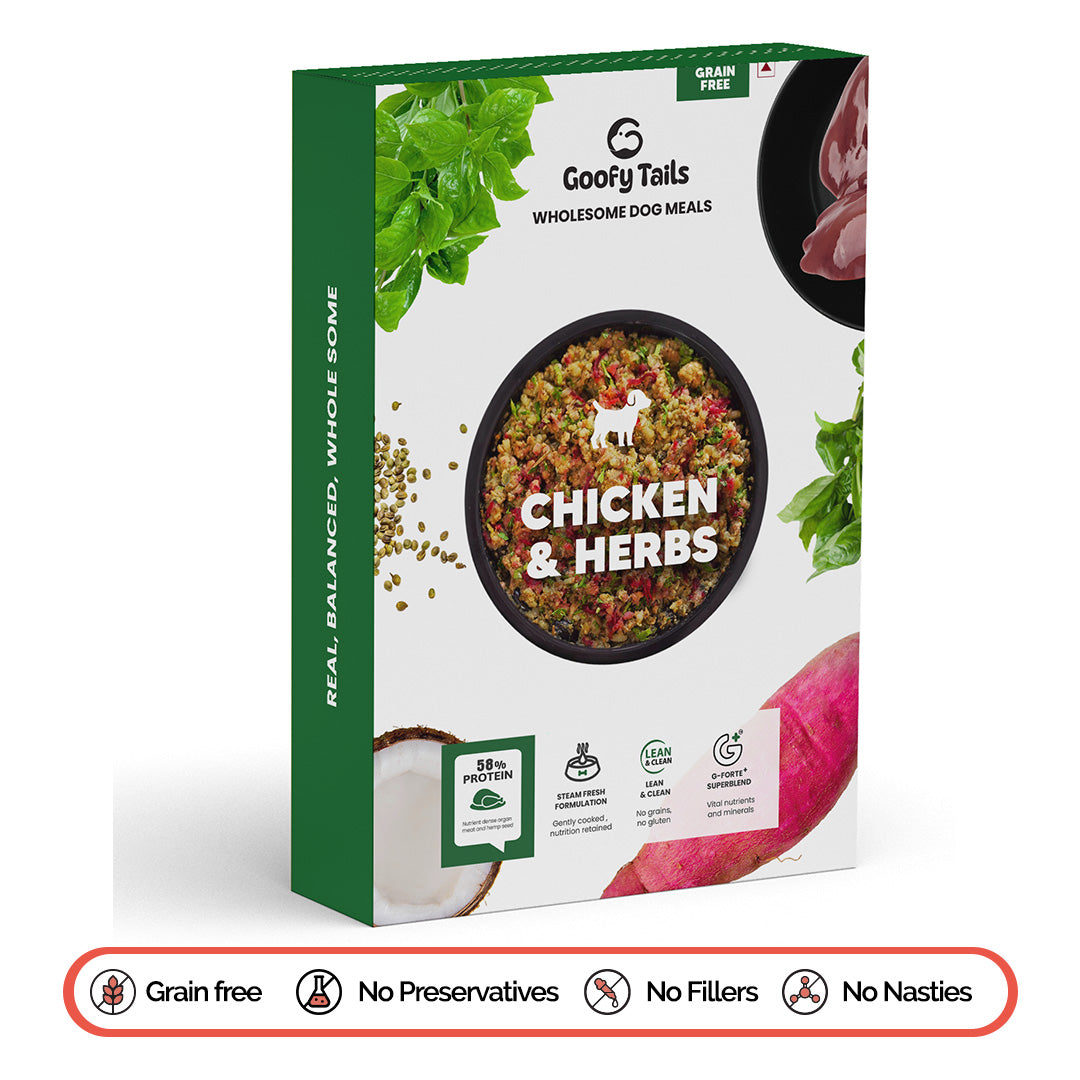
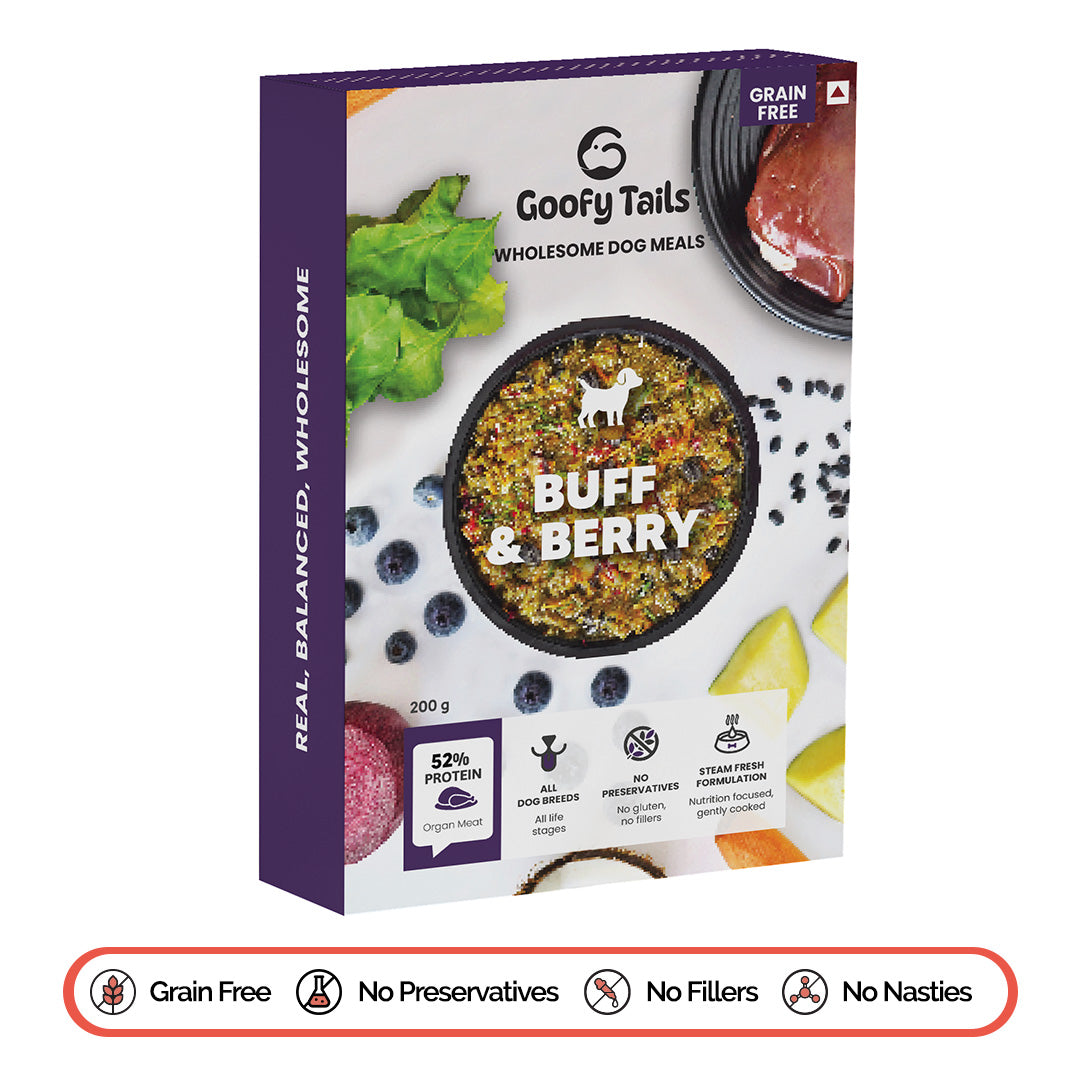
"As a Vet I recommend clean, honest and wholesome ingredients and an active lifestyle. Therefore, I trust and recommend Goofy Tails."Dr. Madhurita, President, Myvets Charitable Trust & Research Centre
4. Home-Cooked Meals for Your Belgian Malinois
Home cooking for a Belgian Malinois offers full ingredient transparency and precise calorie control -- both valuable for a breed where the gap between working-dog calorie needs and companion-dog calorie needs is so significant. The key discipline is meeting the breed's exceptionally high protein requirements while keeping fat at a level that fuels endurance without contributing to weight gain in a dog whose activity level may vary considerably week to week. See our guide to homemade grain-free dog food for a detailed framework.
A Balanced Home-Cooked Base Recipe (Per 28 kg Active Adult Belgian Malinois)
| Ingredient | Quantity (per meal) | Purpose |
|---|---|---|
| Chicken breast or lamb (boneless, boiled) | 180 to 220 g | High-quality complete protein for muscle maintenance and repair; lean cuts preferred for a working dog that needs fuel without excess dietary fat |
| Chicken or lamb liver (boiled) | 20 to 30 g (max 3 times per week) | Nutrient-dense iron, B12, and zinc for red blood cell production and immune resilience under working load |
| Pumpkin (boiled or steamed) | 50 to 60 g | Low-fermentation gut-friendly fibre; supports gut comfort during and after high-intensity training; reduces bloat risk |
| Sweet potato (boiled) | 40 to 50 g | Slow-release complex carbohydrate for sustained working energy; beta-carotene and potassium for electrolyte balance after exertion |
| Carrot (raw, grated or boiled) | 25 g | Beta-carotene, natural fibre, dental-friendly crunch |
| Whole eggs (boiled) | 1 egg | Complete protein, biotin for coat health, natural choline for brain function -- relevant for a breed with exceptional working intelligence |
| Spinach or leafy greens | 15 g | Iron, folate, antioxidant vitamins |
| Hemp seed oil or coconut oil | 1 tsp | Omega-3/6 for joint anti-inflammatory support under working load; sustained energy from medium-chain fats |
| Bone broth (as a liquid base) | 80 to 100 ml | Collagen, glycine, passive hydration, palatability -- critical for a breed that may not drink voluntarily post-exercise |
Safe Human Foods to Add as Toppers
- Watermelon (seedless) -- hydrating, low-calorie; excellent post-training recovery topper in Indian summer heat
- Boiled sweet potato -- complex carbs, beta-carotene, slow-release energy; ideal as a pre-training addition on high-demand days
- Plain boiled chicken or lamb liver (small amounts, max 3 times per week) -- nutrient-dense, iron and B12-rich; the most effective natural performance-nutrition addition
- Cucumber slices -- high water content, very low calorie, cooling post-exercise treat
- Banana (small pieces) -- potassium and natural electrolytes; ideal after demanding training sessions
- Plain curd/yogurt (small amounts) -- natural probiotics; beneficial for gut microbiome maintenance in a breed with a demanding daily feeding and exercise schedule
5. Hydration and Bone Broth: Essential for the Working Belgian Malinois

A 28 kg adult Belgian Malinois at moderate activity requires approximately 1.5 to 2 litres of water per day, rising to 2.5 litres or more during intensive training or in India's summer heat. Post-exercise, Malinois may resist drinking voluntarily -- a behavioural pattern that, in India's climate, creates real dehydration risk within a single demanding session. Read the complete guide to hydration in dogs for a full breakdown of how to meet a working dog's daily fluid needs. For managing the additional environmental burden of Indian city pollution on a working dog's respiratory system, see our guide on how air pollution affects dogs in Indian cities.
Why Bone Broth Is Particularly Valuable for Belgian Malinois
Bone broth is the most practical post-training hydration tool for a breed that may not drink water voluntarily when physically stressed. Poured warm over any meal, it delivers fluid passively alongside collagen and glycine for joint tissue repair and gut lining support -- both of which are under elevated demand in a dog performing repetitive high-impact working activity daily. The glycine in bone broth has a documented anti-inflammatory effect that directly counters the chronic low-grade joint inflammation that accumulates in any intensively working dog over time. Pour 80 to 100 ml warm over every meal. For intensively working Malinois on heavy schedules, twice-daily broth topping is a meaningful additional recovery tool.


💧 Post-Training Recovery Tip: The Warm Broth Protocol
After any intensive training session, allow your Malinois to rest for 30 to 60 minutes before the post-work meal. Serve Goofy Tails Chicken and Herbs or Lamb and Rosemary warm, with 80 to 100 ml of Chicken or Lamb Bone Broth poured over the top. The warm broth aroma triggers appetite in a physically depleted dog, the collagen begins joint tissue repair within the recovery window, and the passive hydration counters the fluid loss from the session. In Indian summers, freeze bone broth into ice blocks and offer immediately post-session as a cooling and hydrating recovery treat while the main meal is being prepared.
Shop All Bone Broths →6. The Right Treats for Belgian Malinois
Treats are one of the most important training tools for a Belgian Malinois -- a breed that is intensely food-motivated and responds to reward-based training with extraordinary speed and precision. The treat you choose needs to be high-value enough to compete with environmental distractions during working sessions, low enough in fat and calories to be used at high frequency without affecting body condition, and easy to deliver in small pieces rapidly during fast-paced training sequences. Goofy Tails offers both essential options. See our guide to caring for dogs with mobility concerns for understanding how treat selection contributes to long-term joint health in working dogs.


7. Supplements: Targeted Support for a Healthy Belgian Malinois
A working Belgian Malinois performing at high intensity accumulates joint wear, inflammatory load, and micronutrient demand at a rate that even the best fresh food diet cannot fully address alone. Proactive supplementation is not optional for an intensively working Malinois -- it is one of the most impactful decisions a handler makes for the dog's working longevity and quality of life after the working years end. See our guide to caring for dogs with mobility issues to understand how early intervention changes long-term outcomes. Canine Mobility+ should be started by 18 months of age -- earlier for intensively working individuals. For context on the degenerative conditions that affect working breeds, see our guide on degenerative myelopathy in dogs.

Why Canine Mobility+ is essential for Belgian Malinois:
- Glucosamine maintains healthy cartilage, supports joint lubrication, and reduces stiffness. For a working dog performing repetitive high-impact landings, pivots, and sustained running daily, glucosamine is not a supplement -- it is a working-life necessity. The cumulative joint load of a Malinois working 2 to 3 hours daily for 5 to 8 years is extraordinary; start before any sign of stiffness appears, ideally by 18 months.
- Chondroitin works synergistically with glucosamine to support mobility and slow cartilage degradation under the repetitive mechanical stress that working activity creates. The combination consistently outperforms either compound alone -- meaningfully important for a breed whose joint health is the primary determinant of working longevity.
- Collagen Peptides provide the structural building blocks for joint cartilage, connective tissue, ligaments, and tendons -- all under elevated demand in a working dog that sprints, jumps, and operates at full physical extension daily. Collagen supplementation supports both the repair of daily micro-damage and the maintenance of connective tissue integrity over a working lifespan.
- Turmeric Curcumin Extract reduces the chronic low-grade joint inflammation that accumulates in any intensively working dog over time. For Indian Malinois in high-pollution urban environments, the systemic inflammatory load from airborne particulates adds to the joint inflammation from working activity -- daily curcumin addresses both pathways simultaneously.
8. Can Belgian Malinois Eat a Vegetarian Diet?
If your household is vegetarian and you prefer a plant-based option for occasional rotation, Goofy Tails offers one carefully formulated vegetarian meal. It is best used as a 1 to 2 day per week rotation alongside meat-based meals, never as the primary diet for this breed and never on heavy training days.

If used as an occasional rest-day rotation, ensure your Malinois's weekly diet also includes:
- Meat-based protein on all training days and a minimum of 5 to 6 days per week -- Belgian Malinois cannot meet their taurine, L-carnitine, and complete amino acid requirements from plant proteins alone. Never feed vegetarian meals on high-demand working or training days.
- Canine Mobility+ daily regardless of meal base -- joint supplementation requirements are not reduced on rest days. The glucosamine, collagen, and curcumin in Canine Mobility+ support tissue repair during recovery as much as during active working periods.
- Bone broth daily -- even on vegetarian meal days, bone broth provides collagen, glycine, and passive hydration that support joint recovery and gut integrity, partially closing the nutritional gap from the plant-based meal.
- Monitor performance closely -- any reduction in working energy, recovery speed, coat condition, or muscle definition in the days following plant-based meal days is a signal that the diet is insufficient for this individual dog's demands.
9. Frequently Asked Questions
Q: What is the best food for a Belgian Malinois in India?
The best food for a Belgian Malinois in India is a high-protein, high-moisture, grain-free wet food made with named whole-meat ingredients and no artificial preservatives. Goofy Tails Chicken and Herbs (58% protein, G-Forte+ superblend, grain-free) and Lamb and Rosemary (58% protein, full organ-meat profile, grain-free) are the top choices for Indian Malinois. Chicken and Herbs delivers the highest protein at 58% with the G-Forte+ superblend for maximum working-day nutrition. Buff and Berry provides a lean buffalo protein rotation at 52% with natural antioxidants from mixed berries -- ideal for counteracting the oxidative stress of daily high-intensity working activity and for Malinois requiring a novel protein away from chicken. For understanding protein source selection, see our guide on lamb vs chicken for dogs.
Q: How much should I feed my active Belgian Malinois?
A working Belgian Malinois (22 to 34 kg) doing 2 or more hours of intensive daily activity requires 1,800 to 2,400 kcal per day. For Goofy Tails wet food at approximately 150 to 180 kcal per 200g pack, an active adult will need 3 to 4 packs per day split across 2 to 3 meals. Never feed one large meal -- split daily intake across at least two meals and avoid feeding within 60 to 90 minutes before or after intensive exercise. A Malinois kept as a companion with moderate activity (30 to 60 minutes daily) needs significantly less -- 1,200 to 1,600 kcal/day -- and must be weighed every 4 weeks to avoid gradual weight gain on an activity level below the breed's design parameters. Read the full guide to managing obesity in dogs.
Q: Do Belgian Malinois need joint supplements?
Yes -- and earlier than most owners expect. Belgian Malinois performing daily intensive working activity accumulate joint wear and micro-damage to cartilage and connective tissue at a rate that significantly exceeds companion breeds. The breed's predisposition to hip and elbow dysplasia means this working load falls on a joint system that is already starting at a genetic disadvantage. Proactive joint supplementation with Canine Mobility+ should begin by 18 months -- earlier for intensively working individuals. By the time a working Malinois shows visible stiffness or lameness, significant and irreversible cartilage damage has usually already accumulated. Early, consistent supplementation with glucosamine, chondroitin, collagen, and curcumin preserves working longevity in a way that reactive treatment after symptoms appear never can.
Q: Is grain-free food better for Belgian Malinois?
For most Belgian Malinois, yes -- particularly for working and sport dogs. Grain-free food has a lower fermentation rate in the stomach, which reduces the gut discomfort and bloat risk that high-starch kibble can cause in a deep-chested breed performing intensive daily activity. The clean ingredient base of grain-free wet food also reduces the dietary allergen load that contributes to inflammatory skin conditions in a breed that is periodically prone to stress-triggered and allergen-triggered dermatitis. Goofy Tails grain-free meals use pumpkin and sweet potato as their carbohydrate base -- not legumes -- avoiding the legume-heavy formulations associated with DCM concerns in some breeds. Read more about grain-free food for sensitive stomachs.
Q: How do I feed a Belgian Malinois puppy correctly?
Malinois puppies mature quickly in temperament and drive, but their skeletal development requires the same disciplined approach as any large breed puppy. Overfeeding during the growth phase (2 to 18 months) accelerates bone growth and increases the risk of the HOD and joint abnormalities that worsen the breed's underlying dysplasia predisposition. Feed for lean, steady growth -- not maximum size. Divide meals across 3 to 4 small portions daily until 6 months, then transition to 3 meals through 12 months. Protein should be high quality (Chicken and Herbs is an excellent puppy meal) but total calorie intake must be precisely managed. Start Canine Mobility+ at 18 months to establish the glucosamine and collagen baseline before working demands begin in earnest.
Q: How do I manage a Belgian Malinois's diet during the Indian summer?
In India's peak summer (April to June), Belgian Malinois face heat stress from two directions simultaneously: high ambient temperature and the thermal load generated by their own intensive working activity. In summer, shift all outdoor training and exercise to before 7:30 AM and after 7:00 PM. Switch to Goofy Tails wet food as the primary diet if not already doing so -- the moisture content is directly relevant in heat. Add Chicken or Lamb Bone Broth over every meal, and freeze diluted bone broth into ice blocks as immediate post-training cooling and hydration. Reduce total daily working intensity by 20 to 30% on days above 35 degrees Celsius. Monitor for excessive panting, drooling, or disorientation -- early signs of heat stress. For city-based Malinois, see our guide on how air pollution affects dogs in Indian cities.
Q: What are the best treats for training a Belgian Malinois?
Belgian Malinois are the most intensely food-motivated working breed most trainers will ever handle -- and the treat you choose matters enormously for training efficiency. Goofy Tails Freeze Dried Chicken Liver Cubes are the ideal primary training reward: intensely palatable, only 2g fat per serving, grain-free, and easy to crumble into the tiny, rapid-delivery pieces that fast-paced Malinois training demands. They can be delivered in under a second, do not crumble messily into the dog's airway, and are nutritionally meaningful (liver B12 and iron) at every delivery. Active Dental Sticks (Seaweed) are the correct daily end-of-session calm-down reward -- they satisfy the oral engagement that a Malinois craves while simultaneously providing the dental care that all working breeds need. Avoid large biscuit treats: their starch content adds fermentable load to a breed that already has bloat vulnerability under working conditions.
Q: How do I care for a senior Belgian Malinois's diet?
Malinois are considered senior from around 8 years. For a breed that has spent years at high physical intensity, the transition to senior nutrition requires specific attention: maintain high-quality protein to counter the muscle wasting that accelerates in ageing working dogs; increase Canine Mobility+ supplementation as cumulative joint wear makes its effect more critical; ensure bone broth daily for collagen, glycine, and passive hydration; and reduce total daily calories by 10 to 15% as working activity declines while monitoring body condition monthly. Senior Malinois should also have annual screening for the degenerative conditions -- degenerative myelopathy, hip dysplasia progression, and cardiac screening -- that emerge in the breed's later years. Read the complete guide to caring for your ageing dog.
Q: What skin and coat issues affect Belgian Malinois, and can diet help?
Belgian Malinois are susceptible to stress-triggered and allergen-triggered skin conditions, including dermatitis, hot spots, and food-triggered allergic skin reactions. For working dogs under consistent physical and mental stress, the cortisol response to training pressure is a genuine immune modulator -- chronically elevated cortisol suppresses immune regulation and increases inflammatory skin responses. Diet addresses the internal side of this problem: omega-3 fatty acids from hemp seed and chia seeds (present in both Chicken and Herbs and Lamb and Rosemary) strengthen the skin barrier and reduce systemic inflammation; grain-free formulations remove the most common dietary allergen triggers; and switching to Buff and Berry provides a clean buffalo novel protein rotation for Malinois showing recurring chicken-triggered reactions -- lean, grain-free, and with natural berry antioxidants that additionally support skin immune health. Read more about grain-free food for skin and coat health.
Q: Where can I buy Goofy Tails products for my Belgian Malinois?
Goofy Tails Chicken and Herbs and Lamb and Rosemary wet food meals are available for quick delivery across India on Blinkit (same-day in select cities), Swiggy Instamart, Zepto, BigBasket, Amazon India, and Supertails. For the complete Belgian Malinois care range -- Canine Mobility+, Chicken Bone Broth, Lamb Bone Broth, Active Dental Sticks, and Freeze Dried Chicken Liver Cubes -- visit goofytails.com directly.
10. The Shepherd Dog Family: Meet the Belgian Malinois's Companions
The Belgian Malinois shares its heritage with the other Belgian Shepherd varieties and the broader shepherd and herding breed group -- some of the most intelligent and capable dogs in the world. All breed profiles are available on the Goofy Tails Dog Breed Wiki →


Conclusion: Feed Your Belgian Malinois Like the Working Dog They Are

The Belgian Malinois asks more of its owner than almost any other breed -- in time, commitment, training, and mental engagement. In return, it offers a partnership that most dog owners will never experience: a dog of extraordinary capability, intense loyalty, and total dedication to its handler. That partnership is built on many things, and nutrition is foundational among them. A Malinois that is underfed, under-supplemented, or fuelled on low-quality starch-heavy kibble is a Malinois operating below its potential -- in performance, in recovery, in longevity, and in daily wellbeing.
Get the nutrition right, and you give a Belgian Malinois the platform to do what it was built to do -- for longer, with less pain, and with the sustained vitality that separates a dog that works for 5 years from one that works for 10.
- Feed grain-free, high-protein, high-moisture wet food as the daily foundation -- Chicken and Herbs and Buff and Berry are the primary meals for Belgian Malinois
- Match calorie intake precisely to actual daily activity level -- adjust every 4 weeks based on body condition score, not appetite
- Split daily intake across 2 to 3 meals minimum -- never feed one large meal
- Never feed within 60 to 90 minutes before or after intensive exercise
- Add Chicken or Lamb Bone Broth daily for hydration, collagen, and post-training joint recovery
- Start Canine Mobility+ at 18 months for proactive joint protection -- earlier for intensively working individuals
- Use Freeze Dried Chicken Liver Cubes as the primary training reward -- high value, low fat, rapid delivery
- Use Active Dental Sticks daily after the evening meal for oral health and systemic bacterial load reduction
- If cooking at home, always supplement with Canine Mobility+ to close calcium, glucosamine, and micronutrient gaps
- Monitor body weight every 4 weeks -- both under and overfeeding carry real health consequences for this breed
- Never feed one large meal -- bloat risk exists for this breed under exertion and is directly influenced by meal size and timing
- Never underfuel an actively working Malinois -- protein and calorie deficiency shows immediately in performance and coat condition
- Never ignore early stiffness or gait changes -- working dogs mask pain effectively; early joint supplementation and veterinary screening are essential
- Never feed onion, garlic, grapes, chocolate, or any salted or spiced human food
🐾 Start Your Belgian Malinois's Nutrition Journey with Goofy Tails
Human-grade, preservative-free, FSSAI-compliant, and vet-formulated. High-protein wet meals, grain-free options, bone broth, joint supplements, dental treats, and freeze-dried training rewards -- everything your Belgian Malinois needs to perform, recover, and thrive at every life stage.
Shop Belgian Malinois Essentials →
Leave a comment