



Belgian Laekenois

Breed History:
The Belgian Laekenois is the rarest of the four varieties of Belgian Shepherds, developed in Belgium in the late 19th century. It is named after the royal castle of Laeken, where it was favoured by the Belgian royal family. Originally bred as a sheep herder and property guardian, the Laekenois distinguished itself from its counterparts by its distinctive rough, wiry coat.
Like the other Belgian Shepherds, Groenendael, Malinois, and Tervuren, the Laekenois shares the same breed standard except for coat type and colour. During World Wars I and II, it served as a messenger dog and military aide, showcasing its courage and loyalty. Although still relatively rare outside Belgium, the Laekenois is gaining recognition as a versatile working and companion dog.
Considering adopting a Belgian Laekenois or a similar shepherd breed? Check out our page "Best Food for Belgian Malinois: High Energy Dog Nutrition Guide for Best Wet Food" detailing what to consider before adopting and our recommended products for the Belgian Malinois and other similar dog breeds.
If you want to learn about other guard dog breeds, check out our page "Different Guard Dog Breeds".
If you want to learn about other herding breeds, check out our page "Different Herding Dog Breeds".
|
Gender |
Height |
Weight |
|
Male |
60–66 cm |
25–30 kg |
|
Female |
56–62 cm |
20–25 kg |
Size – Medium-Large
Life Expectancy: 10–14 years
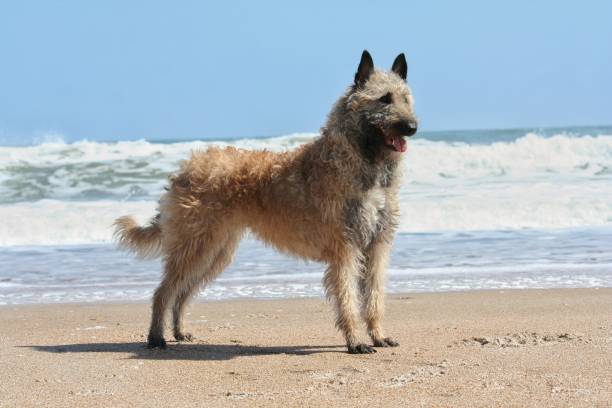
Breed Appearance:
The Belgian Laekenois is a lean, athletic, and well-balanced dog with a rugged appearance.
The breed commonly features:
- Long, refined head
- Straight, strong muzzle
- Dark brown, almond-shaped eyes
- Medium-sized, erect triangular ears
- Deep chest and athletic body
- Strong, well-developed limbs
- Long, bushy tail carried naturally
Its coat is rough, wiry, harsh, and weather-resistant with a dense undercoat.
Common coat colours include:
- Fawn
- Red fawn
Black shading is commonly seen on the muzzle and tail.
The breed's rough-textured coat and alert expression distinguish it from the other Belgian Shepherd varieties.
Breed Type – Herding/Guard:
The Belgian Laekenois is an intelligent, energetic, and highly versatile working breed.
It is known for being:
- Loyal and devoted
- Intelligent and eager to learn
- Alert and watchful
- Energetic and hardworking
- Courageous
- Affectionate with family
The breed combines excellent herding instincts with strong guarding ability and a natural willingness to work.

Training:
The Belgian Laekenois is an intelligent, energetic, and highly versatile working breed.
It is known for being:
- Loyal and devoted
- Intelligent and eager to learn
- Alert and watchful
- Energetic and hardworking
- Courageous
- Affectionate with family
The breed combines excellent herding instincts with strong guarding ability and a natural willingness to work.
Health & Care:
The Belgian Laekenois is generally healthy but may occasionally be prone to:
- Hip dysplasia
- Elbow dysplasia
- Progressive retinal atrophy (PRA)
- Epilepsy
- Hypothyroidism
Routine veterinary care, responsible breeding, and maintaining a healthy weight help support long-term health.

Living Conditions:
The Belgian Laekenois is best suited to active households.
Ideal environments include:
- Houses with secure yards
- Rural or suburban homes
- Active families
- Working or sporting homes
Apartment living is possible only if the dog receives extensive daily exercise and mental stimulation.
The breed thrives when given meaningful work and close interaction with its family.
Exercise:
The Belgian Laekenois has high exercise requirements.
Recommended activities include:
- Long daily walks or runs
- Hiking
- Agility
- Herding
- Fetch
- Obedience and scent work
Both physical exercise and mental stimulation are essential for maintaining balanced behaviour and preventing boredom.
Grooming:
The rough coat requires moderate maintenance.
- Brushing 1–2 times per week
- Hand-stripping or trimming as needed
- Occasional bathing
- Routine ear cleaning and nail trimming
- Regular dental care
The breed sheds lightly to moderately throughout the year.

Advantages:
- Intelligent, alert, and quick to learn
- Loyal and protective without being overly aggressive
- Distinctive coat with rustic charm and low odour
- Thrives in active, purpose-driven households
- Versatile working dog suited for herding, protection, and dog sports
- Affectionate and playful with its family
Disadvantages:
-
Rare breed; may be difficult to find from reputable breeders
- Needs significant daily exercise and mental enrichment
- Strong-willed; training requires experience and consistency
- Can become anxious or destructive if left bored or alone
-
Reserved with strangers; needs thorough early socialisation
- Coat requires regular brushing and occasional hand-stripping