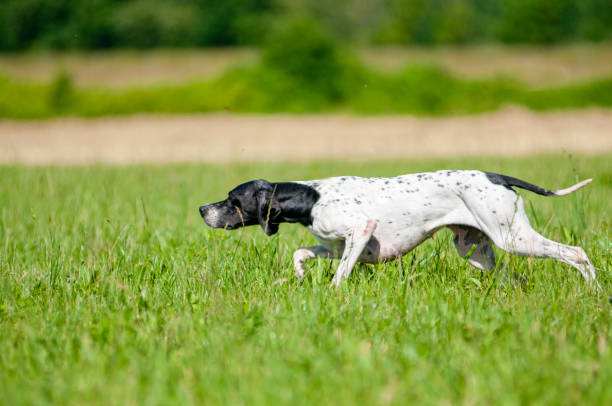



English Pointer

Breed History:
The English Pointer, often simply called the Pointer, is one of the oldest and most refined pointing breeds, developed in England during the 17th and 18th centuries. It was bred specifically for bird hunting, with its signature "pointing" stance, where the dog freezes with its body aligned and one paw lifted toward the game, becoming the hallmark of the breed.
Its ancestry likely includes Spanish Pointers, Greyhounds, Bloodhounds, and Foxhounds, combining endurance, speed, and scenting ability. English Pointers were highly valued for their precision in locating game birds and their compatibility with hunters on foot or horseback.
Today, they are still widely used in the field, especially in North America and Europe, where they remain a favourite among upland game bird hunters. The English Pointer has also become a beloved companion, thanks to its affectionate nature and elegant build.
If you want to learn about other pointer breeds, check out our page "Different Pointer Dog Breeds".
|
Gender |
Height |
Weight |
|
Male |
63–69 cm |
25–34 kg |
|
Female |
61–66 cm |
20–29 kg |
Size – Medium-Large
Life Expectancy: 12–14 years

Breed Appearance:
The English Pointer is an elegant, athletic, and well-balanced dog built for speed, agility, and endurance.
The breed commonly features:
- Long, refined head
- Strong, slightly concave muzzle
- Brown or hazel expressive eyes
- Thin, pendant ears set high on the head
- Deep, well-developed chest
- Long, muscular neck
- Straight, powerful limbs
- Medium-length tail tapering to a fine point
Its short, smooth coat is sleek, dense, and weather-resistant.
Common coat colours include:
- Liver and white
- Lemon and white
- Black and white
- Orange and white
- Solid liver
- Solid black
- Solid lemon
Many dogs display patches, ticking, or speckling.
The breed's graceful outline and effortless movement reflect its heritage as one of the finest upland bird dogs.
Breed Type – Sporting / Pointing Dog:
The English Pointer is an intelligent, energetic, and highly driven sporting dog.
It is known for being:
- Loyal
- Intelligent
- Affectionate
- Energetic
- Courageous
- Eager to please
The breed forms strong bonds with its family and is generally excellent with children and other dogs. It thrives when given opportunities to work and participate in outdoor activities.

Training:
The English Pointer is highly intelligent and eager to learn.
Training should focus on:
- Early socialisation
- Positive reinforcement methods
- Basic obedience training
- Recall training
- Field work
- Retrieving exercises
The breed excels in:
- Pointing
- Field trials
- Retrieving
- Tracking
- Agility
- Obedience
Consistent, reward-based training helps develop a focused, confident, and responsive companion.
Health & Care:
The English Pointer is generally healthy but may be prone to several health concerns, including:
- Hip dysplasia
- Hypothyroidism
- Allergies
- Gastric dilatation-volvulus (bloat)
- Progressive retinal atrophy
- Epilepsy
Routine veterinary care, responsible breeding, regular exercise, and maintaining a healthy weight help support long-term health.

Living Conditions:
The English Pointer thrives in active homes where it has ample opportunities for vigorous daily exercise.
Ideal environments include:
- Houses with large, securely fenced yards
- Rural or suburban homes
- Active families
- Hunters and outdoor enthusiasts
- Homes with access to fields, parks, or open countryside
The breed prefers living indoors with its family but is not well suited to apartment living unless its substantial exercise needs are consistently met.
Exercise:
The English Pointer has very high exercise requirements.
Recommended activities include:
- Long daily walks
- Running
- Hiking
- Field work
- Retrieving games
- Agility
- Mental enrichment activities
At least 2 hours of daily physical activity is recommended to keep the breed physically fit and mentally satisfied.
Grooming:
The short coat requires minimal maintenance.
- Brushing once per week
- Occasional bathing
- Regular ear cleaning
- Nail trimming
- Routine dental care
The breed sheds moderately throughout the year.