



English Foxhound

Breed History:
The English Foxhound originated in England during the 16th century and is one of the oldest and most respected hunting hound breeds. Developed by crossing various scent hounds, including the Talbot Hound, Greyhounds, and Bulldogs, the breed was selectively refined for fox hunting on horseback. Breeders focused on creating a dog with exceptional stamina, speed, a keen sense of smell, and the ability to work cooperatively in large packs over long distances.
For centuries, the English Foxhound has been a cornerstone of traditional British fox hunting. Its athleticism, endurance, and even temperament have also made it a capable companion for active owners, although it remains primarily valued as a working scent hound.
Today, the English Foxhound is admired as a loyal family companion, exceptional hunting dog, and versatile scent hound known for its endurance, intelligence, and remarkable tracking ability.
If you want to learn about other scenthound breeds, check out our page "Different Scenthound Dog Breeds".
|
Gender |
Height |
Weight |
|
Male |
58–64 cm |
29–34 kg |
|
Female |
58–64 cm |
25–32 kg |
Size – Large
Life Expectancy: 10–13 years
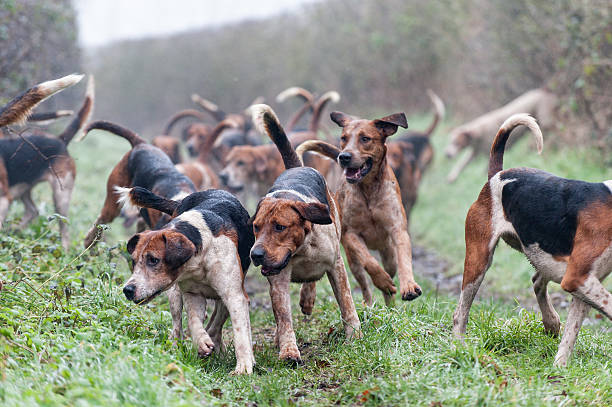
Breed Appearance:
The English Foxhound is a powerful, athletic, and well-balanced dog built for speed and endurance.
The breed commonly features:
- Broad, slightly domed head
- Long, square muzzle
- Large, brown or hazel eyes
- Long, pendant ears
- Deep, broad chest
- Strong, muscular neck
- Long, straight limbs
- Long tail carried high with a slight curve
Its short, dense coat is smooth, hard, and weather-resistant.
Common coat colours include:
- Tricolour (black, white, and tan)
- Lemon and white
- Red and white
- Black and white
- Tan and white
Nearly all recognised hound colour combinations are accepted.
The breed's muscular frame and balanced proportions reflect its heritage as an endurance hunting hound.
Breed Type – Scent Hound:
The English Foxhound is an intelligent, energetic, and determined scent hound.
It is known for being:
- Loyal
- Friendly
- Intelligent
- Energetic
- Independent
- Sociable
The breed forms strong bonds with its family and generally gets along well with children and other dogs. It has a strong prey drive and thrives when given opportunities to use its natural scenting instincts.

Training:
The English Foxhound is intelligent but can be independent because of its hunting background.
Training should focus on:
- Early socialisation
- Positive reinforcement methods
- Basic obedience training
- Reliable recall training
- Leash manners
- Scent-based enrichment activities
The breed excels in:
- Tracking
- Scent work
- Hunting trials
- Search and rescue
- Canicross
- Obedience
Consistent, reward-based training helps channel the breed's intelligence while reinforcing responsiveness.
Health & Care:
The English Foxhound is generally healthy but may be prone to several health concerns, including:
- Hip dysplasia
- Elbow dysplasia
- Obesity
- Gastric dilatation-volvulus (bloat)
- Ear infections
- Progressive retinal atrophy
Routine veterinary care, responsible breeding, regular exercise, and maintaining a healthy weight help support long-term health.

Living Conditions:
The English Foxhound thrives in homes where it has plenty of room to exercise and explore.
Ideal environments include:
- Houses with large, securely fenced yards
- Rural or suburban homes
- Active families
- Experienced dog owners
- Homes with access to trails, parks, or open countryside
The breed prefers living indoors with its family but is not well suited to apartment living due to its high energy level and loud baying.
Exercise:
The English Foxhound has high exercise requirements.
Recommended activities include:
- Long daily walks
- Running
- Hiking
- Tracking games
- Scent work
- Mental enrichment activities
Regular physical activity and scent-based challenges are essential to maintain the breed's physical and mental well-being.
Grooming:
The short coat requires minimal maintenance.
- Brushing once per week
- Occasional bathing
- Regular ear cleaning
- Nail trimming
- Routine dental care
The breed sheds moderately throughout the year.

Advantages:
- Loyal and affectionate family companion
- Outstanding scent-tracking and hunting abilities
- Friendly with children and other dogs
- Athletic and highly energetic
- Low grooming requirements
- Hardy and generally healthy breed
Disadvantages:
- Requires extensive daily exercise and mental stimulation
- Strong prey drive may lead to chasing small animals
- Can be stubborn and independent during training
- Loud baying may not suit urban environments
- Not well suited to apartment living
- May become destructive or vocal if bored or under-exercised