



Best Food for Indie Dogs: Nutrition Guide for Indian Pariah Dogs
India's complete nutrition guide for the Indian Pariah Dog (Indie) — covering ideal meal composition, wet food choices, home-cooked options, hydration, treats, supplements, and everything a healthy Indie needs at every life stage.
If you've welcomed an Indie into your home — whether adopted from a rescue shelter, taken in as a street dog, or chosen deliberately from a breeder — you've made one of the most rewarding decisions an Indian pet parent can make. The Indian Pariah Dog is one of the oldest and most naturally evolved dog breeds on the planet, shaped by thousands of years of survival across India's wildly diverse climates, terrains, and food environments. That evolutionary history makes them hardy, intelligent, and resilient — but it also means their nutritional needs are distinct from imported pedigree breeds, and deserve to be understood on their own terms.
This guide covers everything you need to know about feeding your Indie — from understanding the breed's unique nutritional heritage and health vulnerabilities to practical meal planning, home-cooked recipes, the best Goofy Tails products for Indies, and how to build a diet that honours their natural adaptations while meeting modern nutritional standards.
1. The Indian Pariah Dog: India's Original Breed

The Indian Pariah Dog — also called the Indie, Desi Dog, or South Asian Primitive Dog — is one of the world's oldest domesticated dog breeds, with an unbroken lineage stretching back at least 4,500 years. Unlike imported pedigree breeds selectively bred for specific physical traits, the Indie was shaped entirely by natural selection: the dogs best adapted to Indian conditions — climate, food availability, disease resistance, and human coexistence — survived and reproduced. The result is a genetically diverse, physically robust, and behaviourally well-balanced dog that is uniquely suited to life in India.
Today, Indies are increasingly being adopted from shelters and rescue organisations across India, recognised not just for their hardiness but for their extraordinary intelligence, loyalty, and trainability. An Indie that is well-fed, well-socialised, and well-loved is one of the finest companion dogs available — and their dietary needs, properly understood, are no more complicated than any other breed.
| Breed Fact | Detail |
|---|---|
| Origin | Indian subcontinent (one of the world's oldest domesticated breeds) |
| Also Known As | Indie, Desi Dog, INDog, South Asian Primitive Dog |
| Size | Medium — 15–25 kg; 46–64 cm at shoulder |
| Coat | Short, dense, double coat — naturally adapted to Indian heat |
| Colours | Tawny/fawn (most common), pied, black, or spotted |
| Lifespan | 13–15 years (among the longest of any medium-sized breed) |
| Energy Level | Moderate to high — active and alert, but not hyperactive |
| Key Health Strengths | Excellent natural disease resistance; low genetic disorder load; climate-adapted metabolism |
| Key Health Concerns | Skin conditions (dermatitis, mange); joint health with age; tick-borne disease susceptibility |
| Temperament | Intelligent, loyal, alert, independent, strongly bonded to their primary family |
2. What the Perfect Indie Meal Looks Like
The Indian Pariah Dog evolved in an environment of dietary variety — scavenging grains, meat scraps, vegetables, and whatever was available near human settlements. This means Indies are genuinely omnivorous, with a digestive system adapted to a wider range of food sources than most pedigree breeds. However, "can digest a wide range of foods" does not mean "thrives on low-quality food." Proper nutrition dramatically extends the Indie's already impressive lifespan and prevents the skin, joint, and immune conditions that represent their primary health vulnerabilities.
The 5 Pillars of an Indie-Optimised Diet
| Nutrient Pillar | Why Indies Need It | What to Look For |
|---|---|---|
| Quality Protein (min. 22–28%) | Supports lean muscle mass and the Indie's naturally active, alert metabolism; fuels their working dog instincts | Named whole meat first (chicken breast, lamb, eggs) — not "meat meal" or unnamed by-products |
| Skin & Coat Support Nutrients | Indies are prone to dermatitis, mange, and skin allergies — often triggered or worsened by nutritional deficiencies in omega-3 fatty acids and zinc | Omega-3 fatty acids (EPA/DHA) from hemp seed or fish; zinc from whole meats; biotin from eggs |
| High Moisture Content | India's heat means dehydration is a real risk; Indies were historically water-limited scavengers, not heavy drinkers | Wet food at 75–80% moisture; bone broth topper; always fresh water available |
| Immune-Supporting Micronutrients | Despite natural disease resistance, Indies in urban environments face tick-borne diseases, airborne allergens, and stress from rehabilitation; strong immune nutrition matters | Turmeric curcumin, Boswellia, vitamin C-rich vegetables, antioxidant-rich whole foods |
| Digestive Fibre & Gut Health | The Indie's omnivorous history means they handle plant-based fibre very well; a healthy gut microbiome directly supports their skin and immune health | Pumpkin, sweet potato, chia seeds; prebiotic fibre; consistent, high-quality meals |
Calorie Guide for Indies by Life Stage
| Life Stage | Weight Range | Daily Calories (Active) | Feeding Frequency |
|---|---|---|---|
| Puppy (2–6 months) | 3–10 kg | 400–800 kcal | 3–4 meals/day |
| Puppy (6–12 months) | 10–18 kg | 800–1,100 kcal | 2–3 meals/day |
| Adult (1–8 years) | 15–25 kg | 900–1,300 kcal | 2 meals/day |
| Senior (8+ years) | 14–23 kg | 800–1,100 kcal | 2 meals/day (smaller portions) |
3. Goofy Tails Wet Meals: The Best Food for Indies

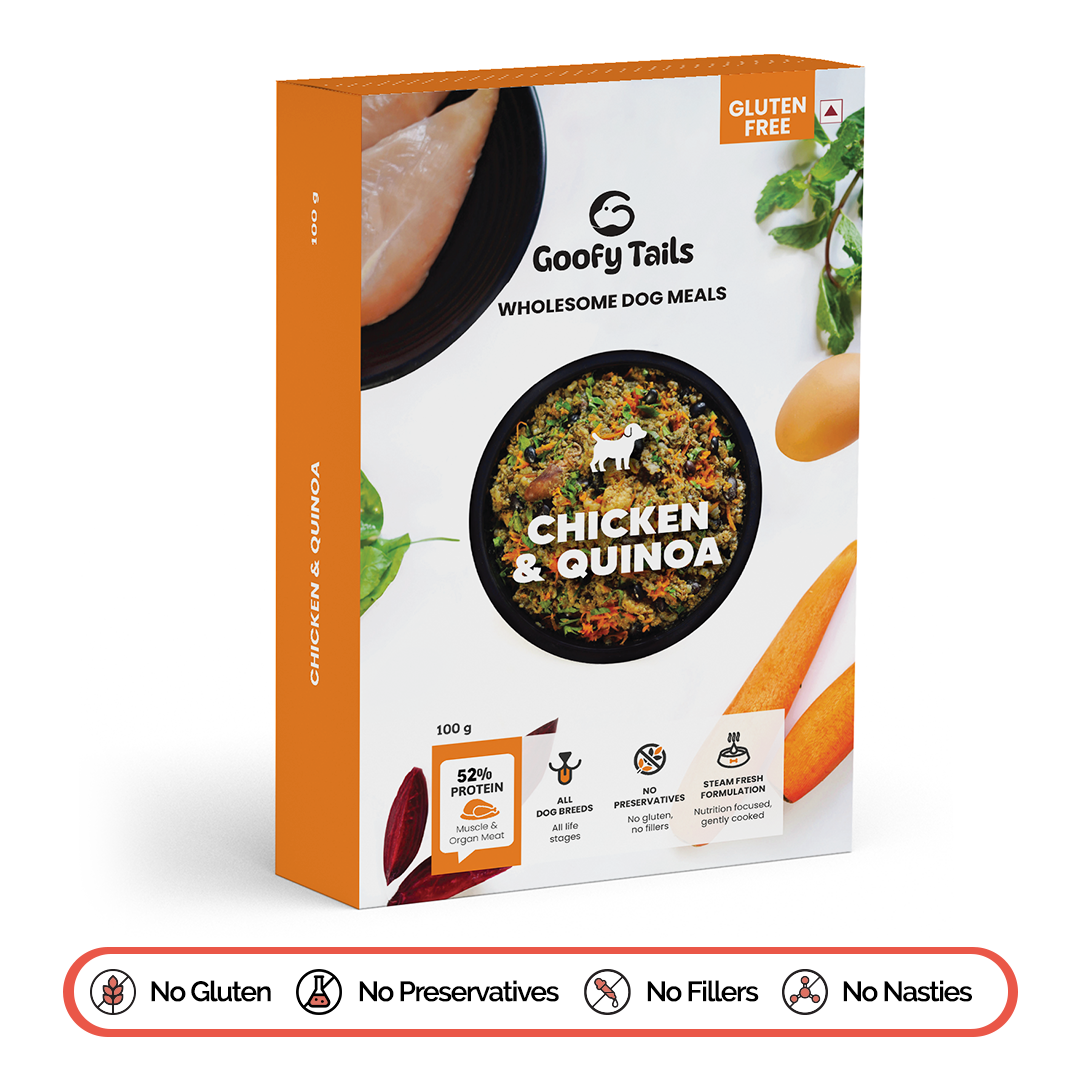
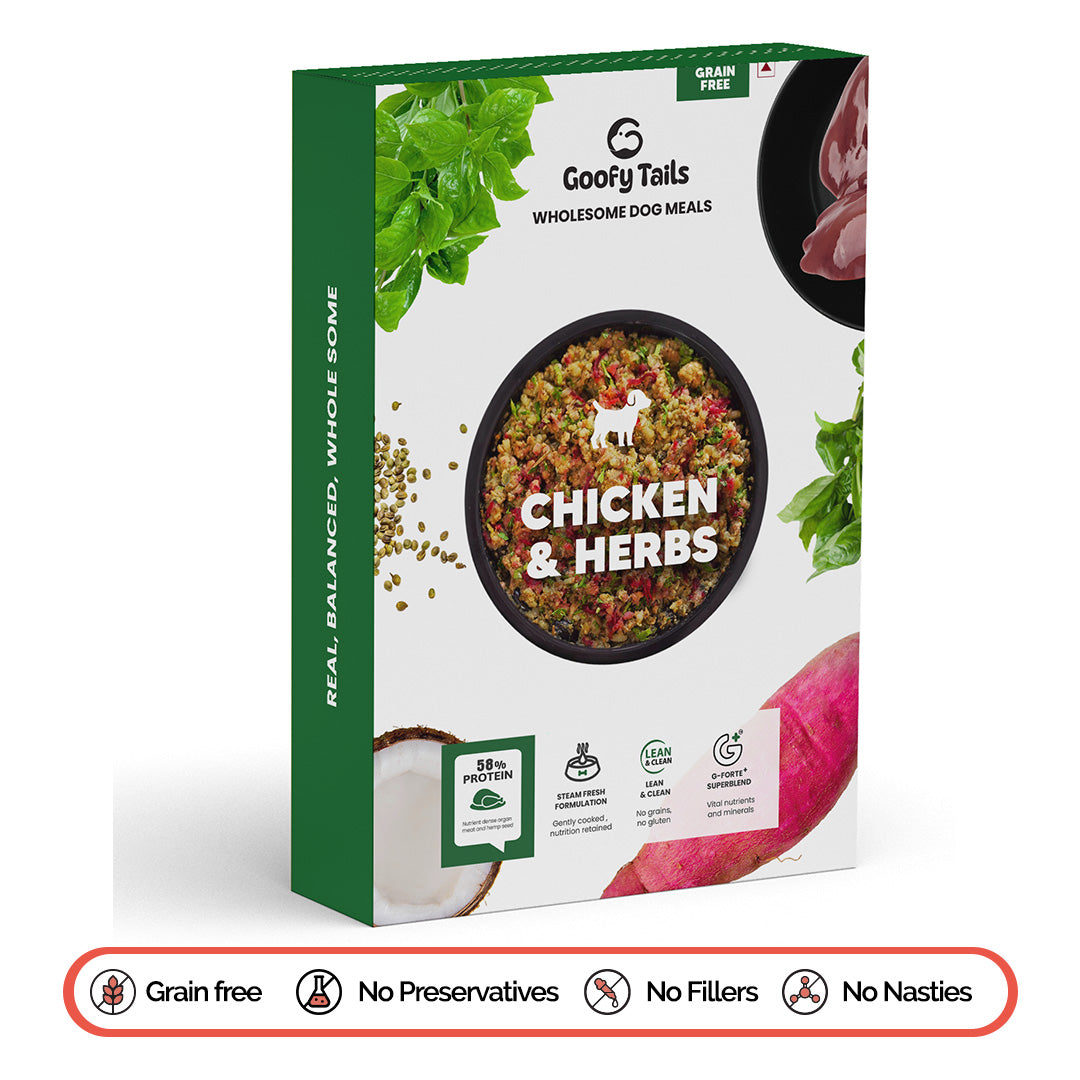
Every Goofy Tails wholesome wet meal is made with 75–80% natural moisture, real whole-meat protein, and no artificial preservatives or fillers. For Indies, this format is ideal: it mirrors the high-moisture, varied-ingredient diet their digestive systems evolved to handle, delivers the omega-3s and zinc essential for their skin health, and provides the lean protein needed to maintain their naturally muscular but trim build.
Among the full range, two meals are particularly well-suited for Indie Dogs:
"As a Vet I recommend clean, honest and wholesome ingredients and an active lifestyle. Therefore, I trust and recommend Goofy Tails."Dr. Madhurita, President, Myvets Charitable Trust & Research Centre
4. Home-Cooked Meals for Your Indie
Home cooking for your Indie is both practical and rewarding — Indies are omnivorous, food-flexible, and generally accepting of a wide range of wholesome ingredients. However, "flexible" does not mean "any food is fine." A properly balanced home-cooked diet requires real attention to protein completeness, omega-3 content, calcium, and micronutrient coverage. Without supplementation, home-cooked diets almost always fall short on key nutrients.
A Simple Balanced Home-Cooked Base Recipe (Per 20 kg Adult Indie)
| Ingredient | Quantity (per meal) | Purpose |
|---|---|---|
| Chicken breast (boiled, boneless) | 120–150 g | Lean complete protein |
| Brown rice or quinoa (cooked) | 50–60 g | Complex carbohydrate, energy |
| Pumpkin (boiled or steamed) | 40 g | Fibre, digestion, gut health |
| Carrot (raw grated or boiled) | 25 g | Beta-carotene, crunchy fibre |
| Spinach or leafy greens | 20 g | Iron, folate, vitamins |
| Whole egg (boiled) | 1 egg | Complete protein, biotin for skin and coat |
| Hemp seed oil or coconut oil | 1 tsp | Omega-3/6, skin barrier support |
Safe Human Foods to Add as Toppers
- Watermelon (seedless) — hydrating, low calorie; excellent in Indian summers
- Boiled sweet potato — complex carbs, beta-carotene, gut fibre
- Plain boiled chicken liver (small amounts) — nutrient-dense, excellent for iron and biotin
- Cucumber slices — high water content, low calorie, cooling in hot weather
- Plain curd / yogurt (small amounts) — probiotics, cooling, gut health; Indies often love it
- Banana (small pieces) — potassium, energy; good post-exercise reward
5. Hydration and Bone Broth: Essential for India's Climate

The Indie evolved in India's heat — but that doesn't mean they don't need active hydration support. A 20 kg adult Indie requires approximately 1–1.5 litres of water per day, rising significantly during Indian summers or after exercise. Indies who eat predominantly dry food are frequently in a state of chronic mild dehydration, which over time contributes to urinary issues, kidney strain, and poor skin condition.
Why Bone Broth Is the Perfect Daily Addition for Indies
Bone broth delivers fluid intake passively even in dogs who don't drink enthusiastically, contributes natural collagen and glycine for joint tissue and gut lining health, and makes any meal more palatable. For Indies who were street dogs and may have unpredictable appetites during rehabilitation, bone broth as a meal topper consistently improves intake and acceptability — even for dogs who are wary of new food.


💧 Hydration Tip: The Broth Bowl Method
Pour one Goofy Tails Chicken Bone Broth pack (100ml) over your Indie's meal once daily. This delivers approximately 90–95ml of additional fluid passively, supports joint and gut health with natural collagen, and makes even cautious eaters more willing to engage with a new diet. In Indian summers, freeze diluted bone broth into ice cubes for a cooling afternoon enrichment treat.
Shop Chicken Bone Broth →6. The Right Treats for Indie Dogs
Indies are intelligent and highly trainable — and treats are one of the most effective tools for building the trust and responsiveness that makes training an Indie such a rewarding experience. For newly adopted Indies who may be wary of human contact, high-value treats play a particularly important role in building confidence and positive associations. Choose treats that are high in palatability, low in empty calories, and free from the artificial additives and excess salt that are common in cheaper commercial treats.


7. Supplements: Targeted Support for a Healthy Indie
Indies are naturally hardy — but that hardiness has limits, particularly when they transition from street life to a home environment, or as they age into their senior years. Two key supplement areas deserve proactive attention: joint and mobility support (especially for larger Indies or those with a history of nutritional deficiency) and immune, skin, and vitality support (particularly relevant given the Indie's susceptibility to dermatitis and tick-borne disease). Goofy Tails offers a dedicated supplement for each.

Why Canine Mobility+ supports Indie Dogs:
- Glucosamine is a key compound that helps maintain healthy cartilage, supports joint lubrication, and reduces stiffness. It promotes smoother movement and enhances flexibility, making it ideal for senior dogs, active breeds, or those with joint discomfort. Regular supplementation can support long-term joint health, comfort, and mobility.
- Chondroitin supports better mobility and flexibility, especially in aging or active dogs. When used regularly, chondroitin promotes long-term joint health and works synergistically with glucosamine for enhanced results.
- Collagen Peptides play a vital role in maintaining your dog's structural strength and mobility. They support the repair and regeneration of joints, cartilage, and connective tissues, helping to improve flexibility and reduce stiffness.
- Curcuminoids are ideal for dogs recovering from illness, injury, or dealing with age-related inflammation — curcuminoids contribute to overall resilience and long-term health.

Why Canine Vitality is especially valuable for Indies:
- Turmeric Curcumin reduces systemic inflammation — directly relevant for Indies prone to dermatitis and allergic skin reactions. Curcuminoids regulate the immune pathways responsible for chronic skin inflammation.
- Boswellia Extract reduces swelling and immune overreaction, particularly valuable for Indies with recurring skin flare-ups or those recovering from tick-borne illness and associated joint inflammation.
- Ashwagandha Root Extract is a natural adaptogen that helps regulate cortisol and the stress response — critically important for newly adopted Indies adjusting to home life, where stress is a documented trigger for skin flare-ups and immune suppression.
- Collagen Peptides support skin barrier integrity from within — a compromised skin barrier is the primary entry point for the allergens and irritants that trigger atopic dermatitis in Indies.
8. Can Indies Eat a Vegetarian Diet?
If your household is vegetarian and you prefer a plant-based option for your dog, Goofy Tails offers one carefully formulated choice. Indies' omnivorous heritage means they handle plant-based ingredients relatively well — but completeness still requires close attention to protein sources and supplementation.

What a complete vegetarian diet for an Indie must always include:
- Complete plant protein sources — paneer and yellow lentils together provide a broad amino acid profile, but taurine and L-carnitine (found naturally in meat) must be monitored; supplement if feeding fully vegetarian long-term.
- Pumpkin (daily) — rich in soluble and insoluble fibre for gut health, beta-carotene for immunity, and natural moisture for kidney support.
- Hemp seeds or flaxseed (daily) — the primary plant-based Omega-3 source (ALA); essential for the Indie's skin and coat health and reducing inflammation.
- Quinoa over rice — quinoa is a complete protein containing all essential amino acids, significantly superior to plain rice in a vegetarian diet.
- Sweet potato — complex carbohydrate rich in beta-carotene, potassium, and gut fibre; lower glycaemic index supports stable energy without fat gain.
9. Frequently Asked Questions
Q: How much should I feed my adult Indie?
A typical adult Indie (15–25 kg) requires approximately 900–1,300 kcal per day depending on activity level and age. For Goofy Tails wet food, 2 packs of 200g per day (alongside any toppers, treats, or home-cooked additions) provides a strong nutritional foundation for a 20 kg active Indie. Adjust based on your dog's body condition score — you should be able to feel the ribs with light pressure but not see them prominently. Indies' naturally self-regulating metabolisms mean most adults settle quickly into consistent portion requirements.
Q: Is wet food better than dry kibble for Indie Dogs?
For most Indies, yes — particularly in India's heat. Wet food delivers 75–80% moisture versus kibble's 6–10%, significantly reducing the dehydration risk that contributes to kidney strain and poor skin condition. Wet food is also more digestible, delivers higher bioavailable protein, and has a lower starch load than most commercial kibble — all important factors for the Indie's skin and metabolic health. If you do feed kibble, always add water or bone broth to every meal to compensate for the moisture deficit.
Q: Why do Indies get skin problems, and can diet help?
Dermatitis and skin conditions are among the most common health issues in Indie Dogs — both adopted strays and home-raised ones. The causes are varied: environmental allergens, nutritional deficiencies (particularly omega-3s and zinc), flea allergy, mange (Demodex or Sarcoptes), and stress. Diet directly addresses several of these: a high-moisture, omega-3 rich diet (like Goofy Tails Chicken & Herbs with hemp seed) strengthens the skin barrier from within, while Canine Vitality's curcumin, Boswellia, and ashwagandha help regulate the immune and inflammatory pathways that drive allergic skin reactions. For a detailed overview of skin conditions in dogs, see the Goofy Tails Dermatitis Guide →
Q: Do Indies need joint supplements?
While Indies have naturally good joint health compared to large pedigree breeds, joint supplementation becomes meaningful from around age 6–7, or earlier for heavier Indies, those with a history of nutritional deficiency on the street, or dogs that were injured during their stray period. Canine Mobility+ provides glucosamine, chondroitin, collagen, and turmeric curcumin in a palatable daily liquid — supporting cartilage integrity and reducing inflammation before clinical stiffness appears. For a detailed overview of joint conditions in dogs, see the Goofy Tails Hip & Elbow Dysplasia Guide →
Q: My newly adopted Indie won't eat — what do I do?
Food refusal in newly adopted Indies is extremely common and is almost always stress-related rather than a medical issue. The transition from street life or shelter to a home environment is a significant psychological shift. Give it 24–48 hours without forcing food. When you do offer a meal, add Goofy Tails Chicken Bone Broth as a topper — the aroma is highly appealing even to cautious eaters. Sit near the bowl without hovering. Freeze-dried Chicken Liver Cubes offered by hand are often the first food a new Indie will accept — and they establish the positive association needed to begin building trust. Consistent mealtimes at the same place and the same time accelerate the settling-in process considerably.
Q: What are the best treats for training an Indie?
Indies are intelligent and highly responsive to reward-based training — the key is choosing treats with high palatability and low empty calories. Goofy Tails Freeze Dried Chicken Liver Cubes are ideal: intensely aromatic (Indies find liver irresistible), only 2g fat per serving, grain-free, and easy to break into smaller pieces for rapid-fire training rewards. For newly adopted Indies who are still building trust, offering liver treats by hand before any formal training begins is one of the fastest ways to build a positive association with human contact.
Q: Should I feed chicken or lamb-based food to my Indie?
Chicken is the preferred first choice for most Indies — it is lean, easily digestible, and the base for both Goofy Tails Indie-optimised meals (Chicken & Quinoa and Chicken & Herbs). If your Indie develops signs of chicken sensitivity (persistent itching, recurring ear infections, or loose stools despite other management), switching to a lamb-based protein provides a clean rotation. The Lamb Bone Broth is a useful dietary bridge — it adds variety and collagen regardless of the primary protein choice, and is well-tolerated by Indies with sensitivities.
Q: Can I feed my Indie home-cooked food exclusively?
Yes, but proper supplementation is non-negotiable. A home-cooked diet without supplementation will almost certainly be deficient in calcium, zinc, vitamin D, and key amino acids. Use the balanced base recipe in Section 4 as your foundation, add Canine Vitality daily for micronutrient and immune support, and add Canine Mobility+ from middle age onwards for joint health. Consult your vet every 6 months with a diet review to catch any deficiencies early. Indies are adaptable eaters who generally thrive on a well-planned home-cooked diet — it just requires genuine nutritional diligence.
Q: Where can I buy Goofy Tails products for my Indie?
Goofy Tails wet food meals are available for quick delivery across India on Blinkit (same-day in select cities), Swiggy Instamart, Zepto, BigBasket, Amazon India, and Supertails. For the complete Indie care range — Canine Mobility+, Canine Vitality, Chicken Bone Broth, Lamb Bone Broth, Active Dental Sticks, and Freeze Dried Chicken Liver Cubes — visit goofytails.com directly.
10. Other Native Indian Breeds: Meet India's Own Dogs
The Indian Pariah Dog is one of several extraordinary native dog breeds that evolved on the Indian subcontinent — each shaped by distinct regional climates, purposes, and human communities. If you're passionate about India's canine heritage, here are the other native breeds whose stories deserve to be known. Full breed profiles for all are available on the Goofy Tails Native Indian Breeds Guide → and the Goofy Tails Dog Wiki →


Conclusion: Feed Your Indie Like the Remarkable Dog They Are
The Indian Pariah Dog is a living testament to millennia of natural selection in one of the world's most demanding environments. Hardy, intelligent, loyal, and adaptable, the Indie thrives when given the diet, care, and respect they deserve. That evolutionary resilience is genuinely impressive — but it is not a reason to feed them poorly. The right nutrition unlocks the Indie's full potential: a gleaming coat, healthy skin, sharp energy, and a lifespan that can stretch well beyond 13 years with proper care.
- Feed high-protein, high-moisture meals — wet food is ideal for India's climate and the Indie's skin health
- Use Chicken & Quinoa or Chicken & Herbs as the primary Goofy Tails meals for your Indie
- Add Chicken Bone Broth as a daily topper for hydration, collagen, and palatability — especially for newly adopted Indies
- Start Canine Vitality from day one for skin support, immune health, and stress adaptation — critical for rehabilitating street dogs
- Add Canine Mobility+ from middle age (6–7 years) or earlier for active or previously malnourished Indies
- Use Freeze Dried Chicken Liver Cubes for trust-building and training — high value, low calorie, irresistible aroma
- Use Active Dental Sticks daily to prevent tartar and dental disease
- If cooking at home, always supplement to fill inevitable micronutrient gaps
- Never feed onion, garlic, grapes, chocolate, or any salted or spiced human food
- Never ignore skin changes — dermatitis caught early is far easier to manage than chronic, established disease
- Never underestimate the Indie — given proper nutrition and consistent care, they are among the finest dogs in the world
🐾 Start Your Indie's Nutrition Journey with Goofy Tails
Human-grade, preservative-free, FSSAI-compliant, and vet-formulated. Wet meals, bone broth, joint and vitality supplements, dental treats, and freeze-dried training rewards — everything your Indian Pariah Dog needs to thrive at every life stage.
Shop Indie Essentials →
Leave a comment