



Best Diet for Labrador Retrievers: Nutrition Tips for Healthy Labs
India's complete nutrition guide for Labrador Retrievers, covering the perfect meal composition, wet food choices, home-cooked options, hydration, treats, supplements, and everything a healthy Lab needs at every life stage.
If you share your home with a Labrador, you already know: they are endlessly enthusiastic, deeply loyal, and, almost without exception, absolutely obsessed with food. That food motivation is one of the Lab's most lovable traits, but it also means that what you put in the bowl matters enormously. The wrong diet leads to weight gain, joint stress, coat problems, and digestive upset. The right diet unlocks the full potential of this remarkable breed: boundless energy, a gleaming coat, strong joints, and a long, healthy life.
This guide covers everything you need to know about feeding your Labrador, from understanding the breed's specific nutritional needs to practical meal planning, home-cooked recipes, the best Goofy Tails products for Labs, and how to handle the perennial "should I feed vegetarian?" question honestly.
1. The Labrador Retriever: India's Most-Loved Dog

The Labrador Retriever is one of the most popular dog breeds in India and across the world, and for excellent reason. Originally developed in Newfoundland, Canada, where they assisted fishermen pulling in nets from icy Atlantic waters, Labs were imported to England in the 1830s by the Earl of Malmesbury and formally recognised by the Kennel Club in 1903. Their intelligence, trainability, and gentle temperament made them the world's go-to working dog, serving as guide dogs, search-and-rescue partners, and therapy animals, while their warmth and adaptability made them the perfect family companion.
In India, the Lab has been the number-one family dog for decades. Their tolerance for active households, patience with children, and adaptability to Indian urban living (apartments, bungalows, independent houses) have made them ubiquitous across Mumbai, Delhi, Bengaluru, Chennai, and every city in between. Indian Labs tend to be energetic through their first three years before mellowing into devoted, affectionate adults, but their love of food and tendency toward weight gain never really goes away.
| Breed Fact | Detail |
|---|---|
| Origin | Newfoundland, Canada (later developed in England) |
| Size | Large, 25–36 kg (male), 25–32 kg (female) |
| Coat | Short, dense, water-resistant double coat |
| Colours | Black, Yellow (cream to fox-red), Chocolate |
| Lifespan | 10–12 years |
| Energy Level | High (especially 0–3 years) |
| Key Health Concerns | Hip & elbow dysplasia, obesity, joint disease, ear infections |
| Temperament | Friendly, intelligent, food-motivated, gentle, loyal |
2. What the Perfect Labrador Meal Looks Like
Labs have specific nutritional requirements shaped by their size, activity level, and breed-specific health vulnerabilities, particularly their predisposition to joint disease and obesity. A meal that works for a Beagle or a Shih Tzu is not necessarily the right meal for a Labrador. Here's what every Lab meal should deliver:
The 5 Pillars of a Lab-Optimised Diet
| Nutrient Pillar | Why Labs Need It | What to Look For |
|---|---|---|
| High-Quality Protein (min. 25–30%) | Supports Labs' naturally muscular build; maintains lean mass as they age; fuels their high energy levels | Named whole meat first (chicken breast, lamb, eggs), not "meat meal" or unnamed by-products |
| Controlled Fat (12–18%) | Labs gain weight easily; excess dietary fat is the primary driver of the obesity epidemic in this breed | Lean proteins (chicken, fish); healthy fats from coconut oil, hemp, or omega-3 sources, not animal tallow |
| Joint-Supporting Nutrients | Hip and elbow dysplasia affect a significant proportion of Labs; proactive joint nutrition from puppyhood pays dividends | Glucosamine, chondroitin, collagen, omega-3 fatty acids (EPA/DHA); bone broth as a natural collagen source |
| High Moisture Content | Labs are prone to urinary tract issues; dry kibble at 6–10% moisture creates chronic low-level dehydration | Wet food at 75–80% moisture; bone broth topper; fresh water always available |
| Digestive Fibre & Gut Support | Labs have sensitive guts and a well-documented tendency to eat anything and everything; good gut flora is essential | Pumpkin, sweet potato, chia seeds; prebiotic fibre; probiotic supplementation if needed |
Calorie Guide for Labs by Life Stage
| Life Stage | Weight Range | Daily Calories (Active) | Feeding Frequency |
|---|---|---|---|
| Puppy (2–6 months) | 5–15 kg | 700–1,200 kcal | 3–4 meals/day |
| Puppy (6–12 months) | 15–25 kg | 1,200–1,600 kcal | 2–3 meals/day |
| Adult (1–7 years) | 25–36 kg | 1,400–1,800 kcal | 2 meals/day |
| Senior (7+ years) | 25–34 kg | 1,200–1,500 kcal | 2 meals/day (smaller portions) |
3. Goofy Tails Wet Meals: The Best Food for Labs

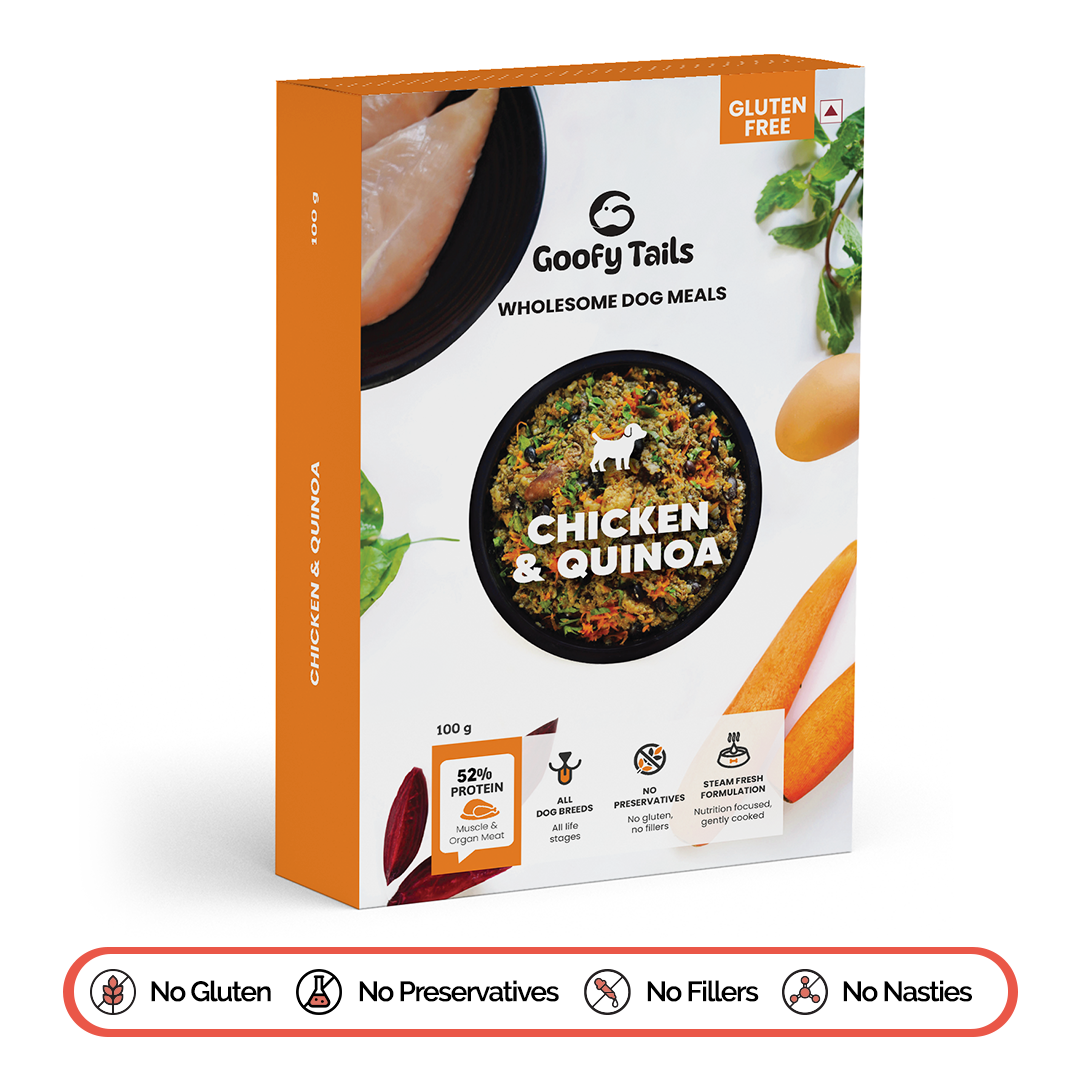
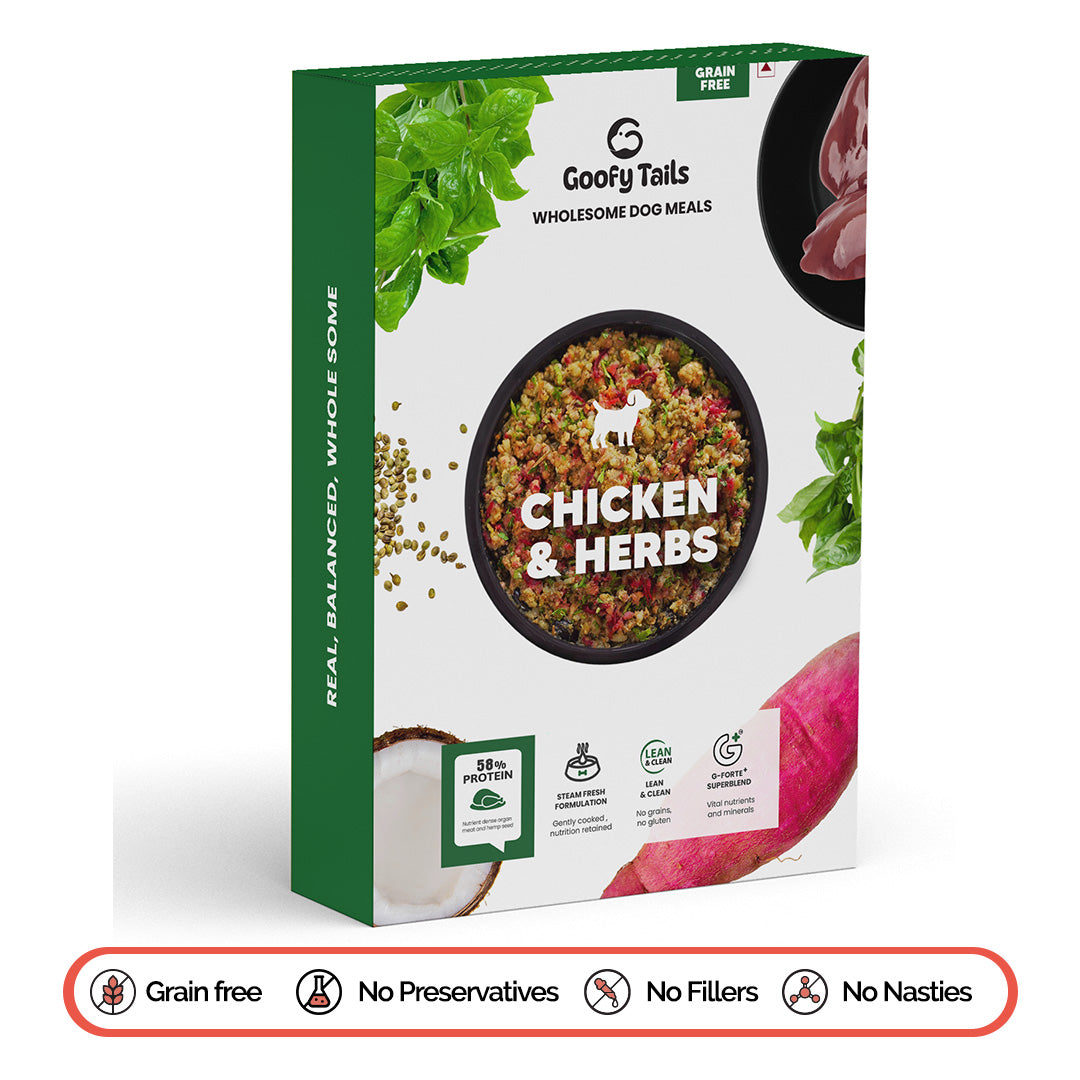
Every Goofy Tails wholesome wet meal is made with 75–80% natural moisture, real whole-meat protein, and no artificial preservatives or fillers. For Labradors, this format is ideal: the high moisture content supports kidney and urinary health, the lean protein profile helps manage weight, and the natural ingredients are free from the excess starch and carbohydrate filler that drives fat gain in kibble-fed Labs.
Among the full range, two meals stand out as particularly well-suited for Labradors:
"As a Vet I recommend clean, honest and wholesome ingredients and an active lifestyle. Therefore, I trust and recommend Goofy Tails."Dr. Madhurita, President, Myvets Charitable Trust & Research Centre
4. Home-Cooked Meals for Your Labrador
Home cooking for your Lab is an excellent way to ensure ingredient transparency and cater to specific sensitivities, but it requires genuine nutritional planning. Labradors are large, active dogs with significant protein, fat, and micronutrient requirements. A poorly balanced home-cooked diet can lead to deficiencies just as damaging as a poor commercial diet.
A Simple Balanced Home-Cooked Base Recipe (Per 30 kg Adult Lab)
| Ingredient | Quantity (per meal) | Purpose |
|---|---|---|
| Chicken breast (boiled, boneless) | 150–180 g | Lean complete protein |
| Brown rice or quinoa (cooked) | 60–80 g | Complex carbohydrate, energy |
| Pumpkin (boiled or steamed) | 40 g | Fibre, digestion, gut health |
| Carrot (raw grated or boiled) | 30 g | Beta-carotene, crunchy fibre |
| Spinach or leafy greens | 20 g | Iron, folate, vitamins |
| Whole egg (boiled) | 1 egg | Complete protein, biotin, fat |
| Coconut oil or hemp seed oil | 1 tsp | Healthy fat, Omega-3/6 balance |
Safe Human Foods to Add as Toppers
- Watermelon (seedless): hydrating, low calorie; great in summer
- Boiled sweet potato: complex carbs, beta-carotene, gut fibre
- Plain boiled chicken liver (small amounts): nutrient-dense, iron-rich
- Cucumber slices: high water content, excellent low-calorie snack
- Plain curd / yogurt (small amounts): probiotics, cooling, Labs love it
- Banana (small pieces): potassium, energy boost post-exercise
5. Hydration and Bone Broth: The Lab's Secret Weapon

Labradors are historically water dogs, and they still need plenty of it. A 30 kg adult Lab requires approximately 1.5–2 litres of water per day, rising to 2–2.5 litres in Indian summers or after vigorous exercise. Labs fed exclusively on dry kibble are in a state of chronic mild dehydration, which over years contributes to kidney strain, urinary tract infections, and bladder crystals.
Why Bone Broth is the Perfect Addition for Labs
Bone broth is one of the highest-impact additions you can make to any Lab's diet. It delivers fluid intake passively (even picky drinkers rarely refuse broth), contributes collagen and glycine for joint tissue repair, supports the gut lining, and makes any meal significantly more palatable. For Labs who are food-motivated, adding bone broth transforms a standard meal into something they practically sprint to the bowl for.


💧 Hydration Tip: The Broth Bowl Method
Pour one Goofy Tails Chicken Bone Broth pack (100ml) over your Lab's meal once daily. This delivers approximately 90–95ml of additional fluid passively, supports joint health with natural collagen, and makes even the most routine meal irresistible. For Labs in Indian summers, freeze diluted bone broth into ice cubes as an enriching afternoon cool-down treat.
Shop Chicken Bone Broth →6. The Right Treats for Labradors
Labs are extraordinarily treat-motivated, which makes them exceptional to train, but also means that treats can silently contribute a significant proportion of their daily calories. The rule of thumb: treats should account for no more than 10% of total daily calorie intake. For a 30 kg adult Lab eating 1,600 kcal/day, that's around 160 kcal in treats, so choose wisely.


7. Supplements: Targeted Support for a Healthy Lab
Given Labs' significant predisposition to hip and elbow dysplasia, proactive joint supplementation is one of the most evidence-backed investments you can make in your dog's long-term quality of life. Canine Mobility+ is purpose-built for exactly this.

Why Canine Mobility+ is the #1 supplement for Labs:
- Glucosamine is a key compound that helps maintain healthy cartilage, supports joint lubrication, and reduces stiffness. It promotes smoother movement and enhances flexibility, making it ideal for senior dogs, active breeds, or those with joint discomfort. Regular supplementation can support long-term joint health, comfort, and mobility.
- Chrondoitin supports better mobility and flexibility, especially in aging or active dogs. When used regularly, chondroitin promotes long-term joint health and works synergistically with glucosamine for enhanced results.
- Collagen Peptides play a vital role in maintaining your dog’s structural strength and mobility. They support the repair and regeneration of joints, cartilage, and connective tissues, helping to improve flexibility and reduce stiffness.
- Curcuminoids is ideal for dogs recovering from illness, injury, or dealing with age-related inflammation, curcuminoids contribute to overall resilience and long-term health.
8. Can Labs Eat a Vegetarian Diet?
If your household is vegetarian and you prefer a plant-based option for your dog, Goofy Tails offers one carefully formulated choice. Here's what it delivers, and what a complete vegetarian diet for a Lab must always include:

What a complete vegetarian diet for a Lab must always include:
- Complete plant protein sources: paneer and yellow lentils together provide a broad amino acid profile, but taurine and L-carnitine (found naturally in meat) must be monitored; supplement if feeding fully vegetarian long-term.
- Pumpkin (daily): one of the most important vegetables for a vegetarian Lab diet: rich in soluble and insoluble fibre for gut health, beta-carotene for immunity, and natural moisture for kidney support.
- Hemp seeds or flaxseed (daily): the primary plant-based Omega-3 source (ALA); essential for skin, coat, and reducing inflammation. Hemp seeds in this meal provide a meaningful daily dose.
- Quinoa over rice: quinoa is a complete protein containing all essential amino acids, making it significantly superior to plain rice as a carbohydrate base in vegetarian dog diets.
- Sweet potato: complex carbohydrate rich in beta-carotene, potassium, and gut fibre. Lower glycaemic index than white potato, helping manage the Lab's obesity risk even on a plant-based diet.
9. Frequently Asked Questions
Q: How much should I feed my adult Labrador?
A typical adult Lab (25–36 kg) requires approximately 1,400–1,800 kcal per day depending on activity level. For Goofy Tails wet food, 2–3 packs of 200g per day (alongside any additional toppers or treats) provides a strong nutritional foundation. Always adjust based on your dog's body condition score. You should be able to feel the ribs easily but not see them. Labs are prone to obesity, so regular weigh-ins every 4–6 weeks are recommended.
Q: Is wet food better than dry kibble for Labradors?
For most Labs, yes, especially in the Indian context. Wet food delivers 75–80% moisture versus kibble's 6–10%, dramatically reducing the chronic dehydration risk that contributes to kidney stress and urinary issues in large breeds. Wet food is also more digestible, delivers higher bioavailable protein, and, critically for Labs, tends to have a lower starch and carbohydrate load than most kibble, helping manage the breed's obesity tendency. If you feed kibble, always add water or bone broth to every meal.
Q: Do Labradors need joint supplements?
Labs are one of the breeds most affected by hip and elbow dysplasia. Proactive joint supplementation, starting by age 4–5, or earlier for heavier dogs, is one of the most impactful preventive health investments you can make. Goofy Tails Canine Mobility+ provides a comprehensive joint formula (glucosamine, chondroitin, green-lipped mussel, collagen, boswellia, and hyaluronic acid) in a palatable liquid served over food. It is suitable from 3 months onwards and is available exclusively on goofytails.com.
Q: My Lab is always hungry. Is this normal?
Yes, and it is actually genetic. Many Labradors carry a variant in the POMC gene that reduces the "satiety signal," meaning they genuinely feel less full after eating than other breeds. This does not mean you should feed more. Instead, focus on high-protein, high-fibre meals (which promote a longer feeling of fullness than high-fat or high-carb alternatives), feed on a strict schedule rather than free-feeding, and use low-calorie treats like cucumber slices or freeze-dried chicken liver for rewards.
Q: What are the best treats for training a Labrador?
High-value, low-calorie, small-format treats work best for Labs. Goofy Tails Freeze Dried Chicken Liver Cubes are ideal: intensely palatable (Labs find liver irresistible), only 2g fat per serving, grain-free, and easy to break into smaller pieces for rapid-fire training rewards. For dental health maintenance, the Active Dental Sticks (Seaweed) used daily after meals provide a rewarding chew that simultaneously reduces tartar and freshens breath.
Q: Should I give my Lab chicken or lamb-based food?
Chicken is the preferred first choice for most Labs. It is the leanest complete protein available, easily digestible, and the base for Goofy Tails' two Lab-optimised meals (Chicken & Quinoa and Chicken & Herbs). If your Lab shows signs of chicken sensitivity (persistent itching, loose stools, ear infections despite other management), switching to the Lamb & Pumpkin or Lamb & Rosemary variants is a straightforward protein rotation. Adding the Lamb Bone Broth alongside any meal provides variety and additional collagen regardless of the primary protein choice.
Q: How do I transition my Lab from dry kibble to wet food?
Transition gradually over 7–10 days: start with 25% wet food mixed into kibble in days 1–3, move to 50/50 in days 4–6, then 75% wet in days 7–9, and full wet food from day 10. This allows your dog's digestive microbiome to adapt, minimising the risk of temporary loose stools. Labs generally make this transition very willingly due to the improved palatability of wet food. If your dog was previously a slow eater on kibble, expect enthusiasm levels to increase considerably.
Q: Can I feed my Lab home-cooked food exclusively?
Yes, but it requires careful planning. A home-cooked diet without supplementation is almost certainly deficient in calcium, zinc, vitamin D, and certain amino acids. If cooking from scratch, always add a comprehensive supplement like Canine Mobility+ (for joint support and omega-3s) and Canine Vitality (for the full micronutrient spectrum). Use the balanced base recipe in Section 4 of this guide as your foundation, and consult your vet every 6 months with a diet review.
Q: Where can I buy Goofy Tails products for my Labrador?
Goofy Tails wet food meals are available for quick delivery across India on Blinkit (same-day in select cities), Swiggy Instamart, Zepto, BigBasket, Amazon India, and Supertails. For the complete Lab care range, Canine Mobility+, Canine Vitality, Chicken Bone Broth, Lamb Bone Broth, Hemp Seed Oil, Active Dental Sticks, and Freeze Dried Chicken Liver Cubes, visit goofytails.com directly. The Trial Pack (all 6 wet food flavours) is the ideal way to discover which meal your Lab loves most.
10. Other Retriever Breeds: Meet the Family
The Labrador is one of six recognised retriever breeds, all sharing a common heritage as working gundogs bred to retrieve game on land and water. Each has its own personality, appearance, and care needs. If you're curious about the broader retriever family, or considering adding a second dog, here's your guide. All breed profiles are available in full on the Goofy Tails Dog Wiki →


Conclusion: Feed Your Lab Like the Champion They Are

The Labrador Retriever is one of the most rewarding dogs to share your life with: energetic, loving, endlessly food-motivated, and loyal beyond measure. That food motivation is a gift for training and bonding, but it means the responsibility for their nutritional health rests entirely with you. Get the diet right and you give your Lab the foundation for a decade or more of vibrant, active, healthy life. Get it wrong and you risk the joint disease, weight gain, and kidney stress that cut that potential short.
- Feed high-protein, controlled-fat, high-moisture meals: wet food is the gold standard for Labs
- Use Chicken & Quinoa or Chicken & Herbs as the primary Goofy Tails meal for your Lab
- Add Chicken Bone Broth as a daily topper for hydration, collagen, and palatability
- Start Canine Mobility+ by age 4–5 (or earlier for large/heavy Labs) for proactive joint support
- Use Freeze Dried Chicken Liver Cubes for training: high value, low calorie
- Use Active Dental Sticks (Seaweed) daily to prevent tartar and maintain oral health
- If cooking at home, always supplement to fill the inevitable micronutrient gaps
- Never free-feed a Labrador: strict portion control is non-negotiable for this breed
- Never feed onion, garlic, grapes, chocolate, or any salted/spiced human food
- Never ignore early joint stiffness: early intervention with Canine Mobility+ changes outcomes
🐾 Start Your Lab's Nutrition Journey with Goofy Tails
Human-grade, preservative-free, FSSAI-compliant, and vet-formulated. Wet meals, bone broth, joint supplements, dental treats, and freeze-dried training rewards, everything your Labrador needs to thrive at every life stage. Rated 4.5/5 across 850+ reviews by Indian pet parents.
Shop Lab Essentials →
Leave a comment