



Rottweiler

History:
Rottweilers are service dogs that have been a well-known breed in the United States since 1931. They are considered to be one of the oldest surviving furry companions. From Roman times, Rottweilers were kept as driving or herding dogs.
In the area of the Rottweiler, this breed met and mixed with native dogs in a natural crossing. The ancestors of this dog breed were the mastiff-like, cattle-herding dogs of the ancient Romans, who roamed Europe with their armies. While some of these dogs were left behind as the army moved forward, they bred with local sheepdogs in Germany, resulting in the Rottweiler dog breed.
Rottweilers commonly helped herd cattle but also served as property guardians and livestock guardians. In the 1930s, these dogs were first taken to Britain and were authorised by the Kennel Club in the year 1966.
Considering adopting a Rottweiler? Check out our page "Best Food for Rottweilers: Guard Dog Nutrition Guide for Best Wet Food" detailing what to consider before adopting and our recommended products for a Rottweiler.
If you want to learn about other guard dog breeds, check out our page "Different Guard Dog Breeds".
|
Gender |
Height |
Weight |
|
Male |
63-69 cm |
50 kg |
|
Female |
58-64 cm |
38 kg |
Size – Large
Life Expectancy: 8 to 10 years

Breed Appearance:
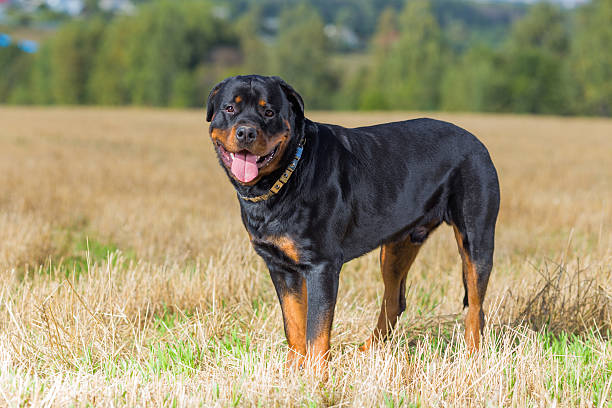
The Rottweiler is a large, muscular, and powerfully built dog with a balanced, athletic frame.
The breed commonly features:
- Broad, moderately domed head
- Strong, deep muzzle
- Dark almond-shaped eyes
- Medium-sized triangular drop ears
- Deep, broad chest
- Thick, muscular neck
- Strong, well-developed limbs
- Long, thick tail carried naturally where docking is prohibited
Its coat is short, dense, straight, and weather-resistant.
Common coat colour includes:
- Black with rust or mahogany markings
The distinctive markings appear above the eyes, on the cheeks, muzzle, chest, legs, and beneath the tail.
The breed's robust physique and confident expression reflect its heritage as a powerful working and guardian dog.
Breed Type - Guardian:
The Rottweiler is a confident, intelligent, and naturally protective working breed.
It is known for being:
- Loyal and devoted
- Courageous
- Calm and confident
- Highly intelligent
- Protective
- Affectionate with family
The breed forms strong bonds with its family and is naturally reserved with strangers while remaining stable and dependable when properly trained.
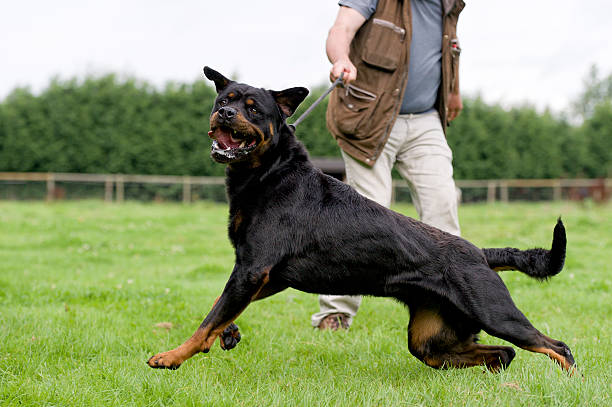
Training:
The Rottweiler is highly intelligent and eager to work.
Training should focus on:
- Early socialisation
- Positive reinforcement methods
- Basic obedience training
- Leash manners
- Controlled exposure to people and environments
- Consistent leadership
The breed excels in:
- Protection work
- Police and military service
- Obedience
- Search and rescue
- Tracking
Early, structured training and regular mental stimulation help develop a confident, well-mannered adult.
Health & Care:
A generally hardy breed, but some issues to watch for include:
- Osteosarcoma (bone cancer) in some lines
- Aortic stenosis and other heart conditions
Regular health screenings, a balanced diet, and controlled exercise in youth are key to longevity and well-being.

Living Conditions:
Adaptable to many home types, with proper care:
-
Can live in apartments if exercised rigorously
-
Thrives in homes with fenced yards
-
Protective and naturally wary of strangers; early training is vital
-
May not do well in homes with many unfamiliar visitors unless well-socialised
-
Good with children and pets it’s raised with, but supervision is advised
It thrives with confident, involved owners and structured environments
Exercise:
Energetic and muscular, the Rottweiler needs daily physical and mental activity:
-
Requires at least 1.5–2 hours of daily exercise
-
Loves brisk walks, play sessions, obedience drills, and tasks
-
Bored Rottweilers may become destructive or overly territorial
-
Benefits from job-like activities like pulling, scent work, or tracking
Mental stimulation is just as important as physical exertion.
Grooming:
Low-maintenance coat:
-
Brush once or twice a week to remove loose hair
-
Bathe occasionally, or when dirty
-
Check ears and trim nails regularly
-
Maintain dental hygiene for long-term health
-
Sheds moderately, more during spring and fall
Grooming is simple but must be consistent to prevent minor issues.
Advantages:
-
Loyal, protective, and deeply devoted to family
-
Confident and intelligent – excels in obedience and working roles
-
Powerful deterrent – natural guard dog instinct
-
Trainable with strong work ethic – used in police, military, and service work
-
Generally calm and steady-natured with proper training
-
Good with children and pets when socialized early
-
Low-maintenance coat – minimal grooming needs
Disadvantages:
-
Requires consistent, experienced handling and training
-
Can be territorial or reactive without early socialization
-
Not ideal for first-time or passive dog owners
-
Strong-willed and physically powerful – needs firm leadership
-
Prone to health issues like hip dysplasia, heart disease, and cancer
-
Needs daily physical and mental exercise to stay balanced
-
Can be misunderstood or restricted in some housing areas due to reputation