



Lamb vs Chicken for Dogs: Which Protein Is Better?
When choosing food for your dog, one of the most common questions is: Should I feed lamb or chicken? Both are high-quality animal proteins that can support healthy growth, muscle maintenance, and energy — but they are not identical, and depending on your dog's age, activity level, digestion, and sensitivities, one may suit you far better than the other. This guide breaks down the real differences between lamb and chicken for dogs so that you can choose intelligently.
1. Understanding Protein Needs in Dogs

Dogs are omnivorous but biologically designed to thrive on animal protein. Unlike carbohydrates or fats, protein cannot be stored in the body in a meaningful way — it must be consumed daily in adequate amounts to maintain every system that keeps your dog healthy and active.
Protein supports:
- Muscle growth and repair — every time your dog runs, jumps, or plays, muscle fibres sustain micro-damage that protein rebuilds
- Immune system function — antibodies, cytokines, and immune cells are all made from amino acid building blocks
- Skin and coat health — keratin (the structural protein in fur) is synthesised directly from dietary amino acids; protein-deficient dogs show dull, brittle coats quickly
- Enzyme and hormone production — digestive enzymes, thyroid hormones, and insulin are all protein-derived
- Energy metabolism — particularly important when carbohydrate intake is low or during high-output activities
The quality of protein matters more than the label claim. Both lamb and chicken are complete animal proteins, meaning they provide all essential amino acids that dogs cannot synthesise themselves. But their nutritional profiles, digestibility, fat content, and allergen potential differ in ways that matter for your specific dog.
| Nutritional Factor | Chicken | Lamb |
|---|---|---|
| Protein Quality | Complete — all essential amino acids | Complete — all essential amino acids |
| Fat Content | Lower (lean protein) | Higher (richer, more calorie-dense) |
| Digestibility | Very high — mild on the gut | High — slightly richer to process |
| Iron & Zinc | Moderate | Higher natural mineral content |
| Allergen Frequency | One of the most common dog allergens (due to widespread use) | Less common — often tolerated by sensitive dogs |
| Calorie Density | Lower | Higher |
| Best For | Weight management, sensitive digestion, most life stages | Active dogs, underweight dogs, protein rotation, chicken sensitivity |
2. Chicken for Dogs
Chicken is one of the most widely used proteins in dog food — and for good reason. It is lean, digestible, nutrient-rich, and well tolerated by the vast majority of dogs across all life stages. When sourced from quality, named cuts (breast, liver, whole bird) rather than unnamed meal or by-products, chicken is one of the most complete nutritional foundations you can put in your dog's bowl.
Why Chicken Is Popular
- Lean and easy to digest — the gut processes chicken efficiently with minimal fermentation or gas
- High in essential amino acids — particularly leucine, which is central to muscle protein synthesis
- Naturally rich in B vitamins — especially B3 (niacin) and B6, which support energy metabolism and nervous system health
- Affordable and widely available — making long-term feeding practical and consistent
- Suitable for most life stages — from weaning puppies through to senior dogs managing chronic conditions
Chicken is often considered a "safe starter protein" for puppies and adult dogs because it is mild on the digestive system. This makes it the go-to choice during dietary transitions, post-illness recovery periods, or whenever you need a predictable, reliable nutritional foundation.
Benefits of Chicken
1. Lean Protein Source
Chicken contains significantly less fat than lamb — particularly when using breast meat — making it ideal for dogs where calorie control matters. This includes dogs on a weight management plan, less active indoor dogs who don't burn enough calories to justify high-fat meals, and dogs prone to pancreatitis, where high-fat diets can trigger dangerous flare-ups. Lean protein allows you to hit your dog's amino acid targets without overshooting their fat and calorie requirements.
2. Highly Digestible
Many dogs digest chicken with exceptional efficiency, meaning more of the protein actually reaches the bloodstream and gets used — rather than passing through undigested and disrupting gut balance. This makes chicken particularly valuable during digestive recovery after illness or stomach upset, transition periods when switching between foods, and in dogs with sensitive stomachs who react poorly to rich, high-fat proteins.
3. Supports Muscle Maintenance
Chicken's clean, complete amino acid profile makes it excellent for active and growing dogs. The high leucine content in particular stimulates muscle protein synthesis — meaning dogs on chicken-based diets tend to maintain lean muscle mass well, even as they age or move through periods of reduced activity.
When Chicken May Not Be Ideal
Chicken is one of the most common proteins in commercial dog food. Because of its widespread use across kibble, wet food, treats, and toppers, some dogs develop protein sensitivities to it over time — not because chicken is inherently problematic, but because constant exposure to any single protein can trigger an immune response in predisposed individuals.
Signs of possible chicken sensitivity:
- Chronic itching — particularly around the face, ears, paws, and groin
- Ear infections — recurring despite treatment; often an early sign of food-related inflammation
- Digestive upset — loose stools, gas, or intermittent vomiting without another obvious cause
- Paw licking — compulsive licking of paws, especially between meals, can indicate dietary inflammation
Not all itching is a chicken allergy — environmental allergens, flea allergy dermatitis, and contact sensitivities are far more common causes. But in dogs where other causes have been ruled out, switching to a novel protein like lamb is a logical and often effective next step.
3. Lamb for Dogs

Lamb is often positioned as a "novel" or alternative protein — and this framing, while useful, undersells what lamb actually brings to the bowl. Lamb is not merely a chicken substitute for allergic dogs; it is a distinctly rich, mineral-dense, and calorie-efficient protein source that suits a specific profile of dog very well.
Why Lamb Is Different
- Higher fat content — naturally more calorie-dense per gram than chicken
- Richer flavour and aroma — making it highly palatable, especially for picky eaters
- Slightly denser in calories — useful for dogs who struggle to maintain weight
- Less commonly used than chicken — which preserves its value as a novel protein for rotation or elimination diets
Lamb can be particularly helpful for dogs needing extra calories to fuel high daily activity, dietary rotation to reduce the risk of developing protein fixation, or an alternative protein source when chicken sensitivity is suspected or confirmed.
Benefits of Lamb
1. Higher Energy Density
Lamb contains more natural fat than chicken, which translates directly to more calories per gram of food — without requiring a larger portion size. This makes it the ideal protein for highly active dogs (working breeds, sporting dogs, dogs in agility or protection training), working breeds who expend significant energy across long daily sessions, underweight dogs who need to gain lean mass without eating an impractical volume of food, and dogs in cold climates or environments where fat serves as an additional insulating energy reserve.
2. Good Alternative Protein
For dogs with suspected chicken sensitivity, lamb is often well tolerated — precisely because most dogs have not been repeatedly exposed to it across years of commercial feeding. When vets recommend an elimination diet to identify food allergies, lamb is one of the most commonly suggested novel proteins because its relative scarcity in mainstream dog food makes it genuinely "new" to the immune system. This gives the gut and skin time to calm down before the offending protein is reintroduced for confirmation testing.
3. Rich in Iron and Zinc
Lamb naturally contains higher levels of haem iron and zinc than most poultry proteins. Haem iron — the form found in red meat — is absorbed significantly more efficiently than the non-haem iron found in plant sources. This matters for immune health (iron is essential for immune cell function), skin integrity (zinc supports skin barrier function and wound healing), and oxygen transport (iron is the central component of haemoglobin, which carries oxygen to every cell in your dog's body). Dogs recovering from illness, anaemia, or prolonged stress can benefit meaningfully from lamb's mineral density.
4. Palatability
Many picky dogs who turn up their nose at chicken-based meals will eat lamb enthusiastically. The stronger aroma of red meat acts as a powerful palatability signal for dogs — whose sense of smell is estimated to be 10,000 to 100,000 times more acute than ours. For dogs who are difficult to feed, or who have gone off their regular food during illness or stress, a lamb-based meal can be the difference between eating and not eating.
When Lamb May Not Be Ideal
Because lamb is higher in fat, it may not suit all dogs. Specifically, dogs prone to pancreatitis should avoid high-fat proteins regardless of source, as fat is the primary dietary trigger for pancreatic inflammation. Sedentary indoor dogs who spend most of their day resting will accumulate excess body fat on lamb-heavy diets if portions are not carefully controlled. Dogs needing weight control — particularly Labs, Beagles, Spaniels, and other obesity-prone breeds — are better served by lean chicken as their primary protein. In such cases, using lamb occasionally as a rotation rather than a daily staple gives you the benefits of protein variety without the calorie excess.
4. Digestibility: Which Is Easier on the Stomach?
Both proteins are digestible when properly prepared, but they differ meaningfully in how they affect the gut — and the difference matters more for some dogs than others.
Chicken is generally lighter and leaner, which means it moves through the digestive tract more efficiently and produces less fermentation in the large intestine. The result is typically firmer stools, less gas, and a lower risk of digestive upset during transitions or recovery periods.
Lamb is richer and more calorie-dense, which means the digestive system has to work slightly harder to process the higher fat load. For most healthy adult dogs this is not a problem — but for dogs with a history of pancreatitis, EPI (exocrine pancreatic insufficiency), or very sensitive digestion, the additional fat can cause loose stools or discomfort, particularly in the early stages of introduction.
5. Puppies: Lamb or Chicken?

Puppy nutrition is one of the most consequential decisions you'll make for your dog's long-term health. The first 12 months of life — particularly in medium and large breeds — set the skeletal, muscular, and metabolic template that your dog will carry for the rest of their life. Choosing the right protein is important, but it is one piece of a larger nutritional picture that includes calcium-phosphorus balance, DHA for brain development, and appropriate caloric density for growth rate.
For puppies, the priority is:
- High-quality protein — to build lean muscle and support organ development
- Balanced calcium and phosphorus — critical for correct bone mineralisation, especially in large breeds where excess calcium causes skeletal problems
- DHA for brain development — omega-3 fatty acids support cognitive and retinal development in the first months of life
- Adequate calories — growing dogs have higher energy requirements per kilogram of body weight than adults
Both lamb and chicken can work well in puppy diets when properly formulated. However:
- Chicken is more commonly used in puppy foods due to its digestibility — it is mild, lean, and well tolerated even by young, developing digestive systems
- Lamb can benefit high-energy or fast-growing pups needing extra calories — particularly in breeds like Rottweilers, Mastiffs, or Saint Bernards who grow rapidly and have substantial energy requirements even before reaching adulthood
The key is balanced formulation, not just protein choice. A well-formulated lamb-based puppy diet is better than a poorly formulated chicken-based one, and vice versa. Always look for meals specifically designed or suitable for puppies, and transition between proteins slowly to protect the developing gut.
6. Skin and Coat Considerations
Your dog's skin and coat are among the most visible indicators of nutritional health — and also the first to show signs when something in the diet is not working.
If your dog has a dull coat that lacks the characteristic gloss of a well-nourished dog, mild persistent itching without an obvious environmental trigger, or recurrent ear issues (inflammation, discharge, or odour) that return despite treatment, switching from chicken to lamb may help if sensitivity is suspected.
However, it is important to understand that protein type alone is rarely the full story when it comes to skin and coat health. Two nutritional factors often matter even more than which protein sits at the top of the ingredient list:
- Protein rotation — alternating between lamb and chicken across the week reduces the risk of developing sensitivity to either protein, ensures a broader range of amino acids and micronutrients, and keeps the immune system from over-committing to a response against any single food antigen
- Omega-3 supplementation — EPA and DHA from fish or algae sources, or ALA from hemp seed and flaxseed, are the most direct dietary drivers of skin barrier integrity, coat shine, and systemic inflammation control. Adding a quality omega-3 source to any protein base — lamb or chicken — will almost always produce more visible coat improvement than switching proteins alone
7. Activity Level Matters
One of the most practical ways to decide between lamb and chicken is simply to look at what your dog does with their day. Caloric needs, fat metabolism, and protein turnover all vary dramatically between a retired sofa companion and an active working dog — and the protein you choose should reflect that reality.
🐔 Choose Chicken If:
- Your dog is moderately active — daily walks but no intense sustained exercise
- Weight control is important — keeping calories down while hitting protein targets
- You prefer lean protein for a dog with a tendency to gain weight
- Your dog digests chicken well and shows no signs of sensitivity
- You are feeding a senior dog with reduced activity and metabolic rate
- Your vet has advised a low-fat diet following a pancreatic episode
🥩 Choose Lamb If:
- Your dog is highly active — working, sporting, agility, or high-energy breeds
- You need a higher calorie intake without increasing meal volume significantly
- Your dog seems bored with chicken or is becoming less enthusiastic about meals
- You suspect chicken sensitivity based on skin, ear, or digestive symptoms
- Your dog is underweight or struggles to maintain lean muscle mass
- You want to introduce protein rotation into your dog's weekly feeding routine
8. Rotation Is Often Better Than Debate
Instead of asking which protein is "better," a smarter approach is often protein rotation — and this is a concept that more and more nutritionally informed pet parents are adopting as the evidence for dietary diversity in dogs grows stronger.
Rotating between lamb and chicken:
- Reduces the risk of protein fixation — repeated daily exposure to a single protein is the primary mechanism through which food sensitivities develop; rotation interrupts that cycle
- Minimises sensitivity development — the immune system is less likely to mount a response to proteins it encounters irregularly rather than constantly
- Improves dietary diversity — different proteins carry different amino acid ratios, fatty acid profiles, and trace mineral concentrations; rotating between them gives your dog access to a broader nutritional spectrum
- Keeps meals interesting — dogs can become habituated to the same flavour and aroma; rotating proteins maintains appetite and mealtime enthusiasm
Dogs, like humans, benefit from variety within balance. A practical rotation looks like lamb-based meals 3–4 days per week and chicken-based meals 3–4 days per week — or alternating daily. The key is that transitions between proteins are consistent and planned, not abrupt or irregular.
9. Goofy Tails Lamb & Chicken Wet Meals
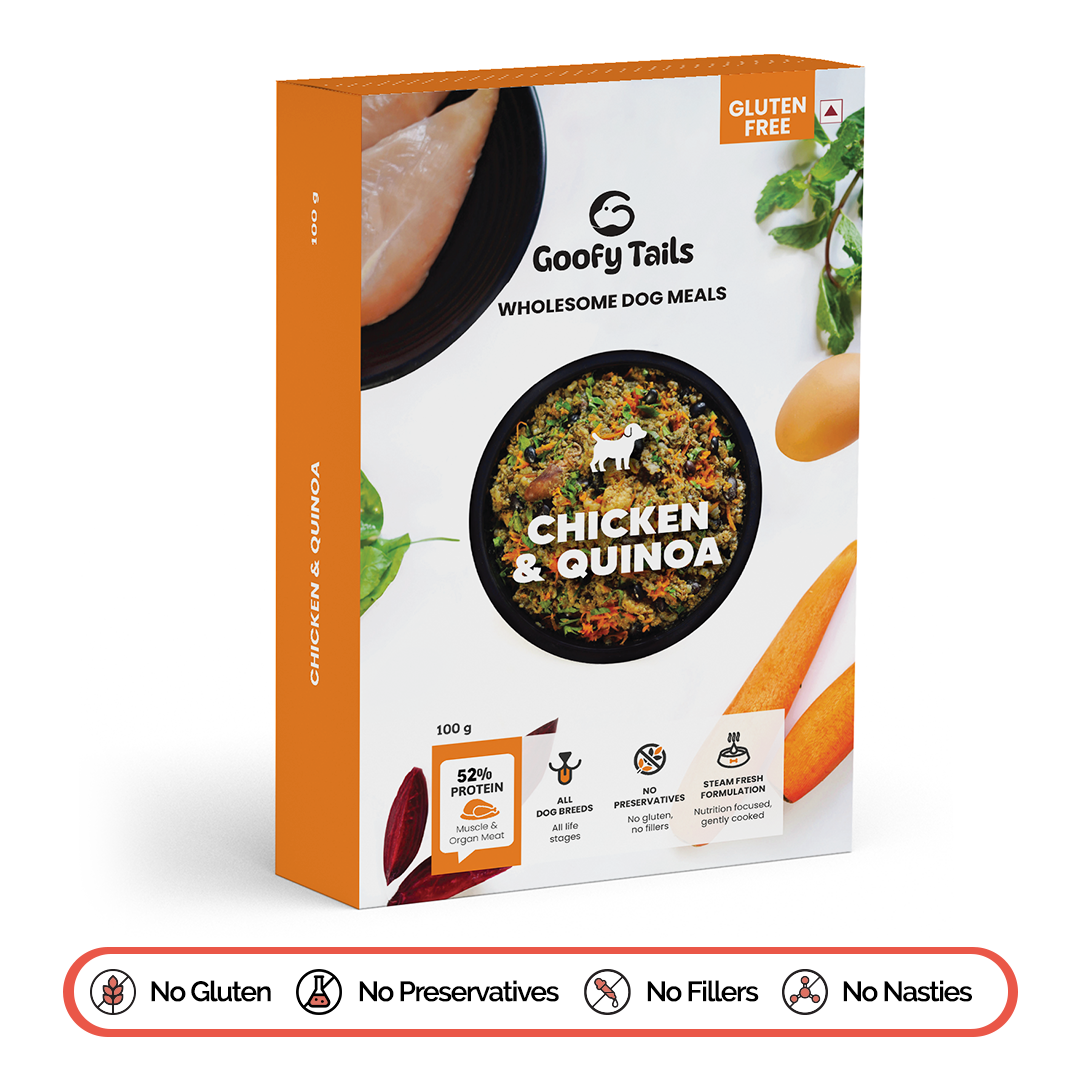
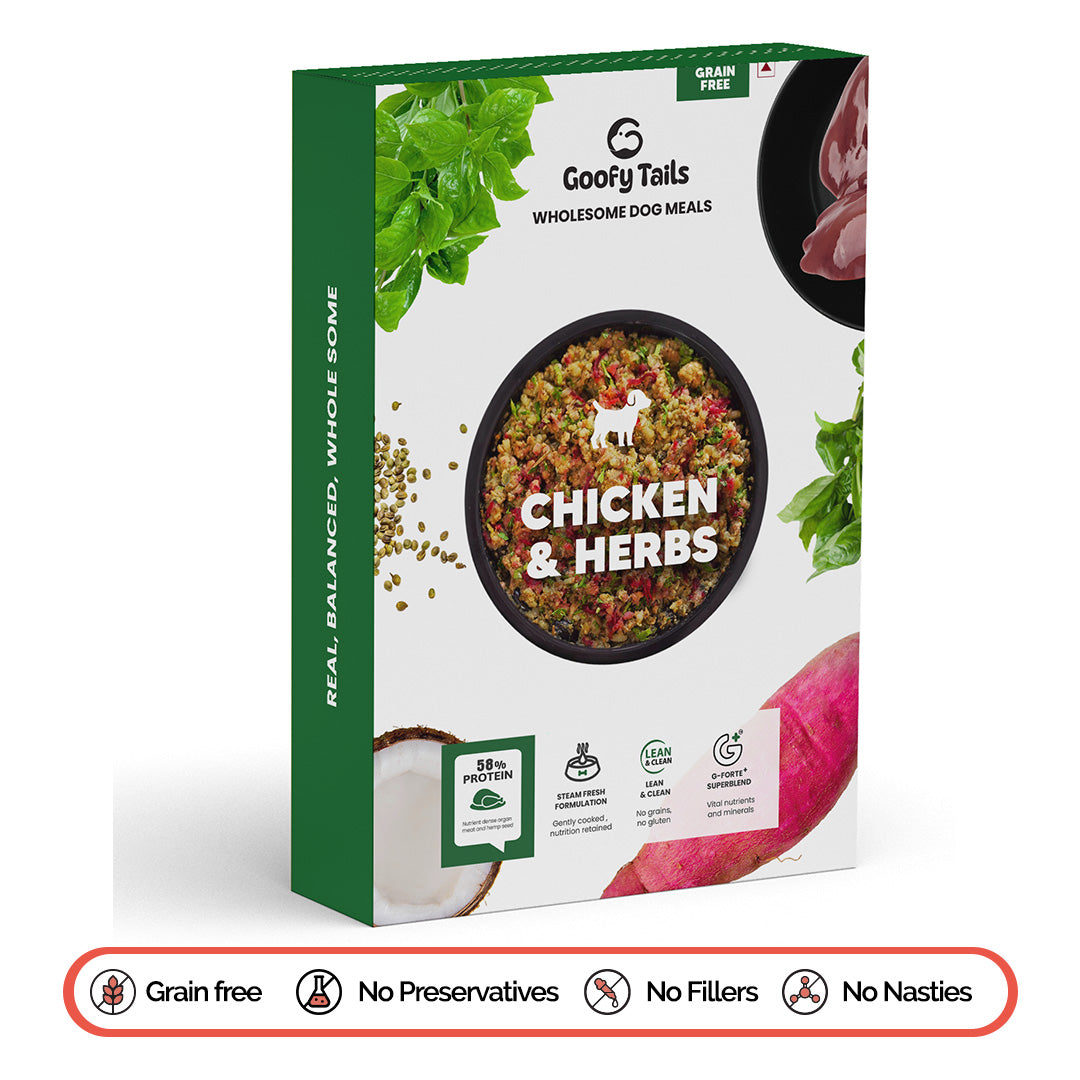
Yes, Goofy Tails serves both gluten-free lamb and chicken wet meals — all made with 75–80% natural moisture, real whole-meat protein, and no artificial preservatives or fillers. Whether you're feeding chicken for its lean digestibility, lamb for its energy density, or rotating between both for maximum dietary diversity, there's a Goofy Tails meal built for that purpose.
Gluten-Free Range

Grain-Free Range

Bone Broths: The Perfect Rotation Companion
Whichever protein you choose — or however you rotate between them — adding a matching bone broth topper delivers passive hydration, natural collagen for joint health, gut-lining glycine, and dramatically improved palatability. Use chicken broth with chicken-based meals and lamb broth with lamb-based meals for a consistent single-protein approach, or mix freely to vary flavour and nutritional input.


"As a Vet I recommend clean, honest and wholesome ingredients and an active lifestyle. Therefore, I trust and recommend Goofy Tails."Dr. Madhurita, President, Myvets Charitable Trust & Research Centre
10. Frequently Asked Questions
Q: Is lamb or chicken better for dogs with allergies?
Neither protein is universally "better" for allergic dogs — the answer depends on what your dog is actually reacting to. Chicken is one of the most common food allergens in dogs, largely because it appears in so many commercial foods and has been fed consistently from puppyhood. If your dog has been eating chicken-based food for years and is showing signs of food sensitivity (chronic itching, ear infections, loose stools), switching to lamb — which most dogs have not been extensively exposed to — is a sensible first step. Lamb is considered a novel protein for many dogs, meaning the immune system is less likely to have developed a response to it. However, if your dog has been eating lamb regularly, the same logic applies in reverse. True food allergy testing requires a strict elimination diet under veterinary supervision, not just a protein swap.
Q: Can I feed my dog both lamb and chicken in the same week?
Yes — and in fact, protein rotation between lamb and chicken is one of the most nutritionally sound feeding strategies available. Rotating proteins reduces the risk of developing sensitivity to any single protein source, provides a broader amino acid and trace mineral profile, and keeps meals interesting for food-motivated dogs. A practical rotation looks like 3–4 days on lamb, 3–4 days on chicken — or alternating daily. The key is introducing new proteins gradually (over 5–7 days) if your dog has been eating a single protein for a long time, to give the gut microbiome time to adapt.
Q: Which protein is better for a puppy — lamb or chicken?
Both can work well for puppies when properly formulated. Chicken is more commonly used in puppy diets because its lean digestibility makes it gentle on developing digestive systems, and its moderate fat content is appropriate for the controlled growth rate required in large-breed puppies. Lamb can benefit puppies of high-energy or fast-growing large breeds who need extra caloric density to fuel rapid development. The most important factor is not the protein choice itself, but that the overall diet is balanced in calcium, phosphorus, and DHA — and age-appropriate in caloric density. Check that any meal you feed is suitable for puppies before starting.
Q: My dog has a sensitive stomach — should I use lamb or chicken?
For a dog with a sensitive stomach, the instinct is often to start with chicken — it is leaner, lighter, and digests very efficiently with minimal gut fermentation. This is correct if the sensitivity is not protein-related (i.e., caused by rich food, dietary transitions, or environmental stress). However, if the sensitivity is protein-related and your dog has been on chicken for a long time, switching to lamb may actually help — particularly if you pair it with a gut-supportive vegetable like pumpkin, which appears in both Goofy Tails Lamb & Pumpkin and Lamb & Rosemary. Pumpkin's combination of soluble and insoluble fibre is one of the most clinically consistent tools for normalising stool quality and supporting a balanced gut microbiome. When in doubt, transition slowly over 7–10 days and monitor stool consistency throughout.
Q: Is lamb harder to digest than chicken for dogs?
Not significantly — both proteins are well digested by healthy adult dogs. The key difference is fat content rather than the protein itself. Lamb's higher fat load means the digestive system expends slightly more energy processing a lamb-based meal compared to a lean chicken meal. For most healthy dogs this is imperceptible. For dogs with pancreatitis, EPI, or a history of fat-triggered digestive episodes, however, this difference is meaningful — and in those cases, lean chicken is the safer choice. If you are introducing lamb for the first time, transition gradually over 7–10 days to allow the gut microbiome to adjust to the new fat load.
Q: Which protein is better for coat and skin health?
Both proteins contribute to coat health through their complete amino acid profiles — keratin (the structural protein in fur) is synthesised from dietary amino acids regardless of whether they come from lamb or chicken. The more significant dietary driver of coat and skin health is omega-3 fatty acid intake (particularly EPA and DHA), not protein type. If your dog's coat is dull or skin is dry, adding a quality omega-3 source — like the hemp seed oil present in both Goofy Tails Lamb & Rosemary and Chicken & Herbs — will typically produce more visible improvement than switching proteins alone. That said, if chronic itching or ear infections point to chicken sensitivity, switching to lamb will reduce the inflammatory load driving those symptoms and allow the skin to recover.
Q: Does grain-free mean better for my dog?
Not necessarily — "grain-free" is a characteristic of the carbohydrate base in a meal, not a measure of overall nutritional quality. Grain-free diets replace grains (rice, wheat, barley) with alternative carbohydrate sources (sweet potato, peas, lentils). This is genuinely beneficial for dogs with confirmed grain intolerances or for owners who prefer to minimise starch load. For dogs without grain sensitivity, well-formulated gluten-free diets using moderate amounts of whole grains like quinoa (as in Goofy Tails Chicken & Quinoa) can be equally nutritious. The most important factors are the quality and identity of the protein source, the absence of artificial preservatives, and the overall moisture and micronutrient profile — not whether grains are present or absent.
Q: How do I transition my dog from chicken to lamb (or vice versa)?
Transition gradually over 7–10 days: mix 25% of the new protein with 75% of the current meal on days 1–3; move to 50/50 on days 4–6; then 75% new and 25% old on days 7–9; full new protein from day 10. This gradual shift allows the gut microbiome — which adapts to process the specific fats and proteins in a diet — to adjust without the disruption that causes loose stools, gas, or temporary appetite loss. For dogs with known digestive sensitivity, extend the transition to 14 days and monitor stool quality throughout. Adding a bone broth topper during the transition period provides gut-lining support (via natural glycine) that helps the adjustment go smoothly.
Final Verdict: Lamb or Chicken?

There is no universal winner — and that is actually a useful answer, because it means you have genuine flexibility to choose based on what your dog actually needs rather than following a blanket rule.
🐔 Chicken is:
- Lean and calorie-controlled
- Highly digestible for most dogs
- Suitable for most life stages and body conditions
- Ideal for weight management or low-fat dietary needs
- The go-to protein for digestive recovery and transition periods
🥩 Lamb is:
- Rich, mineral-dense, and calorie-efficient
- Excellent for active, working, or underweight dogs
- A valuable novel protein for rotation and sensitivity management
- Highly palatable — often the answer for picky eaters
- Higher in iron and zinc than poultry proteins
The best choice depends on your dog's age, activity level, body condition, digestive sensitivity, and skin health. And often, the smartest approach isn't choosing one forever — it's choosing the right protein at the right time, and building a rotation that gives your dog the benefits of both.
- Choose chicken for weight management, lean protein needs, and most sensitive digestion cases
- Choose lamb for active dogs, protein rotation, novel protein trials, or picky eaters
- Rotate between both for the broadest nutritional coverage and lowest sensitivity risk
- Add a matching bone broth topper for hydration, collagen, and gut support regardless of protein
- Don't assume all itching or loose stools are protein-related — rule out environmental causes first
- Don't switch proteins abruptly — always transition over 7–10 days minimum
🐾 Try Both — Find What Your Dog Loves
Goofy Tails offers gluten-free and grain-free lamb and chicken wet meals, plus matching bone broths — all human-grade, preservative-free, and FSSAI compliant. The Trial Pack (all 6 wet food flavours) is the easiest way to discover your dog's preference and start a rotation that works.
Shop All Wet Meals →
Leave a comment