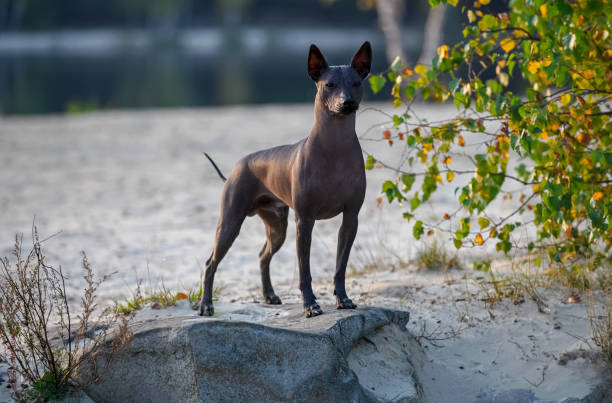



Mexican Hairless Dog (Xoloitzcuintli)

Breed History:
The Mexican Hairless Dog, officially known as the Xoloitzcuintli (pronounced show-low-eats-QUEENT-lee) or simply Xolo, is one of the world's oldest and rarest dog breeds, with a history spanning more than 3,000 years. Native to Mexico, the breed traces its origins to the ancient Aztec, Maya, Toltec, and Colima civilizations, where it was revered as both a loyal companion and a sacred animal. Its name comes from the Aztec god Xolotl, the deity of lightning, death, and the underworld, combined with the Nahuatl word itzcuintli, meaning dog.
According to Aztec mythology, the Xoloitzcuintli was believed to guide the souls of the deceased safely through the underworld. Beyond its spiritual significance, the breed also served as a watchdog, hunting companion, and valued household dog. Archaeological discoveries, including clay figures and burial sites dating back over 3,000 years, confirm its deep historical roots. Following the Spanish conquest, the breed's numbers declined dramatically, but dedicated conservation efforts during the 20th century helped restore its population. Today, the Xoloitzcuintli is recognised as Mexico's national dog and is celebrated as an important symbol of the country's cultural heritage.
Today, the Mexican Hairless Dog is valued as an affectionate family companion, alert watchdog, and ancient heritage breed known for its intelligence, loyalty, and distinctive hairless appearance.
If you want to learn more about the origins and functions of indigenous and primitive dogs, then check out our article "Understanding Dog Breed Categories" covering all categories, including their origins, functions, temperament, and care.
|
Gender |
Height |
Weight |
|
Male |
25–58 cm (toy to standard) |
4–25 kg (size varies) |
|
Female |
23–55 cm (toy to standard) |
4–23 kg (size varies) |
Size – Small to Medium to Large (Three Sizes: Toy, Miniature, Standard)
Life Expectancy: 13–18 years
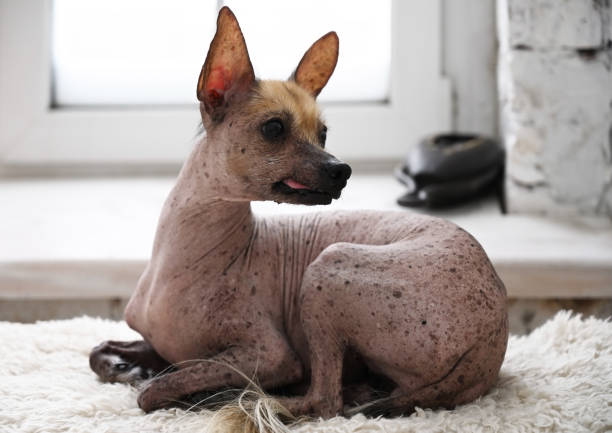
Breed Appearance:
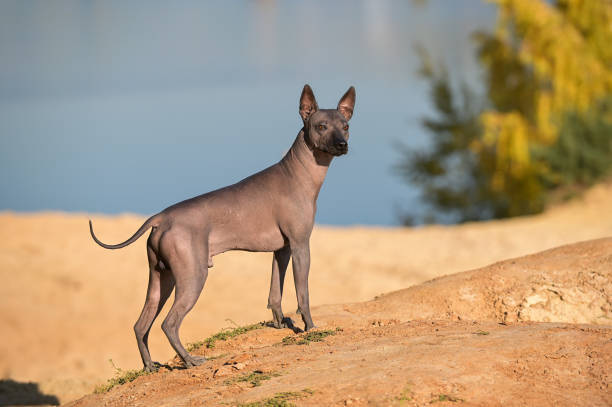
The Xoloitzcuintli is an elegant, lean, and athletic breed with a graceful outline.
The breed commonly features:
- Long, wedge-shaped head
- Straight, tapered muzzle
- Almond-shaped expressive eyes
- Large, erect ears
- Deep chest
- Long, muscular neck
- Lean, well-developed limbs
- Long, tapering tail
The breed is best known for its hairless skin, although a coated variety also exists. Hairless dogs may have small tufts of hair on the forehead, feet, and tail. The skin is smooth, tough, and can range from black and slate grey to bronze, liver, or reddish shades.
Common skin or coat colours include:
- Black
- Slate grey
- Charcoal
- Bronze
- Red
- Liver
- Copper
- Brindle
- Spotted patterns
The breed's smooth skin, upright ears, and refined build create a unique and elegant appearance.
Breed Type – Companion Dog:
The Xoloitzcuintli is an intelligent, calm, and devoted companion breed.
It is known for being:
- Loyal
- Intelligent
- Calm
- Alert
- Affectionate
- Reserved
The breed forms exceptionally strong bonds with its family and is naturally wary of strangers, making it an excellent watchdog without being unnecessarily aggressive.

Training:
The Xoloitzcuintli is highly intelligent and eager to learn.
Training should focus on:
- Early socialisation
- Positive reinforcement methods
- Basic obedience training
- Recall training
- Mental enrichment activities
- Gentle, consistent guidance
The breed excels in:
- Obedience
- Agility
- Rally
- Therapy work
- Scent work
Short, reward-based training sessions help maintain the breed's enthusiasm and confidence.
Health & Care:
The Xoloitzcuintli is generally healthy but may be prone to certain health concerns, including:
- Dental abnormalities (hairless variety)
- Skin irritation and sunburn
- Acne or blocked pores
- Patellar luxation
- Hip dysplasia (larger dogs)
Routine veterinary care, proper skin protection, regular dental care, and responsible breeding help support long-term health.
Living Conditions:
The Xoloitzcuintli adapts well to various living environments.
Ideal environments include:
- Apartments
- Houses with securely fenced yards
- Urban or suburban homes
- Families or individuals
- Warm or temperate climates
The breed thrives indoors with its family and should be protected from prolonged sun exposure and cold temperatures due to its lack of insulating fur.
Exercise:
The Xoloitzcuintli has moderate exercise requirements.
Recommended activities include:
- Daily walks
- Running
- Interactive games
- Agility
- Puzzle toys
- Mental enrichment activities
Around 1 hour of daily exercise helps keep the breed physically fit and mentally stimulated.
Grooming:
The hairless variety requires skin care rather than coat care.
- Regular skin cleansing
- Moisturising when needed
- Sunscreen or protective clothing during prolonged sun exposure
- Occasional bathing
- Nail trimming
- Regular ear cleaning
- Routine dental care
The coated variety requires weekly brushing and minimal coat maintenance.