



Lambkin

Breed History:
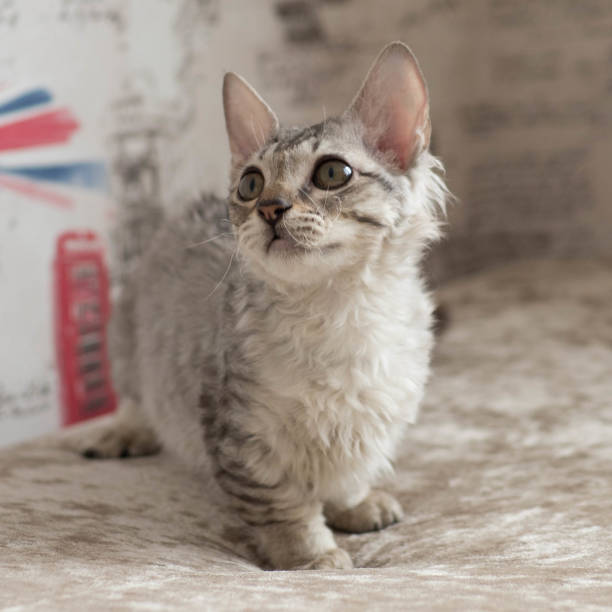
The Lambkin is a rare modern cat breed developed in the United States during the late 20th century. It was created by crossing the Munchkin, known for its short legs, and the Selkirk Rex, combining the Munchkin's naturally short legs with the Selkirk Rex's distinctive curly coat.
The breed was developed to produce a small, low-slung cat with a soft, curly or wavy coat. The name "Lambkin" refers to its lamb-like appearance, particularly its short legs and plush, curly coat.
Because it inherits traits from both parent breeds, Lambkins may vary considerably in coat texture and the degree of leg shortening. The breed remains relatively uncommon and is recognised by some specialised cat registries rather than being universally accepted by all major cat associations.
Today, the Lambkin is valued as a gentle, affectionate, playful, and social companion known for its short legs, curly coat, and distinctive lamb-like appearance.
| Gender | Height | Weight |
|---|---|---|
| Male | 15 to 20 cm | 2.5 to 4 kg |
| Female | 13 to 18 cm | 2 to 3.5 kg |
Size: Small
Life Expectancy: 12 to 15 years

Breed Appearance:
The Lambkin is a small, compact cat with short legs and a distinctive curly coat.
The breed commonly features:
-
Rounded or wedge-shaped head
-
Medium-length muzzle
-
Large, expressive eyes
-
Medium-sized ears with rounded tips
-
Short to medium neck
-
Compact body
-
Short legs
-
Rounded paws
-
Medium-length tail
The Lambkin's most distinctive features are its short legs and curly or wavy coat.
The coat is usually:
-
Soft
-
Plush
-
Curly or wavy
-
Medium to long
The degree of curl can vary between individuals and may become more pronounced as the cat matures.
Common coat colours and patterns include:
-
White
-
Black
-
Blue
-
Red
-
Cream
-
Chocolate
-
Lilac
-
Silver
-
Golden
-
Tabby
-
Tortoiseshell
-
Calico
-
Smoke
-
Bi-colour
-
Colourpoint
Eye colours can include:
-
Green
-
Gold
-
Copper
-
Blue
-
Hazel
The combination of its short legs, rounded body, and soft curly coat gives the Lambkin its characteristic lamb-like appearance.
Breed Type – Companion / Family Cat:
The Lambkin is an affectionate, gentle, playful, and social companion breed.
It is known for being:
-
Affectionate
-
Gentle
-
Playful
-
Intelligent
-
Social
-
Curious
-
Calm
-
People-oriented
The breed generally forms strong bonds with its family and enjoys spending time with people.
Lambkins are usually good with children and other pets when properly socialised. Despite their short legs, they can be playful and active but generally have a more relaxed temperament.

Training:
The Lambkin is intelligent and generally responds well to positive reinforcement.
Training should focus on:
-
Early socialisation
-
Positive reinforcement
-
Basic handling
-
Harness training
-
Recall training
-
Interactive games
-
Mental enrichment
The breed can learn:
-
Basic commands
-
Tricks
-
Fetch
-
Harness walking
-
Puzzle toys
-
Interactive games
Short, gentle training sessions are ideal because they provide mental stimulation without placing unnecessary physical demands on the cat.
Health & Care:
The Lambkin may be predisposed to health concerns associated with its Munchkin and Selkirk Rex ancestry.
Potential health concerns include:
-
Lordosis
-
Pectus excavatum
-
Osteoarthritis
-
Joint problems
-
Mobility problems
-
Polycystic kidney disease
-
Hypertrophic cardiomyopathy
-
Obesity
-
Dental disease
The Munchkin-derived short-leg trait is associated with skeletal and cartilage differences, while the Selkirk Rex ancestry can introduce additional inherited health considerations.
Responsible breeding and appropriate health screening are important.
Regular veterinary examinations, maintaining a healthy weight, appropriate exercise, dental care, and monitoring mobility help support long-term health.

Living Conditions:
The Lambkin is well suited to indoor living.
Ideal environments include:
-
Apartments
-
Houses
-
Urban or suburban homes
-
Families with children
-
Homes with other cats
-
Homes with cat-friendly dogs
Because of its short legs, low climbing structures and easily accessible resting areas are preferable to very high furniture.
Scratching posts, tunnels, low cat trees, window perches, and interactive toys provide useful enrichment.
Exercise:
The Lambkin has low to moderate exercise requirements.
Recommended activities include:
-
Interactive play
-
Wand toys
-
Chasing games
-
Puzzle feeders
-
Tunnels
-
Low climbing structures
-
Fetch
-
Short training sessions
Around 20 to 30 minutes of active play per day is generally sufficient for many Lambkins.
Play should encourage movement without requiring excessive jumping or climbing from significant heights.
Grooming:
The Lambkin requires moderate to high grooming because of its curly coat.
-
Brushing two to three times per week
-
More frequent grooming for heavily curled coats
-
Gentle combing to prevent tangles
-
Occasional bathing when necessary
-
Regular nail trimming
-
Routine ear cleaning
-
Regular dental care
The curly coat can become tangled or matted if neglected, particularly around the belly, legs, neck, and hindquarters.
Grooming should be gentle to avoid damaging the coat's natural curl.
Advantages:
-
Affectionate and gentle
-
Playful and social
-
Distinctive curly coat
-
Distinctive short-legged appearance
-
Adaptable to apartment living
-
Generally good with children and other pets
-
Relatively calm temperament
-
Enjoys human companionship
-
Unique lamb-like appearance
Disadvantages:
-
Short legs may be associated with skeletal and joint problems
-
May develop mobility issues
-
Requires responsible breeding
-
Curly coat requires regular grooming
-
Can be prone to matting
-
High furniture may be difficult to access
-
Can gain weight easily
-
Relatively rare breed
-
Some individuals may be prone to hereditary health conditions